NC MP Aga Ruhullah Sparks Intense Debate in Parliament: “Patriotism Cannot Be Forced Through Vande Mataram”
By: Javid Amin | 12 December 2025
A Speech That Cut Through the Noise
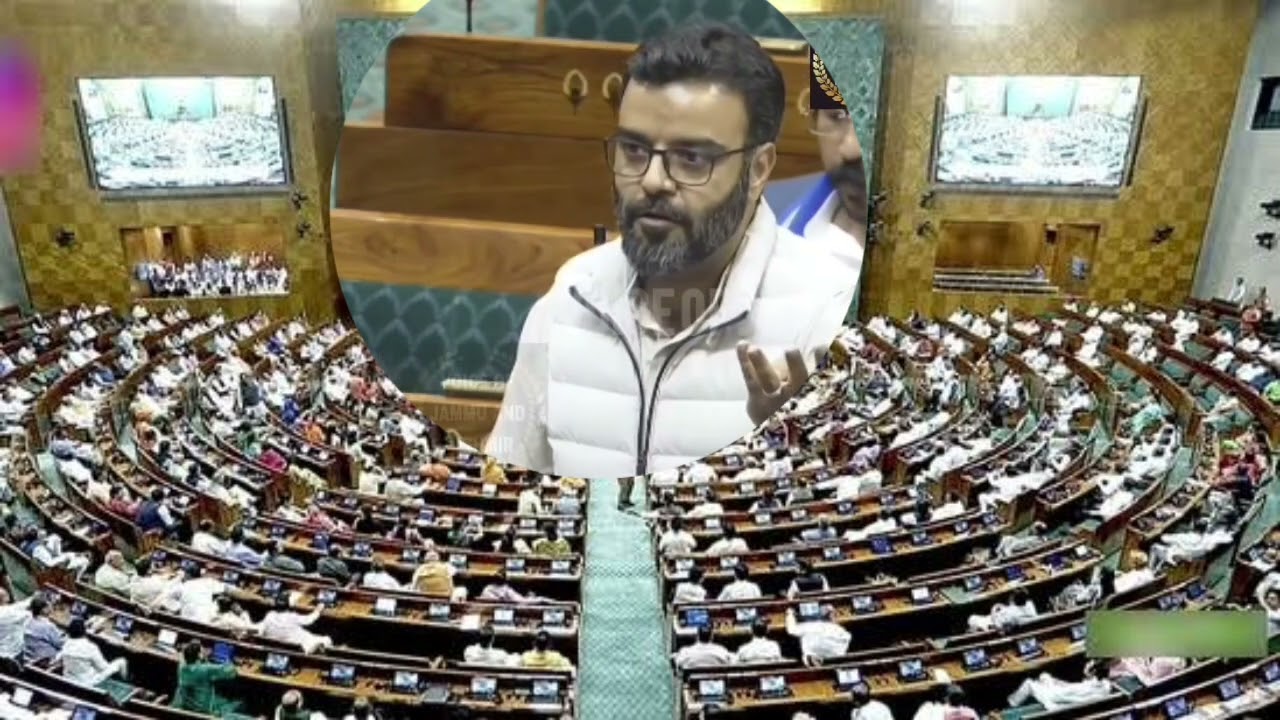
During the 150th anniversary debate on Vande Mataram, the Lok Sabha witnessed one of the sharpest critiques of the government’s nationalist narrative. Srinagar MP Aga Ruhullah Mehdi of the National Conference delivered a hard-hitting intervention that challenged what he described as the ruling party’s “political use of patriotism.”
His speech was fiery, unapologetic, and rooted in constitutional reasoning, turning a symbolic debate into a deeper confrontation over identity, nationalism, dissent, and the rights of India’s minorities.
While the government framed the debate as a celebration of India’s civilisational ethos, Ruhullah reframed it as a struggle for the soul of the Republic, asserting that patriotism must remain voluntary, not state-enforced.
Ruhullah’s Core Argument: Patriotism Is Personal, Not Enforceable
“You cannot force love for the motherland through songs”
Ruhullah began by stating that genuine patriotism cannot be legislated, tested, or imposed. According to him, the government’s push around Vande Mataram conflates cultural symbolism with national loyalty.
He argued:
-
Patriotism is an internal conviction, not a public performance.
-
A state cannot demand uniformity in expressions of nationalism.
-
Symbolic compliance does not create genuine loyalty.
His remarks challenged the belief—often amplified in contemporary political narrative—that national identity must manifest through uniform cultural practices.
The Minority Question: When a Symbol Becomes a Barrier
Religious Imagery, Exclusion, and Constitutional Protections
One of his most provocative points was the assertion that mandatory singing of Vande Mataram carries religious connotations that exclude minorities, especially Muslims. He pointed to specific lines invoking a form of deity worship that may conflict with monotheistic faith traditions.
Ruhullah framed the issue not as one of disrespect, but of conscience and religious liberty—a right guaranteed under Articles 25 and 19 of the Constitution.
His core message:
-
Respect for national symbols must be voluntary.
-
Minority citizens should not face suspicion merely because they opt out.
-
The Republic is weakened—not strengthened—when patriotism becomes coercive.
In the context of rising debates over cultural nationalism, the argument hit a sensitive nerve.
Constitutional Cornerstone: “Faith, Conscience, and Freedom Cannot Be Legislated”
Ruhullah reminded Parliament that:
-
India’s founding values reject forced cultural conformity.
-
Constitutional rights protect a citizen’s freedom to dissent.
-
The state cannot claim the authority to define patriotism.
In doing so, he aligned himself with the broader jurisprudence of the Supreme Court, which has repeatedly held that participation in patriotic rituals—anthem, slogans, or songs—cannot be compelled.
His intervention indirectly invoked landmark rulings such as:
-
Bijoe Emmanuel vs State of Kerala
-
Shyam Narayan Chouksey vs Union of India
This constitutional grounding gave his speech both moral weight and legal legitimacy.
The Political Strike: “Nationalism Is Being Used to Distract from Failures”
Turning the Debate Back on the Government
Ruhullah accused the ruling BJP of deploying patriotism as a political smokescreen—a way to avoid scrutiny over governance failures.
He hinted at:
-
Economic distress
-
Unemployment
-
Rising communal tensions
-
Administrative overreach
-
Erosion of federalism and dissent
He alleged that cultural debates like Vande Mataram are used to divert the public from more urgent questions about livelihoods, inflation, and democratic erosion.
This politically charged accusation drew immediate reactions from treasury benches, with the Speaker calling parts of his speech “controversial.”
Humanitarian Flashpoint: The Arfaz Daing Case That Was Silenced
A Story of Demolition, Solidarity, and Compassion
In a striking attempt to bring real-life communal harmony into the national spotlight, Ruhullah tried to highlight the demolition of journalist Arfaz Daing’s house in Jammu—a case he described as unjust and troubling.
He also sought to praise Kuldeep Sharma, Daing’s Hindu neighbor, who donated land to help the family rebuild.
But the Speaker disallowed him from raising the matter, calling it “outside the scope” of the debate.
This moment became symbolic:
-
Ruhullah’s narrative of communal unity was blocked.
-
The story of alleged administrative excess remained unspoken inside the House.
-
It illustrated the limits placed on dissent, even when wrapped in humanitarian and reconciliatory language.
Many observers later argued that this interruption actually amplified the issue outside Parliament.
Why Ruhullah’s Speech Resonates: Beyond One Controversy
A Debate About Who Gets to Define Patriotism
The intervention struck a chord because it sits at the intersection of several national anxieties:
-
Identity and citizenship
-
Minority rights and cultural nationalism
-
Freedom of expression
-
The expanding boundaries of state authority
Ruhullah’s stance presents an alternative narrative to the dominant nationalism paradigm, asserting:
-
You can disagree with a cultural symbol and still be a patriot.
-
Citizenship rests on constitutional values, not cultural uniformity.
-
India’s diversity is incompatible with enforced homogeneity.
His speech became a focal point for debates around pluralism, dissent, and the nature of the Indian state.
Political Fault Lines: Ruhullah vs the NC Leadership
A Growing Rift Within the National Conference
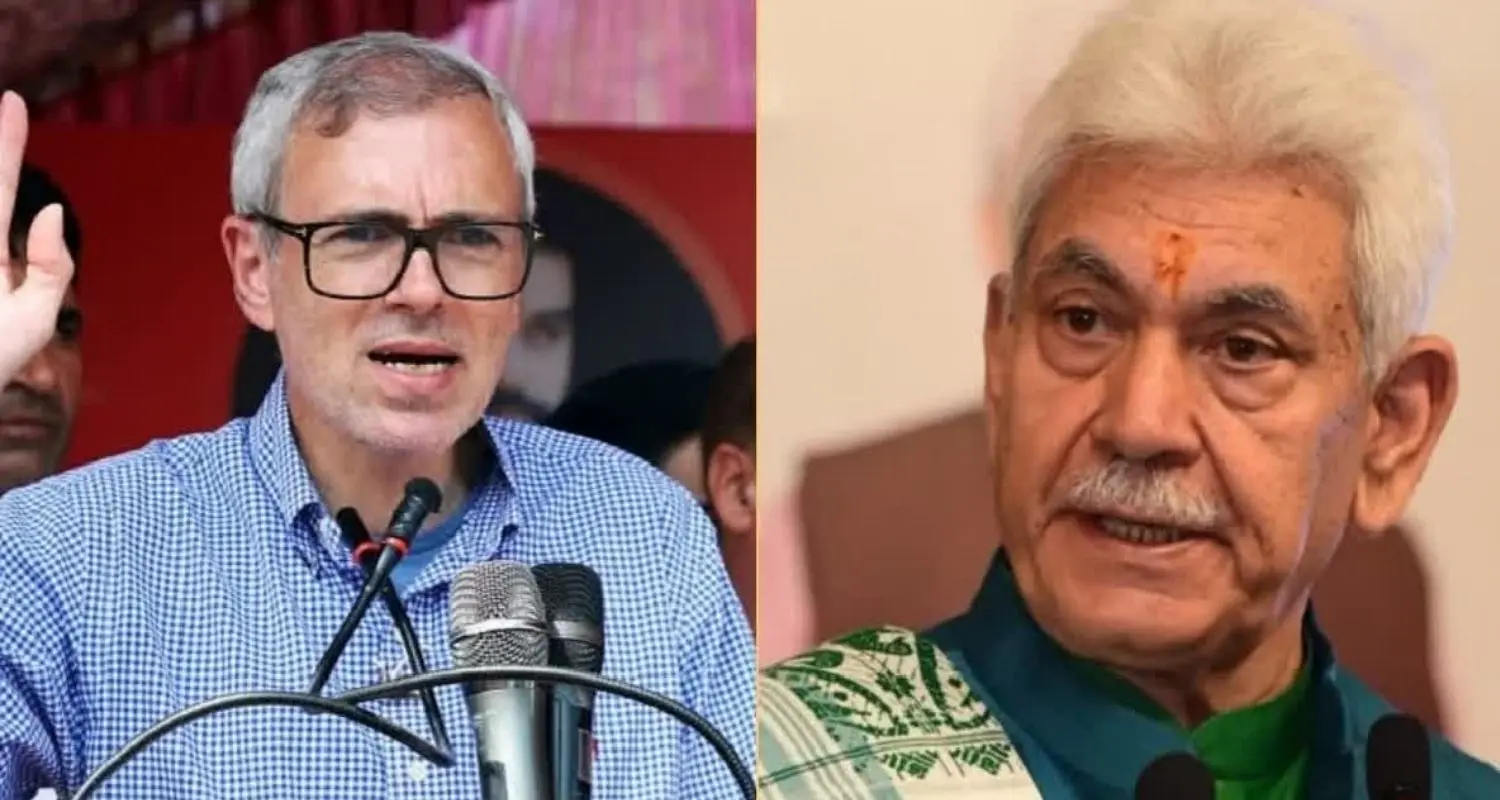
A notable subtext is Ruhullah’s evolving distance from NC vice president Omar Abdullah. While Omar often adopts a conciliatory, pragmatic approach in Delhi, Ruhullah has become increasingly vocal and ideologically driven.
His stance highlights:
-
A generational shift within the party
-
A more assertive Kashmiri Muslim political identity
-
Divergent strategies on national engagement
Some NC insiders view Ruhullah as:
-
The emerging ideological conscience of the party
-
A leader more aligned with grassroots sentiment in the Valley
-
A potential challenger to the party’s traditional power structure
The Parliament intervention thus carries implications not only nationally, but also within J&K’s political landscape.
A Wider National Message: What This Means for India’s Democratic Dialogue
The Debate Is No Longer About One Song
Ruhullah’s speech has already sparked reactions across academia, civil society, digital platforms, and political circles. The issue goes beyond Vande Mataram to encompass broader concerns about:
-
State-mandated culture
-
Democratic freedoms
-
Inter-faith sensitivities
-
The boundaries of acceptable dissent
At a time when debates often polarise quickly, his intervention has reopened a fundamental question:
Can a diverse nation of 1.4 billion people be asked to express patriotism in one uniform way?
The answer will shape India’s civic space for years to come.
Bottom-Line: A Speech That Will Echo Beyond the Session
Aga Ruhullah’s fiery intervention did not merely critique government policy—it challenged the very architecture of cultural nationalism. It questioned the expansion of state authority into matters of conscience, exposed political strategies that weaponise symbolism, and foregrounded the struggles of minorities navigating an increasingly majoritarian national identity.
Whether one agrees with his views or not, his speech has:
-
Reopened the debate on constitutional freedoms
-
Highlighted the pressures on parliamentary dissent
-
Reinforced the value of voluntary patriotism
-
Exposed internal tensions within the National Conference
-
Delivered a counter-narrative to the dominant political discourse
In a Parliament where debate often feels scripted, Ruhullah’s intervention was raw, ideological, and unflinchingly direct—ensuring that the conversation around patriotism, identity, and constitutional rights will remain alive long after the session ends.