Elected J&K Government ‘Has Nothing in Its Hands’, Says NC MP in Rajya Sabha — Spotlight on Lieutenant Governor’s Dominance
By: Javid Amin | 01 November 2025
A Bold Statement Resonates Across Delhi and J&K
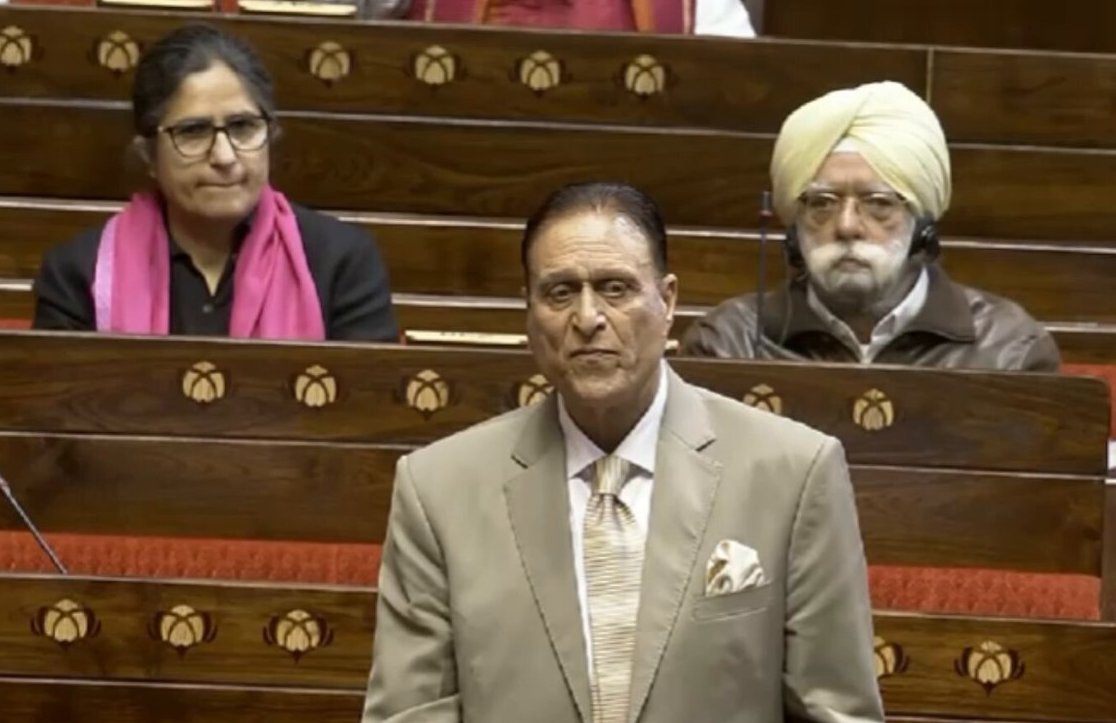
In a dramatic first address in the upper house of India’s Parliament, a member of National Conference (NC) laid bare what many in Jammu & Kashmir already sense: that the elected government in the Union Territory is effectively stripped of real power. With a simple yet powerful claim — “Our government has nothing in its hands; all the power is in the hands of the Raj Bhawan” — the NC MP reignited fresh scrutiny over the distribution of authority in post-2019 J&K.
By declaring that directives flow directly from Raj Bhawan “bypassing ministers,” the speech reframed the familiar tensions between bureaucratic control and democratic representation — and shifted the conversation from regional corridors to the national Parliament.
What the MP Said: Key Takeaways from the Rajya Sabha Intervention
-
Elected government powerless: The MP stated flatly that the popularly elected leadership of J&K lacks meaningful administrative control.
-
LG holds effective authority: He argued that the real decision-making lies with the Lieutenant Governor and his office — not with ministers or the assembly.
-
Orders bypass ministers: Administrative directives, law-and-order decisions, and key governance moves are reportedly issued without ministerial inputs, undercutting the essence of representative governance.
-
A public wake-up call: By choosing his maiden speech for this claim, the MP signalled that this is not just a local grievance — but a national concern about democratic legitimacy in J&K.
Why It Matters: The Structural Crisis of Dual Governance
1. Erosion of Democratic Mandate
Since the abrogation of special status in 2019, Jammu & Kashmir has functioned under a hybrid governance model: elected institutions co-exist with significantly empowered central/union-territory machinery. This duality — once a compromise — has, according to critics, turned into a structural imbalance.
When the elected government cannot make decisions independently — whether on appointments, policing, land records, or major administrative changes — voters’ faith in representative democracy erodes.
2. Bureaucratic Overreach vs. Political Accountability
Decisions flowing directly from Raj Bhawan, bypassing ministers, blur the line of accountability. Who answers if something goes wrong? Who defends civic grievances? When authority is centralized in an appointed office, the chain of responsibility becomes opaque.
3. Undermining Statehood Aspirations
For many in J&K, restoring full statehood is not just about a title — it’s about empowerment. The MP’s speech reaffirms that statehood isn’t merely symbolic: it’s a mechanism to ensure that elected representatives can govern, not just exist.
4. National Implications: Democracy, Autonomy, & Constitutional Values
By raising the issue in Rajya Sabha, the MP ensured that the problem transcends regional politics. The implications touch on:
-
Federal balance
-
Autonomy vs. central oversight
-
The rights of citizens to have effective governance
-
The future of democratic representation in other special-status regions
Political Dynamics: What This Means for NC, Opposition, and J&K Politics
For the National Conference (NC)
-
The speech reaffirms NC’s long-standing stance that power imbalance post-2019 undermines J&K’s democratic spirit.
-
Politically, it signals that NC intends to aggressively push the narrative of “democratic deficit” ahead of future polls.
-
It reinforces NC’s claim to be the legitimate voice of J&K’s popular aspirations.
For Opponents & Smaller Parties
-
Parties like Peoples Democratic Party (PDP), Peoples Conference (PC), and others might find space to compete on this rhetoric.
-
The speech risks fragmenting the opposition narrative: while all demand restoration of rights, they may differ on strategy — constitutional reform, statehood demand, or negotiated autonomy.
For the Central Government & Raj Bhawan
-
The spotlight is back on the concentration of power in appointed offices.
-
The challenge is institutional: can dual governance survive democratic scrutiny, or does it require structural reform?
-
Delhi may face pressure to negotiate power-sharing or return more authority to elected institutions.
Public Sentiment & Civic Impact: When Votes Feel Meaningless
Voter Disillusionment
For many residents, the MP’s statement validates a growing frustration: that elections no longer guarantee real change — that the “system” remains mostly untouched. This disillusionment can deepen alienation from democratic processes.
Civic Mobilisation
Affected communities — from local business owners to civil activists — may demand clearer institutional accountability. The speech could trigger public debate, protests, or renewed demand for constitutional safeguards.
Youth Discontent
J&K’s youth, who voted with hope for change, may feel betrayed. When governance remains centrally controlled, opportunities, representation, and agency can shrink — fueling migration, unrest, or political apathy.
Institutional Implications: Does Dual Governance Work Anymore?
The Rajya Sabha intervention starkly draws attention to the structural flaws in the current system:
-
Blurred lines of accountability: When decisions are not traceable to elected offices, transparency weakens.
-
Slow decision-making: Complex administrative paths cause bureaucratic delays.
-
Reduced public faith: Citizens feel disenfranchised when elected representatives cannot deliver.
-
Political instability: Repeated clashes between political and administrative arms undermine stability.
If unaddressed, this may lead to institutional decay, increased alienation, and rising public distrust.
Why the Maiden Speech Matters: Timing, Symbolism & Strategy
A first speech in Rajya Sabha carries symbolic weight for any MP — but for one representing Jammu & Kashmir, under current conditions, it is historic.
-
It places regional governance concerns on a national stage.
-
It signals that NC is willing to fight constitutional battles.
-
It forces media, civil society, and national political discourse to confront the deeper issue: What does self-governance mean in a Union Territory?
For the MP who spoke, it was not just a political statement — it was a test of identity, rights, and democracy.
Possible Scenarios Ahead: What Could Happen Next
-
Centre opens dialogue on devolving more powers to elected government — possibly reworking power distribution.
-
Opposition unites around democratic accountability — forming a broad alliance from NC, PDP, PC to demand structural reforms.
-
Public pressure mounts — NGOs, youth groups, civil society emerge as strong voices demanding greater transparency and governance reform.
-
Status quo remains, but political polarization deepens — prolonged tussles between elected leaders and the bureaucracy, risking governance paralysis.
Bottom-Line: The Struggle for Real Democracy in Post-370 Jammu & Kashmir
In his maiden Rajya Sabha speech, the NC MP did more than just highlight a political grievance — he exposed a governance crisis that strikes at the heart of democracy in Jammu & Kashmir. When elected governments have “nothing in their hands,” the spirit of representation, accountability, and public faith erodes fast.
As parties debate, leaders strategize, and citizens watch, one fundamental truth remains: the legitimacy of governance lies in enabling elected institutions to deliver — not in vacuous symbolic power.
This confrontation is more than a political clash — it is a test of whether democracy in J&K can survive structural constraints, or whether the region remains trapped in a cycle of administrative dominance under the guise of stability.