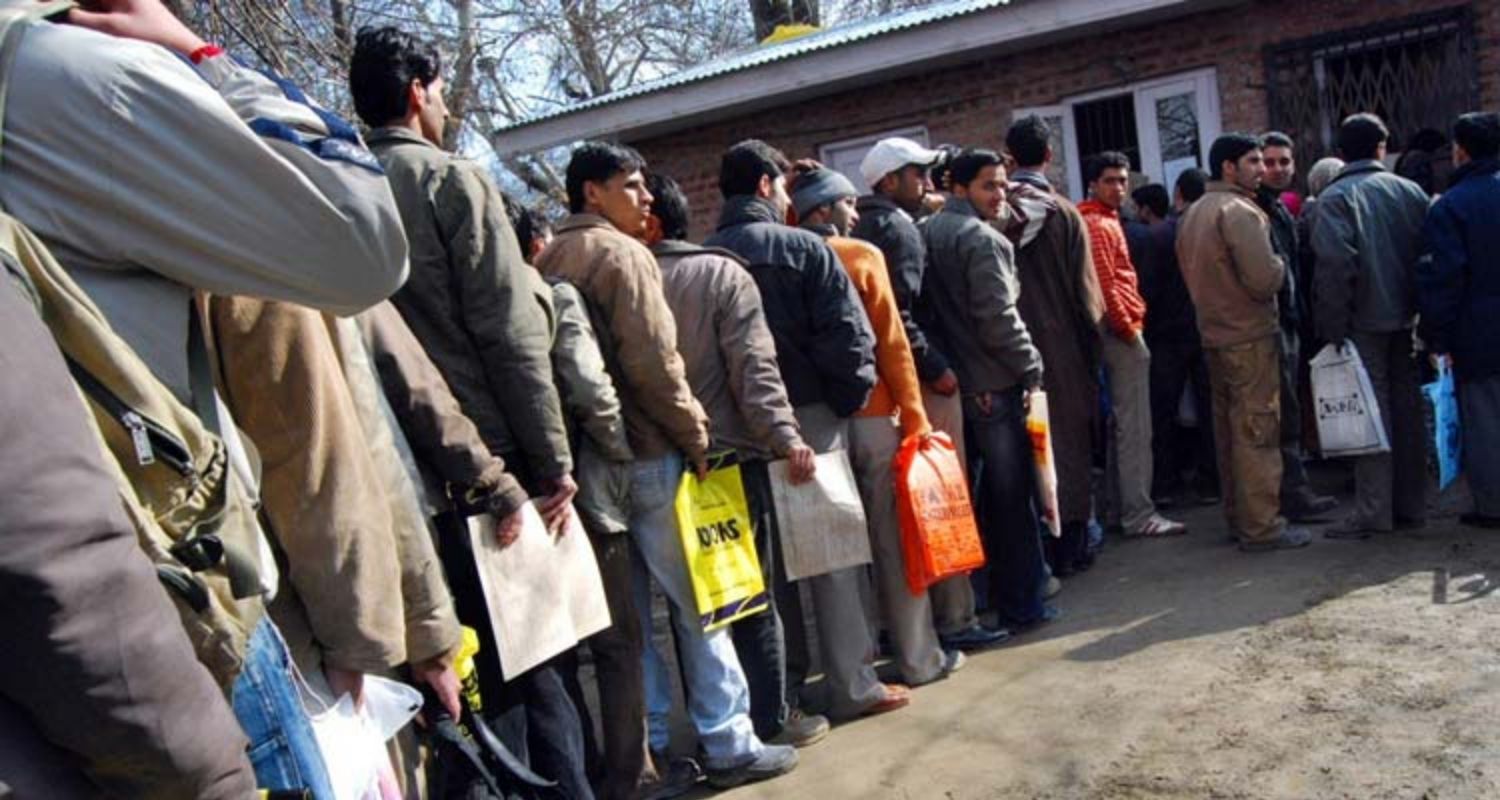
Unemployment in Jammu & Kashmir: 3.57 Lakh Educated Youth Registered Jobless — Why the Crisis Persists in 2025
By: Javid Amin | 30 December 2025
A Mega Feature & Social Insight Report
By November 2025, Jammu & Kashmir had 3.57 lakh unemployed youth registered with the Department of Employment — a sobering statistic that underlines the reality many households quietly live with: degrees do not guarantee jobs, especially in a slow-growing economy with limited private sector presence.
These figures are not abstract. They represent:
-
families postponing marriages
-
graduates preparing endlessly for competitive exams
-
youth migrating to metros
-
silent frustration turning into emotional fatigue
Despite policy announcements, livelihood programs, and skill-development initiatives, the employment gap remains one of the most pressing socio-economic challenges in J&K today.
This report dives deeper into what the number really means — beyond headline value.
The Number That Speaks — 3.57 Lakh Registered Unemployed Youth
Data compiled from district employment exchanges across J&K shows that:
-
3.57 lakh educated youth remain registered as unemployed
-
Registrations cover both urban and rural districts
-
A large proportion are graduates and postgraduates
-
Many have engineering, commerce, sciences, management, and humanities degrees
Registration does not always capture the full unemployment picture — but it remains the most reliable official indicator of joblessness.
Youth continue registering themselves because:
-
government jobs still require registration proof
-
job seekers hope for recruitment notifications
-
the private job market remains small
The figure also tells us something harder to articulate:
aspiration has outpaced opportunity.
Why Are So Many Educated Youth Still Unemployed?
1. A Structural Gap Between Education and Industry
J&K has achieved high literacy and enrollment levels. Colleges and universities produce thousands of graduates every year.
But where do they go next?
Unlike metro economies with strong corporate ecosystems, J&K has:
-
limited organized private sector
-
a small manufacturing base
-
modest IT penetration
-
seasonal tourism-linked employment
-
agriculture-dependent livelihoods
-
limited startup investment flow
So while supply of educated youth has expanded,
demand for skilled workers has not kept pace.
This mismatch breeds stagnation.
2. Government Jobs Remain the First — and Often Only — Choice
Historically, the government has been the largest employer in J&K.
Youth still see government employment as:
-
stable
-
socially respected
-
secure
-
pension-linked
-
predictable
However:
-
recruitments are periodic
-
competition is intense
-
processes move slowly
-
litigation delays selections
-
vacancies are fewer than applicants
When 50,000 people apply for 300 posts, failure becomes the norm — not the exception.
This fuels:
-
exam coaching migration
-
emotional burnout
-
repeated exam cycles
-
growing frustration
3. Private Sector Absorption Is Still Low
The private job market remains constrained due to:
-
limited industrial expansion
-
uncertainty-driven investor hesitancy
-
inadequate logistics in some belts
-
small corporate presence
-
difficulty scaling startups
-
limited high-skill roles
Tourism and horticulture dominate the economy — but:
-
work is seasonal
-
wages are modest
-
jobs are informal
-
social mobility is slow
As a result, an MBA graduate may end up under-employed, which creates:
-
income insecurity
-
social stigma
-
declining motivation
4. Rural Youth Face Even Fewer Opportunities
In rural belts:
-
transport access limits job choice
-
local enterprise options are narrow
-
IT infrastructure remains uneven
-
dependency on migration grows
For many families, migration becomes the only path upward.
5. The Psychological Cost of Waiting
Behind every registered unemployed candidate is:
-
years of exam preparation
-
tuition fees
-
emotional strain
-
family expectations
-
uncertainty about the future
Many youths express fears such as:
-
“Will I ever become financially independent?”
-
“How long can my parents support me?”
-
“Will I age out of government exams?”
Unemployment here is not just an economic issue — it is deeply social and psychological.
Government Schemes Exist — But Uptake Is Uneven
Authorities highlight initiatives such as:
-
self-employment financing
-
startup support programs
-
skill development missions
-
entrepreneurship promotion
-
tourism-linked job creation
-
industrial incentives
-
training centres
However, ground response remains mixed.
Why uptake remains limited
-
fear of loan-linked risk
-
lack of market access
-
paperwork and compliance barriers
-
risk-averse family culture
-
mentorship gaps
-
credit hesitation
Many youth prefer a secure job over entrepreneurial uncertainty.
At the same time, successful startups do exist — particularly in travel, agriculture value-addition, creative industries, crafts, IT freelancing, and retail — but scale remains limited.
The Social Impact: Migration, Exams, and Quiet Stress
Migration To Metros
Growing numbers are moving to:
-
Delhi NCR
-
Chandigarh
-
Bangalore
-
Hyderabad
-
Gulf nations
They seek:
-
BPO jobs
-
hospitality roles
-
IT support
-
logistics
-
sales
Migration provides income, but also disconnect from home and culture.
Competitive Exam Race Intensifies
Applications for:
-
UPSC
-
SSC
-
Banking
-
PSU
-
State recruitment
have surged.
Coaching industry expansion reflects anxiety — and ambition.
But success ratios remain low.
Mental Health Burden Grows Quietly
Unemployment contributes to:
-
anxiety
-
self-doubt
-
family strain
-
relationship delays
-
social withdrawal
This deserves attention, not silence.
Tourism & Horticulture: Strong but Seasonal Pillars
Tourism absorbs workforce during peak season — but:
-
jobs vanish in off-season
-
weather dependency remains high
-
earnings fluctuate
Horticulture provides income stability to growers — but:
-
graduates often seek white-collar jobs
-
value addition industries are still nascent
Thus educated unemployment remains unresolved.
Policy Push: Hope Meets Hindrance
Authorities are encouraging:
-
startup incubation
-
IT parks
-
industrial estates
-
logistics infrastructure
-
export-linked horticulture units
-
handicraft revival
But structural hurdles persist:
-
investor caution
-
small domestic market
-
limited venture capital inflow
Reforms must be paired with hand-holding and predictable policy delivery.
What Must Change To Create Real Jobs
1. Expand Private Sector Capacity
Encourage:
-
IT services
-
agri-processing
-
cold chain logistics
-
eco-tourism enterprises
-
e-commerce hubs
-
craft design industries
-
healthcare services
-
skill-based micro-industries
2. Industry–Academia Linkages
Align degrees with:
-
market demand
-
employable skills
-
internship pipelines
3. Ease of Doing Business — On the Ground
Not just policy — experience.
4. Mentored Entrepreneurship Support
Beyond loans:
-
training
-
networking
-
buyer linkages
5. Transparent, Timely Government Recruitment
Predictability reduces anxiety.
6. Mental Health & Career Counseling
Normalize guidance access.
Voices of Youth — The Silent Narrative
Conversations reveal:
-
hope
-
fatigue
-
resilience
-
determination
Many still believe hard work must lead somewhere.
That belief needs support — not neglect.
Bottom Line
The statistic 3.57 lakh unemployed youth in J&K as of November 2025 is not simply a number on a chart.
It is a mirror to the region’s development reality.
Government programs exist.
Progress is visible in pockets.
But the gap between aspiration and opportunity remains wide.
Until sustainable job creation, private sector growth, transparent recruitment, and skill alignment converge — unemployment will remain the defining challenge for Jammu & Kashmir’s youth.
And resolving it is not just an economic imperative —
it is a social necessity and a peace-building investment.