‘Between the Devil and the Deep Sea’: Kashmiris Trapped in Outside-Registered Vehicle Crisis Amid Seizure Notices, Heavy Taxes & Bureaucratic Chaos
By: Javid Amin | 13 November 2025
A Crisis On Wheels
In Kashmir today, owning a car has quietly transformed from a symbol of mobility and dignity into a source of anxiety, financial distress, and constant fear. For lakhs of ordinary Kashmiris—teachers, traders, private employees, students, and small businessmen—their vehicles have become liabilities rather than assets.
Bought legally, driven responsibly, and often purchased outside Jammu & Kashmir to save costs, these vehicles are now at the center of a growing administrative storm. The government’s enforcement drive against outside-registered vehicles—combined with hefty transfer charges, rigid laws, and a nightmarish paperwork process—has placed citizens in what many describe as a “devil and the deep sea” situation.
Either:
-
Pay lakhs of rupees in re-registration and road tax, or
-
Face seizure notices, fines, and impounding of vehicles
For many families already struggling with rising inflation, unemployment, and economic slowdown, neither option is realistic.
This is no longer just a transport issue. It has evolved into a full-blown governance and trust crisis.
How It Started: Why Kashmiris Bought Outside-Registered Vehicles
01. A Cost-Driven Decision, Not Lawlessness
For years, Kashmiris purchased vehicles from Delhi, Punjab, Haryana, and Chandigarh for one simple reason: cost efficiency.
-
Lower ex-showroom prices
-
Better availability of models
-
Faster delivery timelines
-
Competitive dealer discounts
At a time when local dealerships were limited and vehicle prices in J&K were often higher due to logistics and taxes, buying outside was a rational economic choice—not a legal loophole.
02. A Practice Known to Authorities
Importantly, this trend was never hidden:
-
Vehicles moved openly on roads
-
Insurance, PUC, and documentation were valid
-
Enforcement agencies were aware
For years, there was tacit administrative tolerance, creating a public expectation that the practice was manageable, if not officially encouraged.
The Law Tightens: Mandatory Re-Registration Rules
01. What the Law Says
Under the Motor Vehicles Act:
-
Vehicles used permanently in another state must be re-registered
-
Road tax must be paid to the new state/UT
In theory, this is standard across India.
02. The Kashmir Reality
What makes J&K different is:
-
Scale: Lakhs of vehicles affected
-
Cost: Road tax and penalties running into lakhs
-
Process: Excessively complex and time-consuming
Instead of a phased, citizen-friendly transition, enforcement arrived abruptly—through seizure notices and fines.
The Financial Shock: Double Taxation & Lakh-Rupee Bills
01. Road Tax in Lakhs
Many vehicle owners report:
-
Road tax demands between ₹1 lakh to ₹4 lakh
-
Additional penalties for “delay”
-
No adjustment for tax already paid in another state
For middle-class families, this is financially devastating.
02. Double Taxation Without Relief
Citizens ask a basic question:
“If road tax was already paid once, why are we paying again in full?”
The absence of:
-
Pro-rata adjustments
-
Refund mechanisms
-
Amnesty or waiver schemes
…has turned compliance into punishment.
‘Hell Of Paperwork’: A Process Designed To Exhaust
01. The Transfer Maze
To re-register a vehicle, owners must obtain:
-
NOC from original RTO
-
Police clearance
-
Transport department approvals
-
Physical vehicle inspections
-
Multiple affidavits
Each step involves:
-
Repeated visits
-
Long waiting periods
-
Informal “facilitation costs”
02. For Migrants, Employees, and Students—Impossible
Thousands of Kashmiris who bought vehicles while:
-
Working outside
-
Studying in other states
-
Running businesses
…now find it nearly impossible to travel back repeatedly just to complete formalities.
Seizure Notices: The Turning Point
01. Enforcement Over Empathy
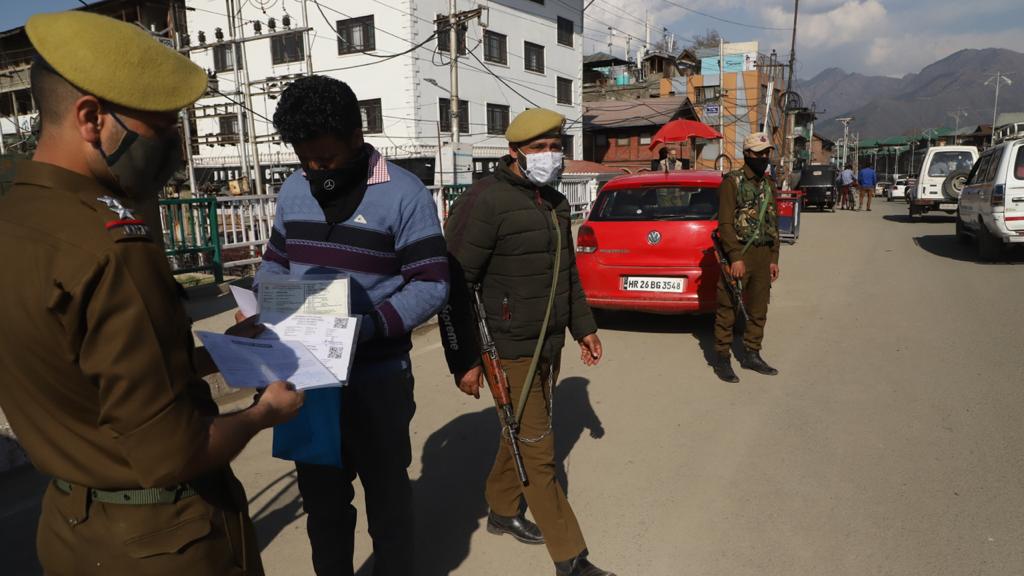
Instead of easing compliance, authorities escalated enforcement:
-
Seizure notices issued
-
Vehicles impounded
-
Fines imposed
This hardened public anger.
02. “Harassment to Mint Extra Bucks”
The dominant public perception is not legality—but revenue extraction.
People argue:
-
No public awareness campaign preceded enforcement
-
No grace period was provided
-
No financial relief was announced
As a result, seizure is seen as harassment, not governance.
Scale Of The Problem: Lakhs Trapped, Few Compliant
| Aspect | Reality |
|---|---|
| Estimated vehicles affected | Lakhs |
| Vehicles successfully transferred | Fraction |
| Average cost of transfer | ₹1–4 lakh |
| Public awareness | Poor |
| Administrative facilitation | Minimal |
This is not an isolated violation—it is a mass compliance failure.
The Human Cost: Stories Behind The Statistics
01. A Teacher’s Salary vs Transfer Fees
A government school teacher earning ₹45,000 a month is asked to pay ₹2 lakh in road tax.
“Should I feed my family or save my car?”
02. A Small Trader’s Livelihood at Risk
For traders, vehicles are tools of survival. Seizure means:
-
Business loss
-
Missed deliveries
-
Financial collapse
03. Students & Young Professionals
Young Kashmiris already facing unemployment now carry:
-
EMI burdens
-
Legal uncertainty
-
Psychological stress
Why This Issue Cuts Deeper In Kashmir
01. A Region With Trust Deficit
Kashmir’s relationship with administration is fragile. Actions perceived as:
-
Punitive
-
Revenue-driven
-
Insensitive
…quickly translate into broader resentment.
02. Post-2019 Governance Expectations
After repeated assurances of:
-
Ease of living
-
Transparent governance
-
Citizen-centric reforms
This crackdown feels like a betrayal of those promises.
A Governance Failure, Not A Transport One
This crisis reflects:
-
Poor policy design
-
Zero stakeholder consultation
-
Absence of phased implementation
-
Lack of empathy
It highlights a governance style that prioritizes enforcement over resolution.
Legal & Civil Response Brewing
01. Potential Legal Challenges
Civil groups are exploring:
-
Petitions against double taxation
-
Challenges to retrospective enforcement
-
Demands for uniform national policy
02. Growing Civil Society Pressure
Transport unions, traders, and activists are demanding:
-
Immediate suspension of seizures
-
Waiver or reduction of charges
-
Simplified process
What Could Have Been Done Differently
01. Amnesty Scheme
A one-time amnesty for existing vehicles could have ensured:
-
Voluntary compliance
-
Revenue without resentment
02. Single-Window System
Digital, time-bound processing could reduce:
-
Corruption
-
Harassment
-
Delays
03. Pro-Rata Tax Adjustment
Credit for tax already paid would restore fairness.
The Way Forward: Practical Solutions
| Solution | Impact |
|---|---|
| Waiver/reduction of transfer charges | Financial relief |
| Grace period | Compliance without fear |
| Online single-window system | Reduced harassment |
| Stakeholder dialogue | Trust rebuilding |
| Clear public communication | Transparency |
Between Law And Livelihood: A Final Reflection
The law exists to serve society—not to crush it.
In Kashmir, the outside-registered vehicle issue has crossed a line. What began as a regulatory requirement has mutated into a collective punishment of ordinary citizens. Families feel trapped, anxious, and unheard.
This is why people say:
“A Kashmiri is stuck between the devil and the deep sea.”
Pay exorbitant charges and sink financially—or resist and risk losing your vehicle.
Unless the administration course-corrects—with empathy, flexibility, and dialogue—this issue will continue to deepen public resentment and erode trust.
This is not about cars.
It is about dignity, fairness, and governance that understands ground realities.