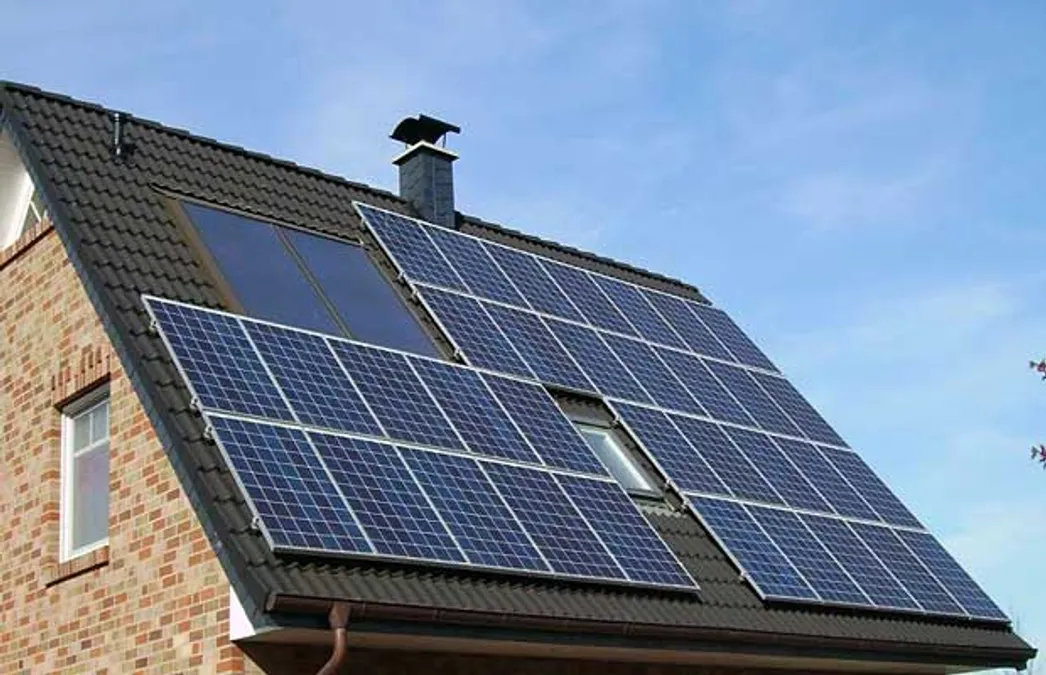
Kashmir Rooftop Solar Ground Report | PM Surya Ghar Scheme, Net-Metering Issues & Daytime Outages
By: Javid Amin | 12 December 2025
A Solar Transition in the Shadow of a Fragile Grid
Kashmir is undergoing a subtle but consequential energy transition. Rooftop solar—once a niche, expensive household luxury—is steadily becoming a mainstream asset. Driven by the PM Surya Ghar Muft Bijli Yojana, falling panel prices, and household frustration with chronic winter deficits, thousands of families across the region are installing small and mid-size solar systems.
The numbers tell a clear story: 16,212 rooftop installations have already been completed across Jammu & Kashmir, a pace that would have been unthinkable just three years ago. Subsidies, especially the promise of up to 300 units of free electricity each month, are catalyzing adoption at a rapid rate.
Yet the on-ground reality is far more complex. While adoption metrics look impressive on paper, everyday users tell a different story—one shaped by midday outages, inconsistent net-metering credits, weak digital dashboards, and inverter synchronization problems that reduce the reliability of the very systems they invested in.
Kashmir is not struggling with a lack of solar potential or citizen willingness. Instead, the region is confronting a deeper structural challenge: an energy ecosystem designed around hydropower and deficit management, not daytime distributed generation. This mismatch creates a ceiling on the value consumers can extract from rooftop systems, even when technology and policy incentives are in their favor.
This ground report examines the reality of Kashmir’s rooftop solar movement, tracing its scale, strengths, friction points, and the systemic reforms needed to unlock its true potential.
The Scale of Adoption: A Clear Upward Surge Across J&K
01. The numbers behind the shift: 16,212 installations and counting
Official figures show that 16,212 rooftop solar installations have been completed across Jammu & Kashmir. This number reflects a clear behavioral shift—households are increasingly willing to bet on solar as a buffer against erratic supply and high winter tariffs.
Unlike earlier government-led solar initiatives that saw tepid participation, the PM Surya Ghar scheme has changed the calculus for households by:
-
Offering substantial subsidies (40–60%)
-
Providing the promise of 300 free units of electricity every month
-
Positioning solar not as a luxury but as a tool for affordability and autonomy
For the first time, even rural and lower-middle-income households are adopting rooftop systems, often with 2–3 kW arrays that can meaningfully reduce monthly bills.
02. Incentive-driven momentum, not saturation
J&K is still in the early stages of adoption. With multiple lakh households eligible for rooftop systems, 16,212 installations are a testament to momentum but do not indicate market saturation.
The curve ahead is steep—but achievable—provided structural challenges are addressed.
03. Why solar matters in J&K’s energy landscape
Hydropower dominates J&K’s electricity profile. NHPC’s eight hydropower stations in the region generated 24,740 million units in 2022–23, nearly half of NHPC’s nationwide output.
Solar is therefore not framed as a replacement for hydro. Instead, it is a complementary layer that can:
-
Reduce pressure on winter baseload
-
Provide relief during peak demand periods
-
Give households greater predictability in bills
-
Support day-to-day reliability during daytime hours
The government’s strategy is clear: use solar to flatten demand, not to displace hydro.
On-ground Performance: What Consumers Actually Experience
While official dashboards show rising adoption, consumer narratives reveal critical gaps that are undermining system performance and satisfaction.
01. Daytime outages: the biggest spoiler of solar economics
Consumers across Srinagar, Budgam, Anantnag, Baramulla, Pulwama, and parts of Kupwara report a consistent theme:
Power cuts peak during the day—the very hours solar panels are most productive.
This creates three layers of impact:
-
Reduced household consumption:
When the grid is down, consumers cannot draw solar power (most systems lack storage). -
Inhibited net export:
Inverters require a stable grid to feed excess solar energy into the network.
If voltage drops or supply cuts occur, inverters shut down or operate inefficiently. -
Loss of promised savings:
Without stable day supply, the 300-unit benefit—designed around net-metering—cannot be fully realized.
Users frequently describe the experience as:
“Solar is generating, but the grid isn’t taking it.”
This single gap erodes the economic logic of rooftop solar.
02. The digital monitoring blind spot: weak dashboards and broken data flows
A recurring frustration among users is the poor quality of solar monitoring systems:
-
App dashboards frequently fail to sync with inverters.
-
Generation statistics are patchy or inaccurate.
-
DISCOMs provide delayed or inconsistent net-metering credit statements.
-
Installers often rely on manual checks instead of digital logs.
-
Consumers cannot track real-time performance or detect faults early.
This creates mistrust:
“We installed solar to save money. But if we can’t see what we’re generating or earning, how do we know it’s working?”
In a high-deficit region, trust is currency—and the digital layer that should build that trust is the weakest link.
03. Mixed reliability: metering errors and inverter issues
Consumers report:
-
Delayed net-metering approval
-
Unsynchronized smart meters
-
Faulty or slow MPPT tracking during low voltages
-
Inverters tripping during voltage fluctuations
-
Poorly designed string configurations by local vendors
These issues are especially acute during winter, when:
-
Hydro output dips
-
Load-shedding increases
-
Voltage drops become common
The result:
Solar reliability becomes seasonally volatile.
Impact Assessment: Successes and Structural Constraints
01. A clear behavioral shift: adoption is strong
Despite real challenges, two successes stand out:
-
Consumers believe solar is worth the investment.
-
Policy design—particularly the 300-unit benefit—is effective.
In a region where households routinely face steep winter bills, rooftop solar is viewed as a tool for:
-
Cost control
-
Energy independence
-
Reduced reliance on backup heaters, generators, or inverters
This represents a genuine cultural and economic shift.
02. Savings are real—when the grid cooperates
Households with:
-
Clean metering
-
Fewer daytime cuts
-
Good inverter installation
-
Accurate dashboard monitoring
…report substantial reductions in monthly bills, especially from March to October.
In these months, solar can offset a large portion of household consumption, proving the 300-unit benefit is powerful when operational conditions align.
03. But systemic constraints cap the upside
The region’s grid conditions create a hard ceiling on savings:
-
Daytime load-shedding
-
Voltage instability
-
Winter baseload shortages
-
Hydropower variability
-
Transformer overloading in peak seasons
These constraints limit:
-
Generation utilization
-
Export potential
-
Metering accuracy
-
Consumer satisfaction
In essence:
Kashmir has installed capacity, but not guaranteed value.
The Key Gaps That Undermine Rooftop Solar’s Effectiveness
01. Grid integration failures
Midday load-shedding undercuts solar by:
-
Reducing inverter runtime
-
Preventing net export
-
Triggering voltage-related shutdowns
-
Lowering overall generation yield
Until grid conditions stabilize during daytime hours, rooftop solar will remain only partially effective.
02. Monitoring and transparency deficits
A modern rooftop ecosystem requires:
-
Live dashboards
-
Accurate DISCOM statements
-
Transparent credit logs
-
Accessible error reporting
-
Early-warning alerts
Most consumers in Kashmir receive none of this.
The result: low trust and slow resolution of faults.
03. Vendor quality variability
Problems include:
-
Incorrect panel orientation
-
Poor string design
-
Suboptimal MPPT matching
-
Loose connectors
-
Low-quality cables
-
Delayed after-sales service
Users report feeling “on their own” after installation.
04. Poor policy communication
Many consumers say they do not understand:
-
How the 300-unit benefit is calculated
-
Timelines for net-metering activation
-
Whom to contact for disputes
-
How to escalate delayed approvals
-
What to expect on monthly billing cycles
This creates confusion and disappointment.
Metrics: The Gap Between Promise and Ground Reality
| Metric | Policy/Expectation | Ground Reality |
|---|---|---|
| Installations | Rapid uptake | 16,212 rooftops completed |
| Monthly benefit | 300 free units | Realized only with clean metering + stable day supply |
| User experience | Smooth digital monitoring | Patchy dashboards, delayed statements |
| Grid synergy | Productive net export | Undercut by midday curtailments |
| Reliability in winter | Complement hydro | Helps bills but doesn’t fix day cuts or heating load |
What Would Make Kashmir’s Solar Shift Truly Succeed
01. Commit to minimal daytime curtailments
Solar-heavy feeders must receive:
-
Stable voltage
-
Minimal outages
-
Better load management schedules
This is the single largest driver of performance improvement.
02. Time-bound net-metering SLAs
DISCOMs should implement:
-
Guaranteed approval timelines
-
Monthly automated credit statements
-
A dispute window (15–30 days)
-
Transparent online tracking
This would restore consumer trust and ensure accountability.
03. A unified monitoring stack
J&K needs:
-
A standardized inverter → DISCOM dashboard protocol
-
Real-time data visibility shared across consumers, installers, and utilities
-
Fault alerts, predictive maintenance, and performance analytics
Monitoring is the backbone of solar confidence.
04. Vendor accreditation and quality assurance
Recommendations include:
-
Mandatory installer accreditation
-
Standard commissioning tests: orientation, string loss tests, MPPT checks
-
Time-bound service response SLAs
-
Penalties for poor-quality installation work
Good vendors create good outcomes.
05. Launch targeted storage pilots
Priority sectors include:
-
Healthcare facilities
-
Schools
-
Cold-chain operators
-
Households in high-outage pockets
Battery pilots would demonstrate how solar can provide daytime resilience—not just bill savings.
06. Public reporting for transparency
Monthly feeder-level data should include:
-
Solar exports
-
Curtailment events
-
Voltage stability
-
Feeder downtime
-
Net-metering credit summary
Community-visible data ensures pressure for improvement.
Verdict: A Qualified Success in Need of Structural Fixes
Kashmir’s rooftop solar revolution is real—but incomplete.
The region is experiencing a clear rise in adoption; incentives are strong, and citizens are responding enthusiastically. The 16,212 installations mark a shift in public behaviour, not an administrative milestone.
But the system built around these installations—grid stability, monitoring, metering, vendor quality—lags behind. The result is a paradox:
High adoption, limited delivered value.
Unless daytime cuts are reduced, net-metering is streamlined, and monitoring becomes transparent, Kashmir risks a future of installed capacity without usable benefit.
Fix these choke points, and rooftop solar could become one of the most powerful tools for:
-
Reducing household financial strain
-
Enhancing energy resilience in winter
-
Complementing hydropower
-
Supporting climate and development goals
Kashmir stands at an inflection point.
The transition is underway.
The question is whether the system will evolve to match the aspirations of its consumers.


