MP Engineer Rashid Seeks PM Modi’s Intervention to ‘End Growing Disconnect’ Between J&K L-G and CM
By: Javid Amin | 08 December 2025
When a Member of Parliament writes directly to the Prime Minister seeking intervention in state administration, it signals more than a routine political disagreement. It speaks to structural tension, institutional imbalance, and a level of friction severe enough to threaten governance itself.
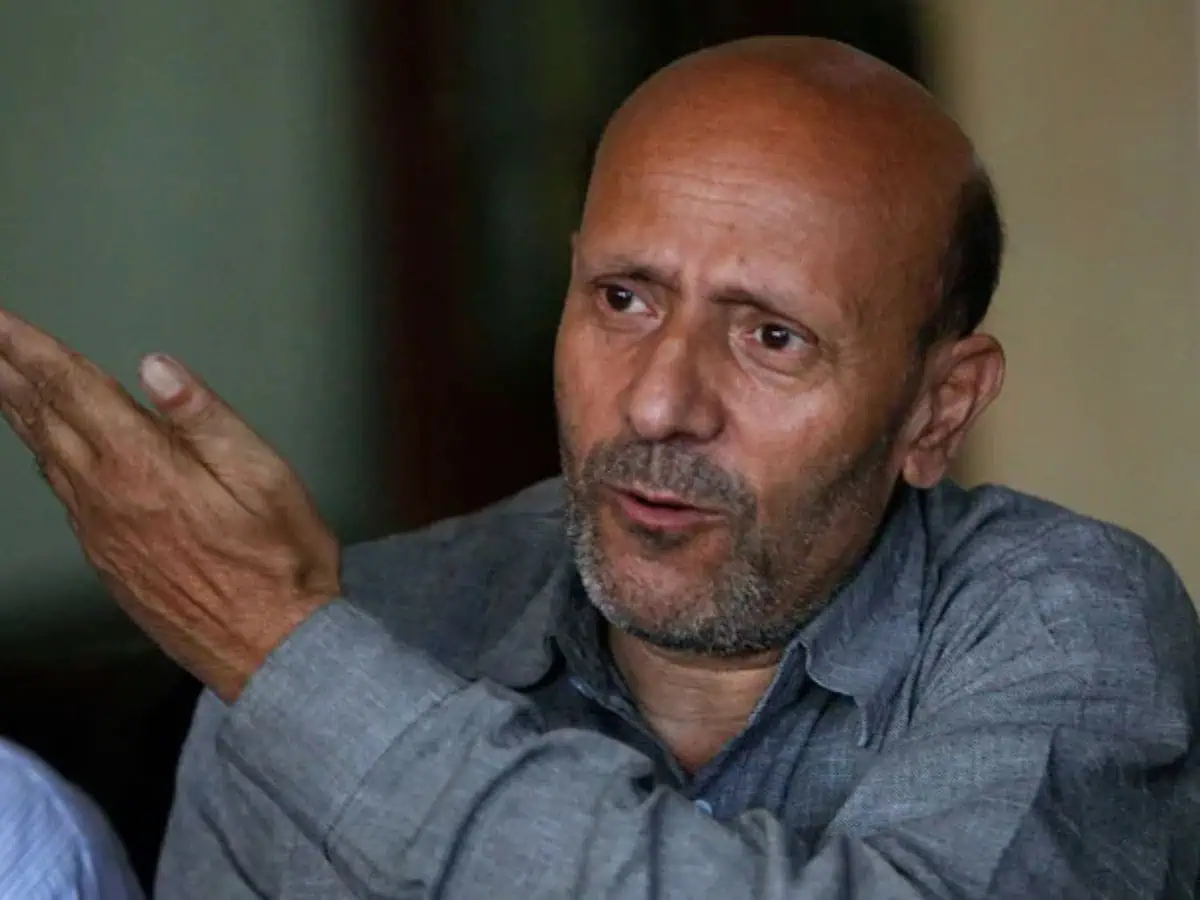
On December 8, 2025, Baramulla MP Abdul Rashid Sheikh, popularly known as Engineer Rashid, penned a formal letter to Prime Minister Narendra Modi, highlighting what he described as a “growing disconnect” between the Lieutenant Governor (LG) Manoj Sinha and Chief Minister Omar Abdullah.
The letter lands in a crucial moment—Jammu & Kashmir is still navigating the post-2019 administrative transition, balancing its elected leadership with the continued influence of centrally-appointed authority. For many observers, Rashid’s intervention is not merely a political signal but a reflection of deeper turbulence within the newly restored democratic framework of the UT.
In this extensive, deeply reported, and analytically enriched feature, we explore:
-
✔️ What Engineer Rashid’s letter says
-
✔️ Why the LG–CM disconnect matters
-
✔️ How dual power centers shape J&K governance
-
✔️ Where citizens stand in this evolving conflict
-
✔️ What intervention by the Prime Minister may mean for J&K’s future
-
✔️ And how this episode fits into the broader political history of the region
The Letter That Sparked a Debate: What Engineer Rashid Told the PM
According to the summary and corroborated ground inputs, Engineer Rashid’s letter was not a casual political complaint. It was a carefully constructed red flag sent to the highest executive office in India.
01. Rashid’s Central Concern: Administrative Disconnect
The MP stated that coordination between the LG’s office and the Chief Minister’s office had deteriorated to a point affecting governance delivery—a serious allegation in a region that already carries a heavy governance burden.
The key concerns highlighted include:
-
Delays in developmental approvals
-
Stagnation in welfare schemes
-
Ambiguity in inter-departmental decision-making
-
Loss of administrative morale
-
Confusion among district-level officers about whose directives to prioritize
02. Not a Personal Complaint, But an Institutional Alarm
Rashid’s positioning was notably non-partisan. By choosing to “alert” the PM without directly blaming either the CM or the LG, he framed the issue as a governance malfunction rather than a political rivalry.
This stance gives his letter credibility—he is not aligned with either Omar Abdullah’s party or the BJP, which appoints the LG, giving him room to speak as an independent legislator representing citizen concerns.
03. A Call for “Structural Clarity”
The MP specifically requested the PM to ensure:
-
Clearly defined boundaries between the LG’s administrative authority and the CM’s executive mandate.
-
Regular coordination meetings between both constitutional authorities.
-
Guidelines for district officials to streamline communication channels.
-
A mechanism to prevent parallel decision-making.
In Rashid’s view, “J&K cannot afford dual power centers pulling in different directions, especially after a long period of political instability.”
Understanding the LG–CM Disconnect: A Governance Faultline in the UT
To understand the magnitude of Rashid’s concerns, one must first understand how the administrative structure of Jammu & Kashmir works today.
01. Post-2019 Administrative Architecture
After the abrogation of Article 370 in August 2019, J&K underwent:
-
A status change from state to Union Territory (with legislature)
-
Enhanced powers for the Lieutenant Governor
-
Limited autonomy for the elected Chief Minister and cabinet
-
Central government oversight remaining strong
This dual system creates overlapping jurisdictions in areas like:
-
Law & Order
-
Bureaucratic appointments
-
Financial clearances
-
Development project approvals
02. Why Coordination Is Crucial
In any UT with an elected government, balance is delicate. The LG represents the Union government; the CM represents the people’s mandate. Both must work symbiotically.
However, conflict erupts when:
-
Policies are stalled
-
Administrative files are delayed
-
Orders are overridden or recalled
-
Public messaging between offices diverges
In J&K, which already has complex political sensitivities, such disconnects are amplified—governance can slow down dramatically.
The Human Impact: Citizens Facing Delays, Confusion, and Dissatisfaction
Rashid’s letter explicitly mentions that day-to-day governance is suffering. Field reports and interactions with district officials show real consequences:
01. Development Projects Delayed
Large-scale works—roads, bridges, rural electrification, healthcare expansions—need coordinated approvals. Without coherence:
-
Contractors pause work
-
Funds remain unutilized
-
Deadlines are missed
-
Public suffers silently
02. Welfare Schemes Slowing Down
Schemes like:
-
Subsidy disbursement
-
Social welfare benefits
-
Scholarship releases
-
Rural livelihood missions
…require bureaucratic precision that becomes difficult amid conflicting directions.
03. Confusion Among Government Employees
Several employees reportedly express that:
-
They receive differing instructions from the two power centers.
-
They fear action from either side.
-
They avoid decision-making entirely—leading to an administrative freeze.
04. Citizens Losing Faith
When common people see political tensions between top offices:
-
They feel insecure
-
They perceive instability
-
They fear delays in justice or support
-
They lose confidence in democracy’s return
Rashid’s letter captures this sentiment:
“People of J&K should not pay the price for misalignment in governance.”
The Political Context: Omar Abdullah vs Manoj Sinha
01. Historical Baggage
Omar Abdullah, a three-time Chief Minister, represents the restoration of electoral politics in J&K. Manoj Sinha, a trusted administrator of the Central Government, represents continuity of New Delhi-led governance.
Their roles inherently contain political, ideological, and administrative tension.
02. Recent Flashpoints
Throughout 2024–2025, multiple episodes have hinted at increasing friction:
-
Disagreements on age relaxation for civil service exams
-
Divergence over district development priorities
-
Conflicting views on police administrative oversight
-
Public statements that indirectly critique each other’s roles
03. The Symbolism of Two Power Centers
In a region struggling to rebuild trust after years of centralized control, the coexistence of:
-
A New Delhi-appointed LG
-
A democratically chosen CM
…has created not only power distribution challenges but also deeper questions about autonomy, accountability, and the future political direction of the UT.
Why Rashid’s Intervention Matters: Signals From Within the System
01. A Sitting MP Raising Alarm is Significant
MPs rarely write to the PM about administrative coordination unless:
-
A crisis is brewing
-
The issue threatens national perception
-
The public is directly suffering
02. Rashid Representing Citizen Sentiments
As a grassroots leader who rose from activism, Rashid’s political credibility lies in sensing public mood. His raising concerns shows widespread unease.
03. Institutional Warning Against Governance Drift
The letter essentially warns:
“Governance may slow down or collapse if corrective steps aren’t taken immediately.”
This is not rhetoric—it’s a structural risk.
What Prime Minister Modi’s Intervention Could Mean
If PM Modi opts to intervene, possible outcomes include:
01. Recalibration of Roles
The PM may issue guidelines clarifying:
-
What falls under LG’s exclusive oversight
-
What falls under CM’s democratic mandate
Clearer separation reduces conflict.
02. Institutional Coordination Mechanisms
Possible steps:
-
Weekly LG–CM reconciliation meetings
-
Joint decision-making boards
-
Revised communication protocols for departments
-
A permanent coordination cell
03. Political Signaling
Depending on how the PM responds:
-
It may strengthen the CM’s hand to restore democratic confidence
-
Or affirm the LG’s authority emphasising administrative discipline
-
Or balance both to sustain stability in the UT
Whatever the outcome, the PM’s response will have a national political impact.
Stakeholders and Their Positions: A Comprehensive Table
| Stakeholder | Position | Implication |
|---|---|---|
| Engineer Rashid (MP) | Raised alarm over LG–CM disconnect | Seeks PM’s intervention to restore coordination |
| Chief Minister Omar Abdullah | Reported strained ties with LG | Faces challenges in implementing policies |
| Lieutenant Governor Manoj Sinha | Holds administrative authority | Overlaps/conflicts with CM’s role |
| Citizens of J&K | Experiencing delays in governance | Feel uncertainty & dissatisfaction |
| Prime Minister Modi | Requested to intervene | May reshape power balance in J&K |
Historical Parallels: J&K’s Long Struggle With Governance Structures
J&K’s governance dilemmas are not new.
01. From Sadr-i-Riyasat System to 2019 Reorganization
The region has seen multiple administrative experiments:
-
Special status arrangements (1950s–2019)
-
Governor’s Rule phases
-
President’s Rule for extended periods
-
The UT framework post-2019
Each transition reshaped power distribution.
02. Lessons From Past Frictions
History suggests:
-
Parallel power structures create friction
-
Lack of clarity leads to bureaucratic paralysis
-
Citizens bear the cost every time
Rashid’s letter essentially warns against repeating the same cycle.
The Way Forward: What J&K Needs Now
01. A Harmonized Power Structure
J&K requires a clearly defined governance model that avoids confusion.
02. Political Maturity and Public-Focused Leadership
Both LG and CM must prioritize citizens over political turf.
03. Transparent, Stable Administrative Processes
Departments need unambiguous directives.
04. Strengthening Public Confidence
Citizens must feel the return of democracy is meaningful.
05. Role of Parliament and Judiciary
Legal clarity and parliamentary oversight can reduce disputes.
Bottom-Line: A Critical Moment for Jammu & Kashmir’s Democratic Journey
Engineer Rashid’s letter to PM Modi marks a pivotal moment in Jammu & Kashmir’s political evolution. It is a reminder that governance is not merely the sum of institutions—it is the lived experience of citizens. When high offices fall out of sync, entire systems slow down.
In a region striving for stability, economic revival, and public confidence after years of uncertainty, coordination between the LG and CM is not optional—it is indispensable.
Whether the PM intervenes or not, J&K’s governance model will continue to be tested. But what cannot be overlooked is the growing call—from leaders, citizens, and administrators—for clarity, cooperation, and a governance approach aligned with people’s expectations.
The coming weeks may well shape not just administrative harmony, but the political destiny of Jammu & Kashmir.