CM Omar Abdullah defends merit-based admissions as Sangharsh Samiti Ramban protests Shrine Board over alleged bias.
By: Javid Amin | 02 November 2025
The controversy surrounding MBBS admissions at the Shri Mata Vaishno Devi Institute of Medical Excellence (SMVDIME) has escalated sharply in Jammu & Kashmir, triggering protests, political reactions, and renewed scrutiny of admission policies. The allocation of 42 out of 50 MBBS seats to Muslim students has been the center of debate, prompting demands for “religious representation” by some groups, while others insist on upholding merit-based admissions mandated under NEET and the Indian Constitution.
In the middle of this storm, former J&K Chief Minister Omar Abdullah has taken a firm stand in favor of meritocracy, arguing that admissions at SMVDIME must follow national regulations—not religious considerations.
Omar Abdullah Defends Merit-Based Admissions
“Merit, Not Religion” Must Guide MBBS Admissions
Addressing the growing controversy, Omar Abdullah reiterated that religion cannot—and legally should not—form the basis of MBBS admissions.
He stated that:
-
The Constitution and NEET regulations explicitly prohibit any religious quota in general institutions.
-
SMVDIME is not a minority institution, and therefore faith-based seat distribution is unconstitutional.
-
The Shrine Board had already consented to NEET merit as the sole criterion for admission.
Abdullah criticized the ongoing protests, saying that students admitted purely through merit are being unfairly targeted because of their religion, which undermines both social harmony and the integrity of the examination system.
He emphasized that NEET scores are the only valid benchmark for admission to medical colleges across India, including those managed by trusts or religious boards.
Protests Erupt in Ramban: Sangharsh Samiti Accuses Shrine Board of Bias
Rally Led by Sangharsh Samiti’s Ramban Unit
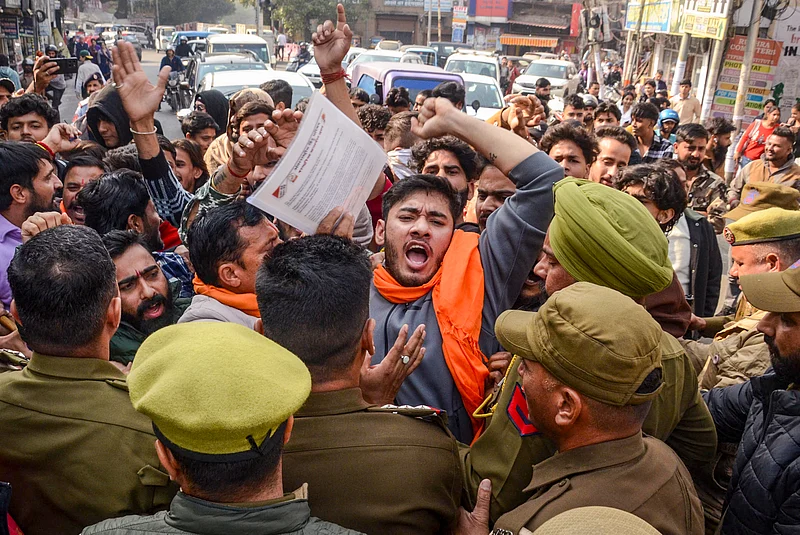
Meanwhile, the Shri Mata Vaishno Devi Sangharsh Samiti (SMVDSS)—particularly its newly formed Ramban district unit—held a protest march accusing the Shrine Board and SMVD University management of irregularities and religious imbalance in seat allocation.
Key Highlights of the Protest:
-
The rally moved through Ramban town, led by district president Surinder Singh.
-
Protesters chanted slogans against the SMVDSB (Shrine Board) and the college administration.
-
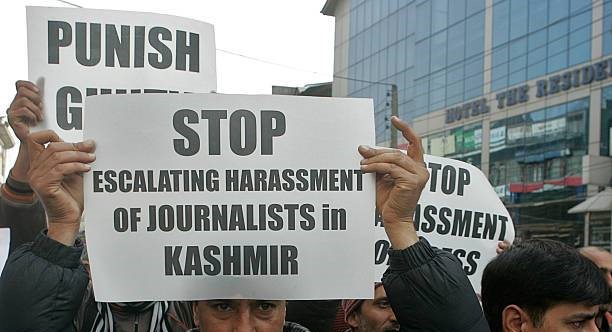
Placards alleged “religious bias” and demanded “corrective measures.”
-
The group argued that since the institution is funded through donations from Hindu pilgrims, Hindu students should have greater representation in admissions.
The protesters demanded a review of the selection process, even though the governing body had already clarified that admissions were conducted strictly based on NEET merit lists.
The Core Issue: 42 of 50 Seats Allocated to Muslim Students
Political & Social Fallout
The revelation that 42 out of 50 MBBS seats were secured by Muslim students—through merit—triggered objections from BJP and Sangharsh Samiti factions.
Why This Happened (Explained Factually):
-
NEET counseling is fully centralized and merit-based.
-
Religion is not recorded or considered in the NEET ranking process.
-
Candidates from all backgrounds compete equally on rank and preference.
-
If more seats are earned by students from a particular community, it reflects performance—not policy manipulation.
Yet, political groups allege that the distribution reflects “bias,” while educational leaders maintain it is purely an outcome of competitive meritocracy.
Legal & Regulatory Framework: What the Law Actually Says
1. NEET Is the Sole Admission Gateway
Under the National Medical Commission (NMC) and NEET UG rules:
-
Admissions across India must be done strictly through NEET rankings.
-
Medical colleges—government, private, charitable, trust-run—must follow transparent merit-based selection.
2. Religious Quotas Are Illegal for Non-Minority Institutions
SMVDIME is NOT a minority institution, as confirmed publicly.
Therefore:
-
Religion-based quotas are unconstitutional.
-
Implementing such quotas could invalidate admissions and invite legal action.
3. The Shrine Board’s Role
Although SMVDIME is governed by the Shri Mata Vaishno Devi Shrine Board, it must:
-
Abide by national medical education laws.
-
Conduct admissions through centralized NEET counselling, not internal preferences.
A Deepening Political Divide
BJP vs. NC: Competing Narratives
-
BJP, Sangharsh Samiti & allied groups: Demand “representation” for Hindu students, citing the institution’s religious affiliation.
-
National Conference (NC) & Omar Abdullah: Defend the merit-based process, calling political interference harmful.
This clash reflects India’s broader debate on religion, meritocracy, and public institutions, particularly in sensitive regions like J&K.
Social Impact: A New Fault Line in J&K?
The dispute risks:
-
Communal polarization in education
-
Erosion of trust in national admission systems
-
Stigmatization of meritorious students simply based on faith
-
Pressure on the Shrine Board to engage in illegal reservation practices
If weaponized politically, the issue may create long-term mistrust between communities, especially among students who deserve protection—not controversy.
Bottom-Line: Meritocracy Must Prevail Over Identity Politics
The SMVDIME admissions row is more than a campus controversy—it is a reflection of India’s struggle between constitutional principles and identity-driven demands.
Omar Abdullah’s stance aligns with:
-
NEET rules
-
Constitutional equality
-
NMC guidelines
-
Judicial precedents on non-minority institutions
As the debate intensifies, one thing remains clear: