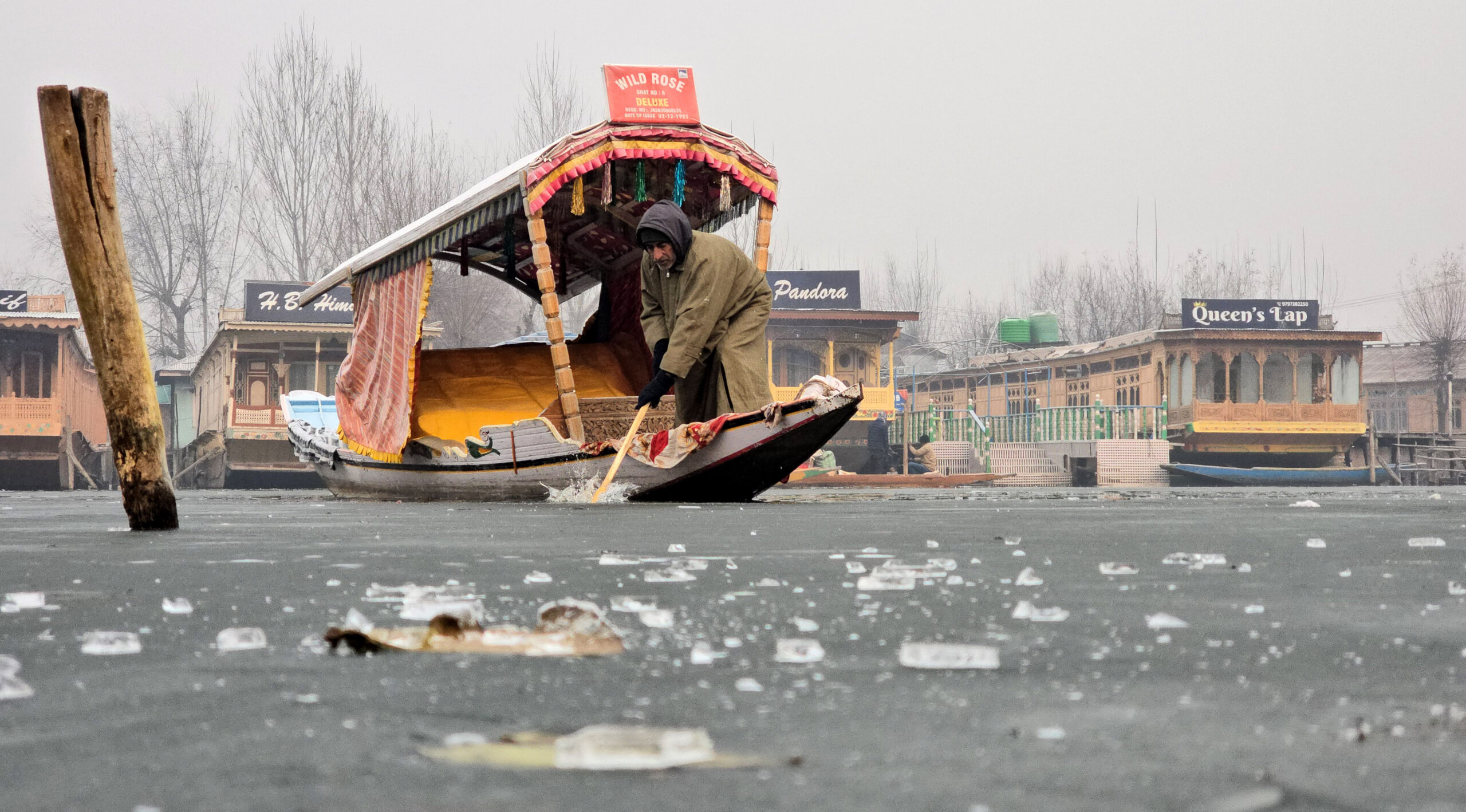
Fresh Snowfall in Higher Reaches Intensifies Cold Wave Across Kashmir Valley
By: Javid Amin | 05 January 2025
Chillai Kalan, Kashmir’s harshest winter phase, has tightened its grip across the Valley as fresh snowfall in higher reaches pushes temperatures further down. Gulmarg recorded this winter’s coldest night at minus 8.8 degrees Celsius, while Srinagar and other districts continue to reel under sub-zero conditions. Though snow boosts tourism in the mountains, the dry spell in plains is raising concerns over water supply and agriculture.
Winter Update from Kashmir
The 40-day Chillai Kalan period, which runs from December 21 to January 31, marks the coldest stretch of the Kashmiri winter. This year, the phase has begun with intense night-time freezing, icy winds, and fresh snowfall confined largely to higher altitudes.
While the plains remain dry, the cold wave has intensified across the Valley due to clear skies and plunging night temperatures.
Temperature Highlights Across Kashmir
Gulmarg
-
Recorded –8.8°C, the coldest night of the winter so far
-
Ski resort covered in fresh snow
-
Conditions ideal for skiing and winter sports
Srinagar
-
Persistent sub-zero nights
-
Frozen water taps reported in several localities
-
Icy roads causing morning travel disruptions
Pahalgam & Kupwara
-
Both regions dipped well below freezing
-
Sharp night-time chill adding to Valley-wide cold conditions
What Is Chillai Kalan?
Chillai Kalan is the harshest phase of winter in Kashmir, lasting 40 days. It is characterised by:
-
Freezing nights
-
Strong icy winds
-
Frequent snowfall in higher reaches
-
High risk of frozen water bodies and pipes
This period plays a crucial role in replenishing glaciers, rivers, and groundwater systems that sustain Kashmir through spring and summer.
Snowfall: Relief in the Mountains, Worry in the Plains
Fresh snowfall in higher reaches such as Gulmarg and upper Pir Panjal areas is environmentally significant, as it helps:
-
Replenish glaciers
-
Sustain river flows
-
Support winter tourism
However, the continued dry spell in plains has triggered concerns over:
-
Future water availability
-
Spring irrigation for agriculture
-
Reduced soil moisture
Experts note that snowfall in plains during Chillai Kalan is critical for long-term water security.
Impact on Daily Life
Everyday Challenges
-
Frozen water pipes in residential areas
-
Slippery roads during morning hours
-
Increased dependence on heating devices
Tourism Upside
-
Snow-covered Gulmarg sees rising tourist footfall
-
Skiing and winter activities gain momentum
Agriculture Concerns
-
Farmers await snowfall in plains
-
Snowless winters can affect spring irrigation and crop cycles
Why This Matters
What appears as a seasonal cold wave has deeper implications. Chillai Kalan sets the tone for:
-
Water availability in summer
-
Agricultural productivity
-
Power generation and tourism revenue
A cold winter with uneven snowfall highlights the growing unpredictability of Kashmir’s winter climate.
Editorial Takeaway
Kashmir’s winter has entered its harshest phase, with Chillai Kalan bringing freezing nights and fresh mountain snow. While Gulmarg celebrates a snow-rich season, the dry plains tell a different story — one that raises quiet but serious questions about water, agriculture, and climate resilience in the Valley.