Kashmir’s Vanishing Winters: How Climate Change Is Rewriting Snowfall, Water Security, and Livelihoods
By: Javid Amin | 16 January 2026
A Winter That No Longer Feels Like Winter
For centuries, winter in Kashmir meant deep snow carpeting the Valley, frozen lakes, roaring rivers replenished by slow snowmelt, and a natural rhythm that sustained agriculture, hydropower, and daily life. Today, that rhythm is breaking.
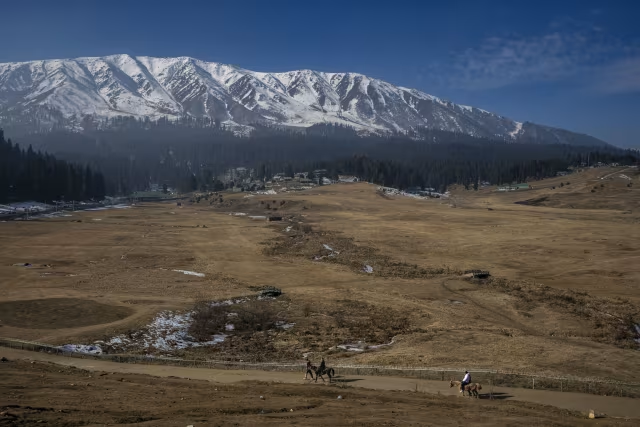
Across large parts of the Valley — including Srinagar and other lower-altitude areas — winters are increasingly snowless, punctuated by cold spells but lacking the sustained snowfall that once defined the season. Scientists and environmental experts now warn that Kashmir is slipping into a new climatic reality, where winters may feel milder in the moment but prove far more damaging in the long run.
At the heart of this transformation lies climate change, reshaping how snow falls, how long it stays, and how water moves through the fragile Himalayan ecosystem.
Snowfall Deficit: A Defining Signal of Climate Stress
Over 40% Snowfall Deficit in Recent Years
Multiple scientific assessments and regional observations indicate that Kashmir has experienced snowfall deficits exceeding 40% in several recent winters, particularly across the Valley floor and lower elevations. While higher reaches still receive snow, even these areas now see shorter accumulation periods and faster melting.
This phenomenon has given rise to what scientists describe as a “snow drought.”
What Is a Snow Drought?
A snow drought occurs when:
-
Snowfall is significantly below normal, or
-
Snow melts prematurely due to higher winter temperatures
Unlike visible disasters such as floods or avalanches, snow droughts are slow-onset climate events, often overlooked until their impacts surface months later.
The Illusion of Mild Winters
At first glance, snowless winters may appear less harsh. Roads remain open longer, heating demand may briefly ease, and snowfall disruptions decline. However, this apparent comfort is deceptive.
Delayed Consequences
The real impacts of reduced snowfall emerge later:
-
Rivers shrink during spring and summer
-
Natural springs dry up
-
Water shortages intensify during peak agricultural seasons
Snow is not merely winter decoration; it is Kashmir’s most critical water reservoir.
Rising Temperatures and Disrupted Snow Cycles
Warmer Winters, Faster Melt
Climate data from Himalayan regions show:
-
Rising average winter temperatures
-
More precipitation falling as rain instead of snow
-
Rapid melting of whatever snow does accumulate
This disrupts the natural storage-and-release system that snow provides. Instead of gradual melt feeding rivers over months, water now runs off quickly — often wasted or lost downstream.
The Broken Water Cycle
Traditionally:
-
Snow accumulated in winter
-
Meltwater recharged rivers, springs, and groundwater in spring
-
Water sustained agriculture and hydropower through summer
Now:
-
Less snow accumulates
-
Melt happens too fast
-
Water availability collapses during critical months
Shrinking Rivers and Drying Springs
Water Security Under Threat
Kashmir’s rivers — including the Jhelum and its tributaries — depend heavily on snowmelt. Reduced snowpack means:
-
Lower river discharge
-
Weaker spring flows
-
Increased dependence on erratic rainfall
Rural communities, which rely on natural springs for drinking water, are among the hardest hit. Many springs that once flowed year-round now run dry by early summer.
Impact on Agriculture: A Silent Crisis
Snowmelt and Farming Are Deeply Linked
Agriculture in Kashmir depends on predictable water availability. Reduced snowpack threatens:
-
Rice cultivation, which requires consistent irrigation
-
Apple orchards, sensitive to both water stress and chilling hours
-
Saffron farming, already vulnerable to climatic shifts
Yield Declines and Farmer Anxiety
Farmers report:
-
Delayed sowing
-
Reduced crop yields
-
Rising dependence on groundwater and pumps
Climate uncertainty is replacing seasonal predictability, placing livelihoods at risk.
Hydropower: An Energy Model Under Strain
Snow-Fed Rivers Power Kashmir
Hydropower is a backbone of Kashmir’s electricity generation. However:
-
Declining river flows reduce generation capacity
-
Winter electricity shortages worsen
-
Infrastructure planning becomes unreliable
Ironically, warmer winters increase heating demand while reducing water availability for power generation — a double vulnerability.
Tourism: From Predictability to Uncertainty
Winter Tourism Losing Its Edge
Destinations like Gulmarg, once known for reliable snowfall, now face:
-
Shorter ski seasons
-
Cancellations due to lack of snow
-
Financial uncertainty for tourism operators
While occasional heavy snowfall still occurs, its unpredictability undermines planning and investment.
Economic Ripple Effects
Tourism supports:
-
Hotels and homestays
-
Transport services
-
Local artisans and guides
Snow uncertainty threatens an entire economic ecosystem.
Comparative Snapshot: Past vs Present Winters
| Aspect | Past Winters | Current Winters |
|---|---|---|
| Snowfall | Heavy, widespread | Deficit over 40% |
| Plains | Regular snowfall | Often snowless |
| Rivers | Strong summer flows | Shrinking channels |
| Tourism | Reliable ski seasons | Frequent disruptions |
| Agriculture | Stable irrigation | Increasing water stress |
Ecological Consequences Beyond Humans
Biodiversity at Risk
Altered snow cycles affect:
-
Alpine vegetation
-
Wildlife migration patterns
-
Soil moisture and forest health
Species adapted to cold, stable winters now face habitat stress.
Increased Disaster Risk
Reduced snowpack also means:
-
Less slope stability
-
Higher risk of landslides
-
Greater vulnerability to flash floods when intense rainfall occurs
Climate Stress and Regional Stability
Climate change acts as a threat multiplier in sensitive regions like Kashmir. Water scarcity, livelihood insecurity, and economic stress can:
-
Intensify social tensions
-
Increase rural distress and migration
-
Complicate governance and development planning
Environmental instability feeds into broader socio-political challenges.
Policy Gaps and Adaptation Challenges
Despite growing evidence, adaptation remains limited:
-
Few dedicated snow-monitoring systems
-
Insufficient long-term water storage infrastructure
-
Tourism policies still heavily dependent on snowfall
Experts warn that reactive responses are no longer sufficient.
The Way Forward: Adapting to a New Winter Reality
1. Adaptive Water Management
-
Small reservoirs and artificial recharge systems
-
Efficient irrigation techniques
-
Protection of natural springs
2. Climate-Resilient Agriculture
-
Crop diversification
-
Water-efficient farming practices
-
Climate advisory services for farmers
3. Tourism Diversification
-
Promote year-round eco-tourism
-
Reduce dependence on snow-based activities
-
Invest in cultural, wellness, and nature tourism
4. Energy Transition
-
Expand solar and wind energy
-
Reduce sole reliance on hydropower
-
Improve energy efficiency in winter housing
5. Community Awareness
-
Climate education at the grassroots level
-
Local participation in water conservation
-
Traditional knowledge integration
Redefining Winter, Redefining Kashmir
Kashmir’s changing winters are not an isolated phenomenon — they are part of a broader Himalayan climate transformation. Snow droughts, shrinking rivers, and uncertain seasons signal that the Valley is entering a new environmental era.
The challenge ahead is not just to mourn the loss of familiar winters, but to adapt intelligently, equitably, and urgently. How Kashmir responds to this climate shift will determine not only its environmental future, but also the security of livelihoods, ecosystems, and generations to come.