Iltija Mufti Protests Proposed Bijbehara–Pahalgam Rail Line, Warns of Livelihood and Ecological Loss
By: Javid Amin | 24 January 2026
Opposition to rail project revives debate on development versus preservation in South Kashmir
Rail Connectivity Meets Grassroots Resistance
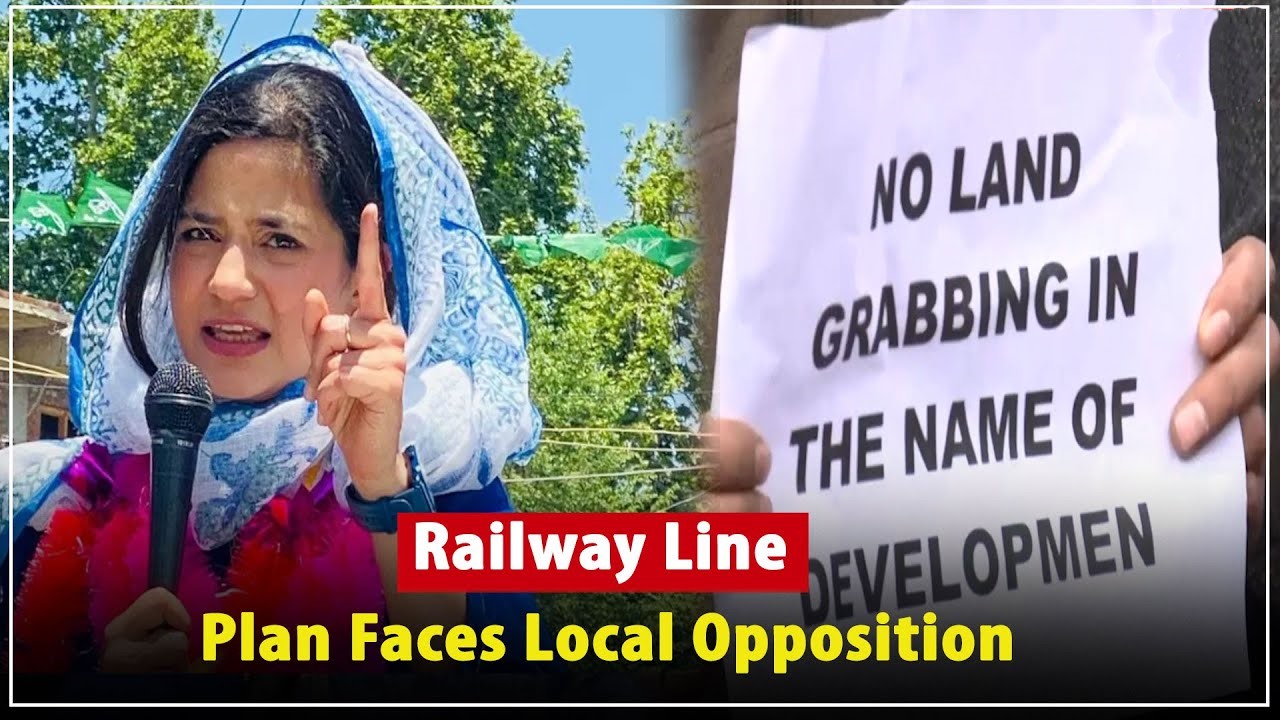
The proposed Bijbehara–Pahalgam rail line, pitched by authorities as a connectivity and tourism booster, has sparked resistance in South Kashmir. Iltija Mufti, daughter of former Jammu and Kashmir Chief Minister Mehbooba Mufti, has emerged as a prominent voice opposing the project, warning that it could undermine local livelihoods, damage fragile ecosystems, and alter the cultural character of Pahalgam.
Her protest adds political visibility to concerns already being voiced by residents and civil society groups, turning the proposed rail link into a larger debate over who benefits from development and who bears its costs.
What the Proposed Rail Line Entails
Project Overview
-
Route: Bijbehara (Anantnag district) to Pahalgam
-
Objective: Improve rail connectivity to one of Kashmir’s most visited tourist destinations
-
Government Rationale:
-
Easier access for tourists
-
Reduced travel time
-
Integration of Pahalgam with the Valley’s rail network
-
Officials argue that rail connectivity would support tourism growth and regional integration. However, critics say the plan has been conceptualised without sufficient community consultation.
Livelihoods at Risk: Core of the Protest
Tourism as a Community-Based Economy
Iltija Mufti has stressed that Pahalgam’s economy is deeply local, sustained by:
-
Pony owners and trekking guides
-
Small guesthouses and homestays
-
Local transport operators
-
Artisans and seasonal vendors
According to her, large-scale rail-driven tourism could shift economic benefits away from locals, favouring corporate operators and outside investors.
Fear of Economic Marginalisation
Residents worry that mass tourism facilitated by rail access could:
-
Reduce demand for local transport and pony services
-
Push small operators out of business
-
Concentrate profits in fewer hands
Iltija framed the issue as one of economic justice, warning that development should not come at the cost of traditional livelihoods.
Ecological Fragility: Environmental Concerns Take Centre Stage
A Sensitive Himalayan Ecosystem
Pahalgam lies in a highly fragile ecological zone, marked by:
-
Dense forests
-
Alpine meadows
-
River systems feeding the Lidder basin
-
Wildlife corridors
Iltija Mufti cautioned that rail construction would require extensive excavation, tunnelling, and tree cutting—processes that could permanently alter the landscape.
Long-Term Environmental Risks
Environmental concerns raised include:
-
Increased risk of landslides and soil erosion
-
Disturbance to wildlife habitats
-
Pressure on water resources
-
Pollution from construction and tourist influx
In a region already vulnerable to climate change, critics argue that environmental safeguards must precede infrastructure expansion.
Cultural Identity and the Fear of Over-Commercialisation
Beyond ecology and economics, Iltija Mufti also flagged concerns over cultural erosion.
Changing Character of Pahalgam
Pahalgam has historically attracted slow, seasonal tourism, allowing communities to manage visitor flow organically. Opponents fear rail connectivity could:
-
Encourage unchecked tourist volumes
-
Replace community-led tourism with mass commercial models
-
Dilute the town’s traditional character
The concern, she said, is not tourism itself, but tourism without limits or local control.
Displacement and Land Acquisition Worries
Another flashpoint is land acquisition.
Residents along the proposed alignment fear:
-
Loss of ancestral land
-
Inadequate compensation
-
Displacement without rehabilitation
While official details on land acquisition are yet to be made public, the absence of clarity has fuelled anxiety and resistance.
Political Significance of Iltija Mufti’s Stand
Amplifying Local Voices
Iltija Mufti’s intervention has given political visibility to local concerns, especially among youth and civil society groups. Her stance aligns with a broader narrative advocated by the Peoples Democratic Party (PDP), which has often emphasised sustainable development and local consent.
Potential Flashpoint
The protest could evolve into a larger political issue, especially if:
-
Consultations remain limited
-
Environmental impact assessments are perceived as inadequate
-
Local opposition grows
In South Kashmir, where land and livelihood issues are politically sensitive, infrastructure projects often carry high social stakes.
Development vs Preservation: A Familiar Kashmir Debate
The Bijbehara–Pahalgam rail line has revived a familiar question in Kashmir:
Should development prioritise speed and scale, or sustainability and consent?
Supporters of the project argue that improved connectivity is essential for growth. Opponents counter that development without safeguards risks deepening inequality and ecological damage.
What Happens Next
Key questions now facing authorities include:
-
Will there be structured consultations with local communities?
-
Will environmental and social impact assessments be made public?
-
Can alternative, less disruptive connectivity models be explored?
The answers may determine whether the project proceeds smoothly or faces prolonged resistance.
Conclusion: More Than a Rail Line
Iltija Mufti’s protest against the proposed Bijbehara–Pahalgam rail line goes beyond opposition to a single infrastructure project. It reflects a broader struggle over development priorities in Kashmir, where land, livelihood, and identity are deeply intertwined.
As the government pushes connectivity and growth, voices from Pahalgam are asking a fundamental question: development for whom, and at what cost?
How authorities respond may shape not just the future of this rail project, but the credibility of development planning in Kashmir’s fragile mountain regions.