Jammu Traders Reject Separate State Demand, Seek Full J&K Statehood: An On-Ground Reality Check
By: Javid Amin | 11 January 2026
Markets choose stability over slogans as traders warn against further fragmentation of Jammu & Kashmir
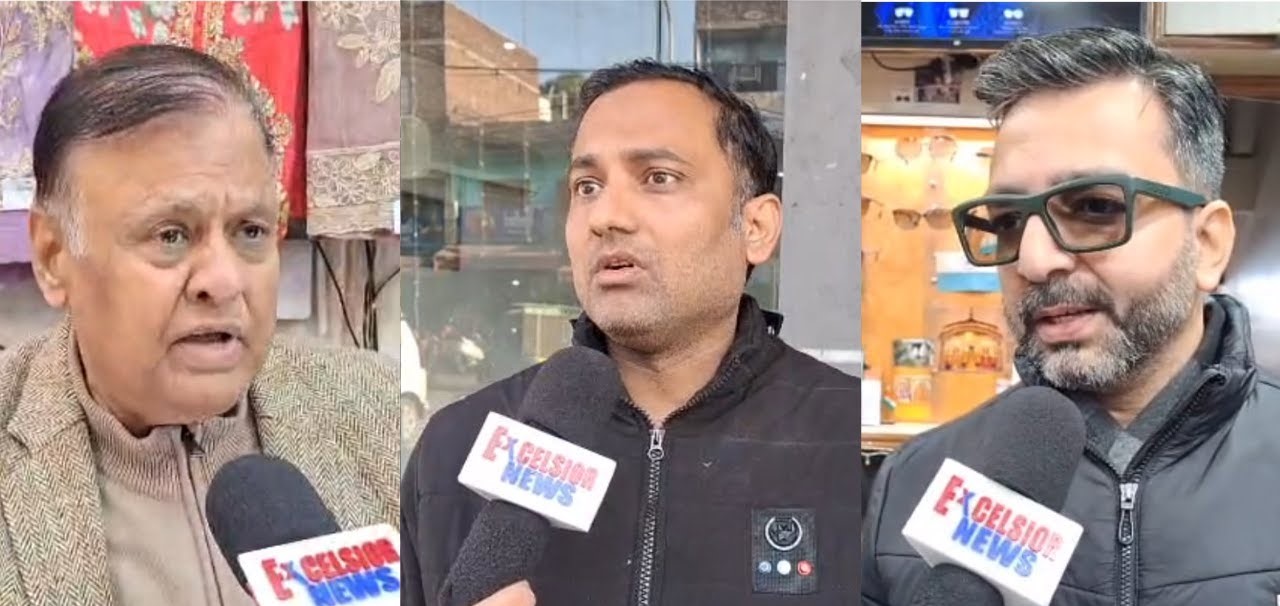
As political voices grow louder over the demand for a separate Jammu state, a decisive and pragmatic rejection has emerged from an unexpected quarter — Jammu’s trading community. From wholesale markets and transport hubs to hotels and small retailers, traders across Jammu are united in their message: division will weaken the economy; full statehood will restore stability.
An extensive on-ground assessment across Jammu’s commercial centres reveals that the demand for separation finds little resonance among those who drive the region’s economy. Instead, traders are calling for the restoration of full statehood to Jammu & Kashmir, arguing that only democratic governance and regional unity can revive confidence, investment, and livelihoods.
Traders Speak: “Our Economy Cannot Survive Isolation”
In markets like Raghunath Bazaar, Warehouses, Narwal Transport Nagar, and City Chowk, traders express a shared concern — economic interdependence between Jammu and Kashmir is not optional, it is structural.
A wholesale trader from Raghunath Bazaar explains:
“Our supply chains run through Kashmir. Apples, handicrafts, tourism traffic — everything is connected. You break that link, and you break our business.”
Transport operators echoed similar fears, noting that any new administrative boundaries, permits, or taxation regimes would immediately raise operational costs, hurting traders and consumers alike.
Economic Reality: Why Traders Oppose a Separate Jammu State
1. Interlinked Markets, Not Parallel Economies
Jammu’s economy functions as a gateway, not a standalone hub. Goods move from Kashmir through Jammu to the rest of India, while pilgrims and tourists often combine Vaishno Devi with Kashmir travel. Traders argue that separation would disrupt this natural flow.
2. Limited Independent Revenue Base
Unlike Kashmir’s tourism-driven economy, Jammu lacks sufficient standalone revenue streams. Traders warn that a separate state would mean:
-
Higher administrative expenditure
-
Limited fiscal autonomy
-
Greater dependence on central grants
“A new state will bring more officers, not more customers,” said a small retailer in City Chowk.
3. Post-2019 Business Stress
Since the 2019 reorganisation, traders report:
-
Reduced footfall
-
Slower decision-making
-
Increased compliance burden
In such conditions, further restructuring is seen as economically risky.
Political Undercurrents: Traders Reject Identity-Driven Narratives
While some right-wing groups advocate a separate Jammu state citing regional neglect and identity, traders remain unconvinced.
A senior traders’ association member remarked:
“Business does not run on emotion. It runs on predictability. Division brings uncertainty.”
Traders fear that pushing separation could intensify regional and communal polarisation, damaging Jammu’s image as a stable commercial centre.
Why Traders Prefer Full Statehood for J&K
The demand for full statehood is rooted in practicality, not nostalgia.
Key Expectations from Statehood
-
Elected government with accountability
-
Faster administrative decisions
-
Investor confidence and policy continuity
-
Regionally balanced development
Hoteliers in the Jammu-Katra belt believe that statehood would revive tourism confidence, encouraging long-term investment rather than short-term political posturing.
Counter-View Explained: Why Some Still Push for Separation
Advocates of a separate Jammu state argue that:
-
Jammu was historically sidelined
-
Valley-centric politics dominated governance
-
Administrative autonomy could improve development
However, traders counter that economic fragmentation will not correct political imbalance. Instead, they argue that statehood with safeguards for regional equity offers a more sustainable solution.
Comparative Snapshot: Separation vs Full Statehood
| Aspect | Separate Jammu State | Full J&K Statehood |
|---|---|---|
| Economic Viability | Weak, limited resources | Integrated markets, broader base |
| Business Confidence | Low, high uncertainty | Higher, policy clarity |
| Social Impact | Risk of polarisation | Greater regional cohesion |
| Governance | Fragmented | Accountable, elected leadership |
Business Editorial View: Markets Have Spoken
The resistance from Jammu’s traders underlines a critical truth — economic stakeholders value unity and stability over political experimentation.
In a border region already facing strategic, security, and economic challenges, further fragmentation is seen as counterproductive. Traders believe that restoring statehood would strengthen governance, not weaken it.
As one transport operator summed it up:
“Statehood gives us accountability. Separation gives us confusion.”
Conclusion: Stability Is the Real Demand
The rejection of a separate Jammu state by traders is a ground-level reality check for policymakers. It reflects a consensus that economic revival, social harmony, and political stability lie not in division, but in restoring full statehood to Jammu & Kashmir.
For Jammu’s markets, the choice is clear:
Unity over uncertainty. Statehood over separation.


