J&K Aims to Decongest Tourist Hotspots Through Sustainable Planning: Chief Secretary Atal Dulloo
By: Javid Amin | 17 January 2025
Government looks to ease pressure on Gulmarg, Pahalgam, Sonamarg by promoting new destinations and eco-friendly tourism models
Rethinking Tourism in a Fragile Landscape
As tourist arrivals rebound in Jammu and Kashmir after a turbulent period marked by security incidents and extreme weather, the Union Territory administration is moving to recalibrate its tourism strategy.
Chief Secretary Atal Dulloo has announced that the government is working on sustainable tourism planning aimed at decongesting heavily visited destinations such as Gulmarg, Pahalgam, and Sonamarg, while simultaneously developing new and lesser-known locations to distribute visitor pressure more evenly.
The shift reflects growing recognition within the administration that unchecked mass tourism is straining infrastructure, ecosystems, and local communities—and that long-term growth depends on balance, not volume alone.
Why Decongestion Has Become Urgent
Tourism Recovery After Setbacks
Tourism in J&K suffered multiple shocks in 2025, including:
-
The Pahalgam terror attack, which temporarily dented visitor confidence
-
Episodes of extreme weather, disrupting road access and hospitality services
Despite these setbacks, officials say tourist inflows are rising again, particularly during peak seasons.
However, the revival has also revived old problems—most notably overcrowding at traditional hotspots.
Hotspots Under Pressure
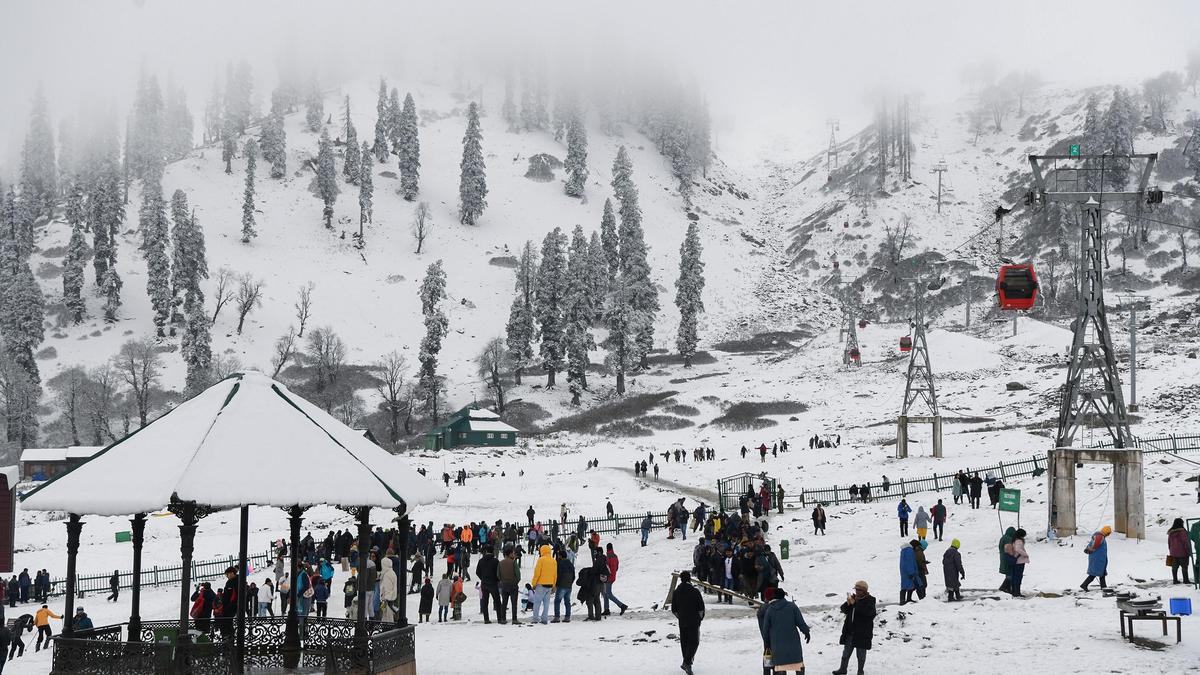
Destinations like Gulmarg, Pahalgam, and Sonamarg are experiencing:
-
Traffic gridlocks during peak days
-
Overburdened hotels and guesthouses
-
Stress on water supply, waste management, and sanitation
-
Environmental degradation in forests, meadows, and river systems
The Chief Secretary acknowledged that these locations are reaching—or have already crossed—their carrying capacity.
The Shift Toward Sustainable Tourism
From Mass Tourism to Managed Growth
Atal Dulloo said the administration is moving away from a numbers-driven tourism model to one focused on:
-
Environmental sustainability
-
Infrastructure resilience
-
Community participation
The aim is not to reduce tourism, but to manage it more intelligently.
This approach aligns with global best practices in hill and eco-sensitive regions, where over-tourism has led to long-term damage and economic instability.
Key Measures Announced by the Government
1. Developing New Tourist Destinations
To ease pressure on established hotspots, the government plans to:
-
Identify and develop lesser-known scenic areas
-
Improve basic access, amenities, and safety at emerging sites
-
Market new destinations alongside established ones
By offering alternatives, officials hope to spread visitor footfall across the region rather than funnel everyone into the same three or four locations.
2. Community Participation at the Core
A central pillar of the strategy is local involvement.
According to the Chief Secretary:
-
Tourism planning will involve local residents
-
Communities will be stakeholders, not spectators
-
Benefits such as jobs and income should flow directly to locals
This is intended to prevent resentment, encourage stewardship of natural resources, and ensure that tourism growth translates into inclusive economic development.
3. Role of the Private Sector
The government is also encouraging:
-
Private investment in eco-friendly infrastructure
-
Responsible hospitality models
-
Services aligned with sustainability goals
Public-private partnerships are expected to play a key role in building facilities that are both economically viable and environmentally responsible.
4. Environmental Safeguards
Officials stressed that:
-
Projects will be carefully evaluated
-
Fragile ecosystems will be protected
-
Unplanned construction will be discouraged
This is particularly significant in a region vulnerable to:
-
Landslides
-
Flooding
-
Climate-induced weather extremes
The emphasis, the administration says, is on planned development rather than reactive expansion.
Comparative Snapshot: Old Model vs New Vision
| Challenge | Current Hotspots | Sustainable Planning Model |
|---|---|---|
| Visitor load | High congestion | Diversified destinations |
| Infrastructure | Overburdened | Phased, eco-friendly |
| Economic benefits | Concentrated | Widely distributed |
| Environmental impact | High stress | Conservation-focused |
| Long-term viability | Fragile | More resilient |
Economic Stakes: Tourism as a Lifeline
Tourism remains one of J&K’s most important economic sectors, supporting:
-
Hotels and homestays
-
Transport operators
-
Artisans, guides, and small traders
Officials acknowledge that over-dependence on a few destinations makes the sector vulnerable to shocks—whether security-related or climate-driven.
Diversification, therefore, is seen not just as an environmental necessity but as an economic risk-management strategy.
Risks and Challenges Ahead
Execution Will Be Key
Policy intent alone will not deliver results. Challenges include:
-
Ensuring new destinations do not replicate old mistakes
-
Preventing unchecked construction once footfall increases
-
Coordinating between departments and local bodies
Without strict monitoring, critics warn that congestion could simply shift locations.
Climate Vulnerability
J&K’s tourism infrastructure remains exposed to:
-
Heavy rainfall
-
Snowfall variability
-
Floods and landslides
Sustainable planning must account for these risks, or investments could be washed away—literally and financially.
Community Buy-In Is Non-Negotiable
While community participation is a stated goal, its success depends on:
-
Genuine consultation
-
Fair distribution of benefits
-
Respect for local concerns
Top-down planning without local trust, observers note, could undermine the entire initiative.
A Broader Policy Signal
The Chief Secretary’s remarks indicate a shift in governance philosophy—from rapid expansion to measured, sustainable growth.
In a region where natural beauty is both an asset and a vulnerability, the government appears to be acknowledging that tourism cannot thrive by exhausting the very landscapes it depends on.
Conclusion: Balancing Growth With Preservation
Jammu and Kashmir’s plan to decongest tourist hotspots through sustainable planning reflects a critical reassessment of how tourism should evolve in a fragile Himalayan region.
By:
-
Reducing pressure on Gulmarg, Pahalgam, and Sonamarg
-
Promoting new destinations
-
Involving local communities
-
Prioritising environmental safeguards
the administration hopes to build a tourism model that is resilient, inclusive, and future-proof.
Whether this vision translates into lasting change will depend on execution—but the shift in narrative itself marks an important step toward responsible tourism governance in Jammu and Kashmir.