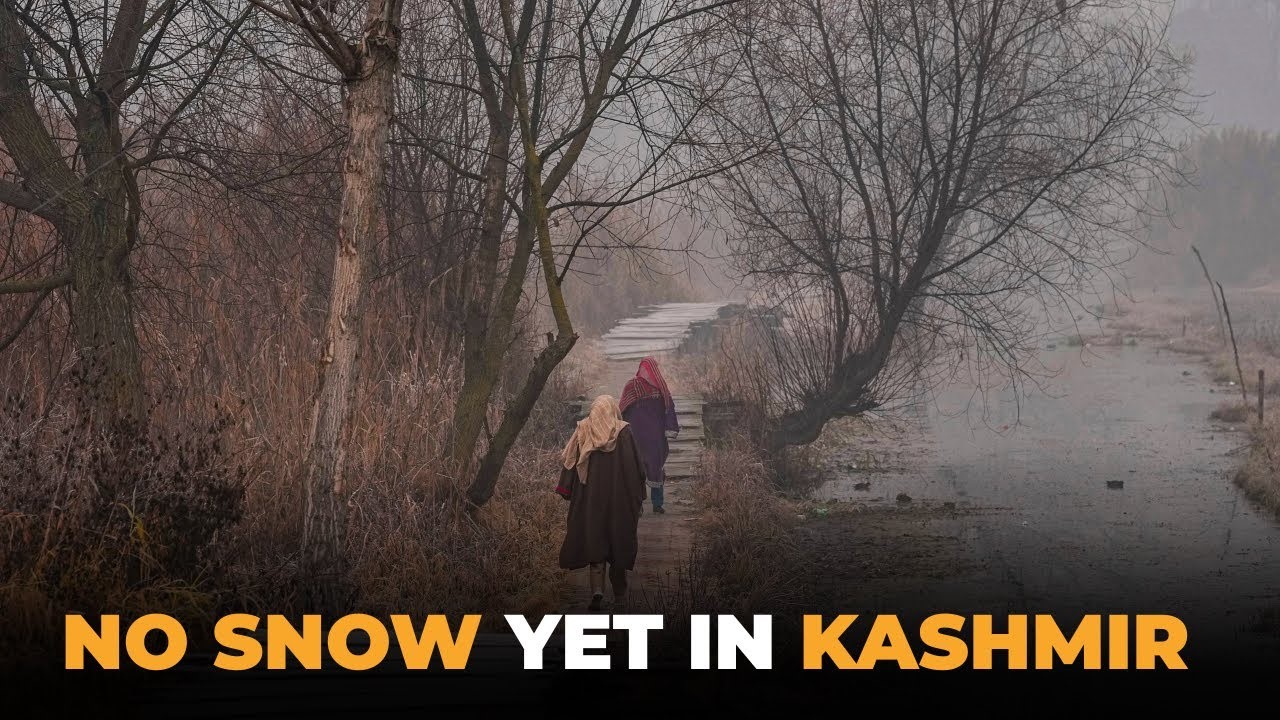
Kashmir Records 40% Rainfall Deficit as Dry Winter Raises Alarm
By: Javid Amin | 08 January 2026
Kashmir is staring at a worrying winter scenario as meteorological data confirms a nearly 40% rainfall deficit so far this season, raising fears of a prolonged dry spell with far-reaching consequences for water resources, agriculture, hydropower, and tourism.
The shortfall comes during Chillai Kalan, the Valley’s harshest 40-day winter phase, traditionally marked by widespread snowfall and steady winter precipitation. This year, however, the plains have remained largely dry, even as cold waves intensify under clear skies.
Dry Chillai Kalan Raises Red Flags
Chillai Kalan, which began on December 21, is critical for Kashmir’s ecological balance. Snow and winter rain during this period act as natural water storage, replenishing rivers, lakes, springs, and groundwater reserves that sustain the region through spring and summer.
This winter, however:
-
Little to no snowfall has occurred in the plains
-
Precipitation has been largely confined to higher reaches, and that too in limited amounts
-
The cumulative rainfall deficit has now reached around 40%
Weather experts warn that the absence of sustained winter precipitation could have delayed but serious impacts.
Clear Skies, Sharper Cold
Ironically, the dry spell has intensified cold conditions across the Valley. With minimal cloud cover, heat escapes rapidly after sunset, leading to sharp temperature drops at night.
Meteorologists explain that such conditions often result in:
-
Colder nights despite the lack of snow
-
Increased frost formation
-
Higher stress on water supply systems due to freezing pipes
Several parts of Kashmir have already recorded some of the coldest nights of the season, even as snowfall remains scarce.
Regional Snapshot: Uneven Winter Across Kashmir
| Region | Condition | Impact |
|---|---|---|
| Srinagar | Dry, persistent sub-zero nights | Water scarcity concerns, frozen taps |
| Gulmarg | Thin snow cover | Ski tourism affected |
| Pahalgam | Freezing nights, little snow | Agricultural uncertainty |
| Kupwara | Clear skies, severe cold | Reduced river inflow |
| Sonamarg | Severe cold, light snowfall | Tourism slowdown |
The uneven distribution of precipitation highlights a growing pattern where higher altitudes receive some snow, while lower regions remain dry.
Water Security Under Growing Threat
Hydrologists caution that winter precipitation deficits directly affect spring and summer water availability. Snowfall and rainfall during Chillai Kalan are essential for:
-
Sustaining river flows
-
Recharging groundwater aquifers
-
Maintaining springs that supply drinking water
A prolonged dry winter could lead to:
-
Reduced river discharge in summer
-
Drying of traditional springs
-
Greater dependence on groundwater extraction
These impacts often emerge months after winter, making the crisis harder to anticipate and manage.
Agriculture Faces an Uncertain Spring
Farmers across Kashmir are increasingly concerned about the lack of winter moisture. Snow and rain during winter:
-
Improve soil moisture
-
Protect crops from extreme cold
-
Support healthy flowering in orchards
With the current deficit, experts warn of:
-
Reduced irrigation water for spring crops
-
Stress on apple, almond, walnut, and cherry orchards
-
Potential decline in yields if dry conditions persist
Agriculture remains highly sensitive to winter weather, and even a single dry season can have lasting economic effects.
Tourism Takes a Hit Amid Thin Snow Cover
Winter tourism, a key economic driver for Kashmir, is also under pressure.
Key Concerns
-
Gulmarg’s ski slopes require consistent snow cover
-
Thin snowfall limits skiing and snow sports
-
Uncertainty discourages long-term bookings
While higher reaches have seen light snow, tourism stakeholders say reliable snowfall, not just cold weather, determines the success of the winter season.
Hydropower Projects Feel the Strain
Kashmir’s hydropower sector depends on predictable snow accumulation and melt cycles. Reduced winter precipitation can lead to:
-
Lower water inflows into reservoirs
-
Reduced power generation during peak demand
-
Greater reliance on external power supply
Experts warn that repeated dry winters could undermine the region’s energy security.
Health Risks Rise During Snowless Cold Waves
Medical professionals note that cold waves without snow cover can pose heightened risks:
-
Increased frostbite cases
-
Higher incidence of respiratory infections
-
Greater cardiovascular stress among the elderly
Dry air combined with extreme cold worsens breathing conditions and raises overall health vulnerability.
Climate Signals: A Pattern, Not an Anomaly
Climate observers point out that Kashmir’s dry winter fits into a broader regional trend:
-
Winters becoming more erratic
-
Precipitation shifting from snow to rain
-
Longer dry spells punctuated by short intense events
The Himalayan region is warming faster than the global average, altering long-established weather patterns and increasing the likelihood of rainfall and snow deficits.
Weather Outlook: Limited Relief in Sight
Meteorological forecasts suggest:
-
Stable, dry weather in the near term
-
Possibility of light snowfall in higher reaches later this month
-
No strong weather system expected to bring widespread precipitation to the plains
If current conditions persist, this winter could rank among the driest in recent memory.
Editorial Takeaway: A Quiet Crisis Unfolding
Kashmir’s 40% rainfall deficit is more than a seasonal statistic — it is an early warning. What appears today as a dry winter could translate into water stress, agricultural losses, energy shortages, and economic strain in the months ahead.
As Chillai Kalan progresses, the Valley waits anxiously for snow and rain. Whether relief arrives in time may determine not just how this winter is remembered, but how prepared Kashmir is for a changing climate.


