Kashmir on the Edge: Five High-Risk Glacial Lakes Identified for Potential Outburst Floods, Scientists Warn of Climate Disaster
By: Javid Amin | 12 January 2026
A Silent Threat Growing in the Mountains
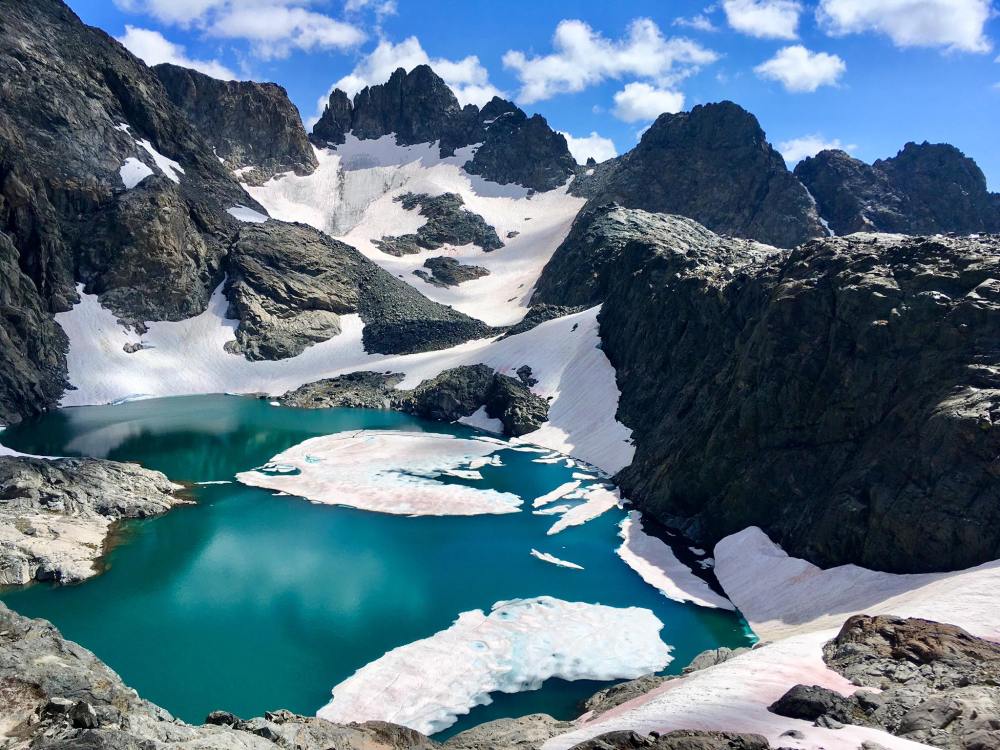
High above Kashmir’s valleys, where snow-covered peaks define the region’s identity and glaciers feed rivers sustaining millions, a silent and accelerating threat is taking shape. A new scientific study by Kashmiri and national researchers has identified five glacial lakes in the Kashmir Himalaya as extremely vulnerable to Glacial Lake Outburst Floods (GLOFs) — sudden, violent releases of water capable of triggering catastrophic downstream destruction.
The research, conducted by scientists from the University of Kashmir, IISER Pune, and NIT Srinagar, and accepted for publication in the Journal of Glaciology (Cambridge University Press), represents one of the most comprehensive assessments yet of glacial lake instability in the region.
The warning is clear and urgent: without immediate monitoring, engineering interventions, and community preparedness, Kashmir could face climate-driven disasters comparable to — or worse than — past Himalayan flood catastrophes.
Understanding GLOFs: Why Glacial Lakes Are Dangerous
A Glacial Lake Outburst Flood (GLOF) occurs when a lake formed by melting glaciers suddenly breaches its natural dam — usually composed of loose rock, ice, and debris known as a moraine. When this barrier collapses, millions of cubic metres of water can rush downstream within minutes or hours.
Unlike monsoon floods, GLOFs offer little to no warning. Their force is amplified by steep Himalayan terrain, turning water into walls of destruction capable of sweeping away bridges, roads, homes, hydropower facilities, and entire villages.
Across the Himalayas, GLOFs have already caused deadly disasters in Nepal, Bhutan, Uttarakhand, and Ladakh. Scientists now warn that Kashmir is entering the same danger zone.
Key Findings of the New Scientific Study
Five Glacial Lakes Classified as High-Risk
The study identifies five lakes exhibiting critical warning indicators such as rapid expansion, unstable moraine dams, proximity to retreating glaciers, and steep downstream gradients.
Confirmed High-Risk Lakes
1. Bramsar Lake
-
Location: Foot of Bram Shakri Peak, Pir Panchal Range
-
Risk Factors: Weak moraine dam, rapid meltwater accumulation
-
Threat Zone: Downstream valleys with human settlements and infrastructure
2. Chirsar Lake
-
Location: Kashmir Himalaya
-
Risk Factors: Expanding lake volume, fragile debris barriers
-
Threat Zone: Bridges, roads, and hydropower installations
3–5. Three Additional Glacial Lakes
-
Located near major glacier systems including Kolahoi
-
Names not widely publicised due to safety and monitoring concerns
-
Identified as unstable based on satellite imagery, field surveys, and geomorphological modelling
Scientific Leadership and Credibility
The research is led by Dr. Syed Afaq Ahmad and Dr. Inayatullah Rangrez from the University of Kashmir, in collaboration with glaciologists, geomorphologists, and disaster-risk experts from premier national institutions.
Its acceptance by the Journal of Glaciology, one of the world’s most respected cryosphere journals, underscores the global scientific significance of the findings.
Why These Lakes Are Becoming Increasingly Dangerous
1. Rapid Glacier Retreat
Himalayan glaciers are retreating faster than the global average. In Kashmir, rising temperatures are shrinking ice masses that once acted as natural regulators of meltwater.
As glaciers thin and recede:
-
Meltwater accumulates faster
-
Lakes expand rapidly
-
Pressure on moraine dams increases
2. Fragile Moraine Dams
Unlike concrete dams, moraine dams are:
-
Loose piles of rock, ice, sand, and debris
-
Structurally weak
-
Highly sensitive to earthquakes, heavy rainfall, ice avalanches, or sudden inflows
A small trigger can cause complete dam collapse.
3. Chain-Reaction Flood Potential
A GLOF does not stop at the lake’s edge. Scientists warn of:
-
Cascading floods along river channels
-
Secondary landslides
-
Sediment-choked rivers that intensify downstream flooding
Downstream Impacts: What Is at Risk
Human Lives
Thousands of families live along river valleys fed by glacier-origin rivers. Many settlements lack:
-
Early warning systems
-
Evacuation routes
-
Disaster awareness training
Critical Infrastructure
-
Hydropower plants
-
Bridges and highways
-
Transmission lines
-
Drinking water systems
A single GLOF could erase years of infrastructure investment within hours.
Agriculture and Livelihoods
Floodwaters can:
-
Destroy orchards and farmlands
-
Deposit debris and boulders
-
Render soil unusable for years
Tourism Economy
Popular trekking routes and tourist hubs near Kolahoi and Pir Panchal lie directly in potential flood paths.
Risk & Impact Overview
| Lake | Location | Primary Risk | Potential Impact |
|---|---|---|---|
| Bramsar | Pir Panchal | Weak moraine dam | Valley floods, village damage |
| Chirsar | Kashmir Himalaya | Rapid expansion | Bridges, hydropower at risk |
| Unnamed 1 | Kolahoi region | Glacier retreat | Tourist route disruption |
| Unnamed 2 | High-altitude basin | Fragile rock walls | Agricultural flooding |
| Unnamed 3 | Remote ridge | Lake expansion | Downstream settlements |
Climate Change: The Root Cause
Above-Average Regional Warming
The Kashmir Himalaya is warming faster than the global mean, amplifying glacier melt.
Extreme Weather Events
-
Cloudbursts
-
Intense rainfall
-
Heatwaves at high altitude
These events place sudden pressure on already unstable glacial lakes.
Loss of Natural Buffers
Deforestation and unplanned development weaken watersheds that once absorbed flood impacts.
Mitigation Strategies: What Must Be Done Now
1. Early Warning Systems
-
Automated water-level sensors
-
Seismic and moraine-stability monitors
-
SMS and siren alerts for downstream villages
2. Engineering Interventions
-
Controlled drainage channels
-
Lake-level lowering through siphoning
-
Moraine reinforcement using geo-engineering techniques
3. Continuous Scientific Monitoring
-
High-resolution satellite imagery
-
Drone-based surveys
-
Annual field inspections
4. Community Preparedness
-
Evacuation drills
-
Flood-risk education
-
Safe-zone mapping
5. Policy and Governance
-
Dedicated GLOF monitoring authority
-
Regulation of construction in flood paths
-
Integration into disaster management plans
6. Climate Adaptation
-
Reforestation
-
Sustainable tourism policies
-
Watershed restoration
Lessons from Past Disasters
Experts repeatedly reference the Chamoli disaster (Uttarakhand, 2021) as a stark reminder of what unchecked glacial hazards can do. Kashmir’s terrain and infrastructure vulnerability make proactive intervention not optional — but essential.
A Climate-Security Issue, Not Just an Environmental One
GLOFs are no longer theoretical risks. They represent:
-
A humanitarian threat
-
An economic liability
-
A national security concern in a sensitive border region
Ignoring early warnings today could lead to irreversible consequences tomorrow.
Conclusion: A Narrow Window to Act
The new scientific study is not a prediction — it is a warning grounded in data, field evidence, and climate science. Kashmir stands at a crossroads: act decisively now or face disasters that could reshape its landscape, economy, and future.
The mountains are speaking. The question is whether policymakers, planners, and institutions are listening — and acting — in time.