Press Freedom Under Threat in Kashmir: Political Parties Slam Police for Summoning Journalists
By: Javid Amin | 20 January 2026
When Journalism Becomes a Suspect Act
In Jammu and Kashmir, journalism has rarely been a neutral profession. Reporting from the region has long required navigating conflict sensitivities, political scrutiny, and security anxieties. Yet the recent summoning of several journalists by the Cyber Police Station in Srinagar has triggered a political storm precisely because it appears to cross a critical democratic red line: treating routine reporting as a matter of criminal suspicion.
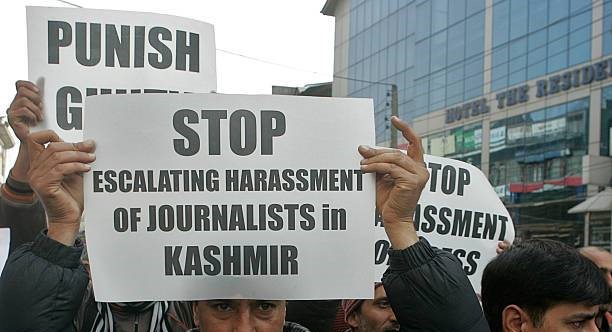
Over the past week, journalists working with national newspapers as well as independent freelancers were summoned for questioning over their reportage on sensitive subjects, including the alleged profiling of mosques and religious leaders. The absence of a formal police explanation, coupled with reports of repeated summons and pressure to sign bonds, has intensified concerns that the move was less about investigation and more about intimidation.
Political parties across the spectrum have responded sharply, warning that such actions threaten press freedom, erode public trust, and deepen the already fragile relationship between the state and the media in Kashmir.
What Exactly Happened: A Timeline of Events
According to accounts shared by journalists and media bodies, the summons began quietly but quickly escalated in scale and intensity.
Summons to the Cyber Police Station
Journalists were asked to appear before the Cyber Police Station in Srinagar, a unit typically associated with online offences, digital surveillance, and cyber-related investigations. The choice of venue itself raised eyebrows within media circles, as the reporting in question had appeared in mainstream print and digital outlets.
Focus on Sensitive Reporting
The questioning reportedly centered on stories related to the profiling of mosques and imams—an issue that sits at the intersection of religion, security, and civil liberties. Such topics are inherently sensitive in Kashmir, but they also fall squarely within the legitimate scope of public-interest journalism.
Repeated Summons and Bonds
One assistant editor from a national daily was reportedly summoned four times. During these appearances, he was allegedly asked to sign a bond—an action widely interpreted by journalists as coercive rather than procedural.
Official Silence
As of January 20–21, 2026, no formal statement or clarification had been issued by the Jammu and Kashmir Police. This silence has only deepened suspicion and speculation, allowing political narratives of intimidation to gain traction.
Political Backlash: Rare Unity Across Party Lines
In a region known for fractured politics, the condemnation of the police action has been unusually broad-based.
Congress: Democracy Needs Questioning
Syed Naseer Hussain, the All India Congress Committee in-charge for Jammu and Kashmir, framed the issue as a fundamental democratic concern. He argued that democracy cannot function if “the basic act of asking questions is treated as defiance.” His statement positioned the summons not as an isolated administrative act, but as a symptom of democratic backsliding.
The Congress’s response reflects a broader national concern within the party about shrinking civic spaces and the increasing use of law enforcement to manage dissent.
People’s Democratic Party: A Stark Moral Indictment
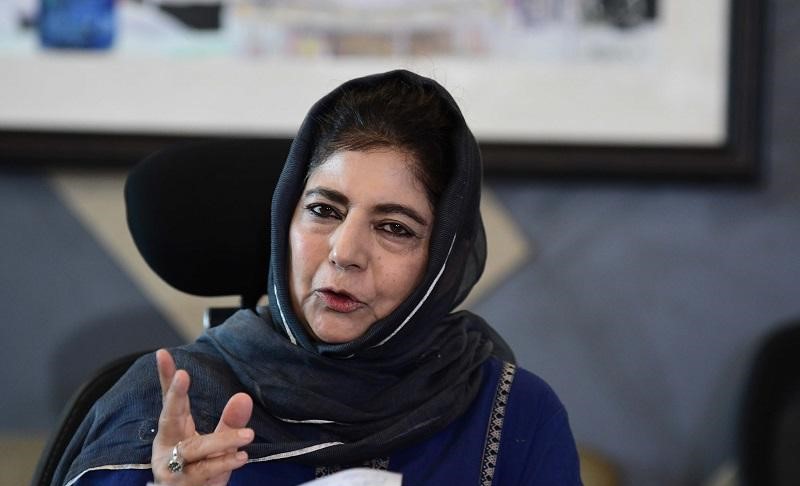
The People’s Democratic Party (PDP), led by former Chief Minister Mehbooba Mufti, adopted a far sharper tone. Iltija Mufti described the police action as “a new low,” accusing authorities of turning Kashmir into “Dante’s hell.” Her remarks suggested that journalists are being threatened precisely because they document and question state actions.
For the PDP, which has often positioned itself as a civil-liberties-focused party, the incident reinforces its long-standing critique of what it sees as authoritarian governance in the region.
Other Mainstream Parties
Several other mainstream political parties in Kashmir echoed these concerns, characterizing the summons as an overreach and a direct challenge to the freedom of the press. While their statements varied in tone, the underlying message was consistent: journalism should not be criminalized.
Why This Matters: Press Freedom in a Conflict Zone
Journalism Under Double Pressure
Journalists in Kashmir operate under uniquely difficult conditions. They face scrutiny not only from state agencies but also from non-state actors and polarized public opinion. In such an environment, even subtle signals of intimidation can have a chilling effect.
Summoning journalists for questioning over published reports sends a message that critical reporting may invite personal risk. This, critics argue, encourages self-censorship—often more effective than outright bans.
From Accountability to Fear
A free press functions as a bridge between the state and society. When that bridge is weakened by fear, accountability suffers. Political leaders warn that actions like these risk transforming journalism from a watchdog into a guarded, hesitant observer.
The Cyber Police Question: Process or Pretext?
The involvement of the Cyber Police Station has raised important questions about legal process.
Cyber units are designed to investigate offences such as misinformation campaigns, hacking, and online fraud. Critics argue that summoning print and field reporters to such units blurs the line between legitimate investigation and institutional overreach.
Without a clear explanation from the police, suspicions persist that cyber laws may be used expansively to monitor and regulate journalistic content.
A Pattern, Not an Exception?
Media organizations point out that this incident fits into a broader pattern of pressure on journalists in Kashmir. Over the years, reporters have faced detentions, travel restrictions, accreditation issues, and prolonged questioning.
While authorities often justify these actions on security grounds, journalists argue that the lack of transparency and due process undermines such claims.
Public Trust and Democratic Legitimacy
Beyond the immediate impact on journalists, the episode carries wider implications for public trust.
When citizens see reporters questioned for doing their jobs, it reinforces perceptions of a shrinking civic space. This, in turn, fuels cynicism about democratic institutions and governance.
Political leaders warn that trust, once eroded, is difficult to rebuild—particularly in a region already marked by historical grievances and skepticism.
Legal and Constitutional Dimensions
India’s Constitution guarantees freedom of speech and expression, including the freedom of the press. While reasonable restrictions exist, they must be clearly defined, proportionate, and transparent.
Legal experts argue that repeated summons without formal charges or explanations risk violating both the spirit and the letter of constitutional protections.
The State–Media Relationship in Kashmir
The relationship between the state and the media in Jammu and Kashmir has always been complex. Security concerns coexist uneasily with democratic norms.
Political parties caution that normalizing extraordinary measures against journalists risks institutionalizing mistrust. Over time, this could weaken governance rather than strengthen it.
Voices from the Ground: Fear and Fatigue
Journalists privately describe a climate of fear and fatigue. Many say they continue reporting out of professional commitment, but with increasing caution.
Some admit to avoiding certain topics altogether, not because they lack news value, but because the personal cost has become too high.
International and National Attention
Although the incident is rooted in local context, press freedom in Kashmir is closely watched nationally and internationally. Episodes like these often find mention in global press freedom assessments.
Political leaders warn that such scrutiny has reputational consequences for democratic institutions.
What Comes Next: The Need for Clarity and Accountability
At the center of the controversy lies a simple demand: transparency. Political parties and media bodies are calling on the police to clarify the legal basis of the summons and to reaffirm their commitment to press freedom.
Without such clarity, mistrust will deepen, and the chilling effect on journalism will persist.
Conclusion: Journalism Is Not a Crime
The summoning of journalists in Srinagar has become more than a procedural dispute—it has emerged as a test case for democratic norms in Jammu and Kashmir.
Political parties argue that treating journalists as suspects for routine reporting undermines democracy itself. In a region where information is already contested, a free and fearless press is not a luxury but a necessity.
In essence, the episode serves as a stark reminder that journalism thrives on freedom, not fear. Whether the authorities choose dialogue over intimidation will shape not only the future of media in Kashmir, but also the credibility of democratic governance in the region.