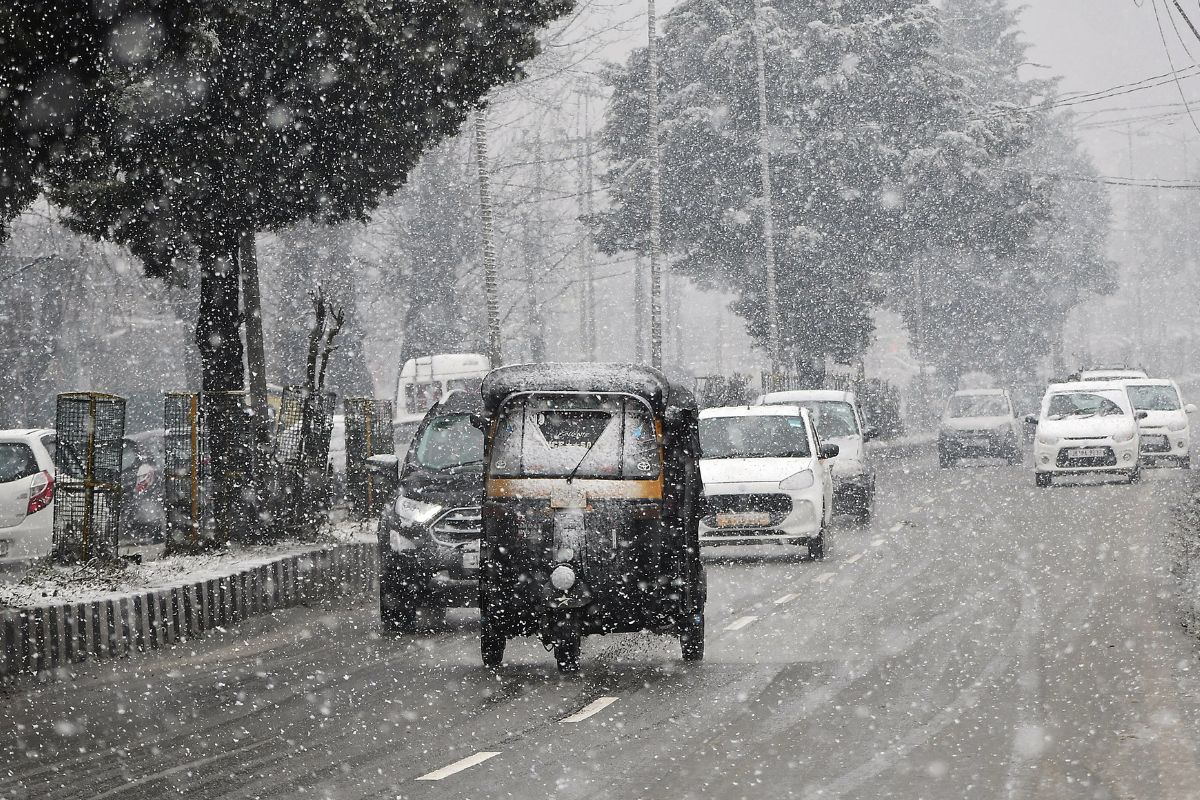
Snowstorm in Kashmir: Widespread Disruption to Travel, Power, Economy and Daily Life
By: Javid Amin | 22 January 2026
Heavy Snowfall Blankets the Valley — Major Travel Corridors Shut, Weather Alerts in Force
An Unusually Powerful Snowstorm Grips Kashmir
Heavy snowfall that began on the evening of January 22, 2026 has evolved rapidly into one of the most disruptive winter weather events seen in the region this year. Large parts of the Kashmir Valley and surrounding high-altitude zones have reported sustained snow accumulation, leading to major disruptions in transportation, essential services, and economic activity. Weather agencies have confirmed that this snowfall is associated with a strong Western Disturbance — an atmospheric phenomenon that typically brings moisture-laden systems across the northwestern Himalayas in winter.
The following is a thorough ground-reality report based on cross-verified information from multiple news outlets, official advisories, meteorological forecasts, and on-the-ground reportage from Kashmir. Each section expands on key impact areas to provide a comprehensive understanding of the situation.
Meteorological Forces Behind the Snowstorm
Kashmir’s weather is shaped by shifting Western Disturbances — low pressure systems originating from the Mediterranean region that travel eastwards and bring snow and rain to the northwest Himalayas. During January 22–23, 2026, a particularly intense Western Disturbance swept across Jammu & Kashmir, resulting in heavy snow in valley areas and very heavy snow at higher altitudes like Gulmarg and Pahalgam.
According to the India Meteorological Department (IMD), this was not a singular isolated event. Forecast models indicated two successive disturbances:
-
First system: Active Jan 22–24 with peak impact on Jan 23 (current disruption).
-
Second system: Expected around Jan 26–27, posing risk of renewed heavy snowfall and travel interruptions.
This linkage between atmospheric dynamics and disruptive snowfall is what amplified the event’s severity beyond normal seasonal expectations.
Snowfall Intensity and Ground Conditions
Across the Kashmir Valley, snow depths varied with altitude, but reports indicate significant accumulations:
-
Plains of Srinagar: Moderate snow accumulation.
-
Higher reaches (Gulmarg & Pahalgam): Snowfall reaching over a foot in many areas.
-
Gurez and other high alpine regions: Snow depths measured over a foot to two feet in places.
The fresh white cover transformed the landscape but also brought connectivity to a standstill, particularly where snow packs exceeded clearance capacity and impassable road and rail conditions developed overnight.
Multiple independent weather dispatches confirm this is among the heaviest snow events of the season so far — breaking an extended dry spell in many districts while simultaneously stressing transport and infrastructure.
Air Travel Chaos: Flights Cancelled and Delayed
Major Disruptions at Srinagar International Airport
One of the earliest and most visible impacts was on air travel. The heavy snowfall forced multiple flights to be delayed or cancelled at Srinagar Airport, and airlines issued urgent advisories urging passengers to verify schedules before departure.
Confirmed airline advisories included:
-
IndiGo: Announced temporary suspension of take-offs and landings due to poor visibility and runway snow accumulation.
-
SpiceJet: Warned of probable impact on all departures and arrivals, advising passengers to track flight status continuously.
Additional reports suggested at least 17 flights were cancelled as of Friday morning, including services to major cities such as Delhi and Mumbai.
Operational and Passenger Impacts
Passengers reported long waits in terminals, and airlines were completing boarding ahead of potential clearance to ensure readiness once conditions improved. This reflects broader contingency operations at the airport, balancing safety with service continuity.
Airport clearing teams were working around the clock to remove snow from runways and improve visibility conditions, but ongoing snowfall and weather forecasts indicated operational normalisation could take longer than initially expected.
Road Network Breakdown: NH-44 and Beyond
Jammu–Srinagar National Highway Closed
The Jammu–Srinagar National Highway (NH-44) — the key link between the Valley and the Indian mainland — was closed in both directions following heavy snowfall and landslides at several points, including near tunnels and high passes.
Traffic authorities halted vehicle movement as a precautionary safety measure due to slippery surfaces, low visibility, and snow build-up.
Secondary Road Blockages
Additional routes such as the Mughal Road, Sinthan Top road and Srinagar–Sonamarg stretches were also blocked by snow accumulation, effectively stranding local commuters and halting freight movement through alternative routes.
Clearance teams were reported to be operational, but weather conditions continued to challenge progress, indicating that reopening these critical transport corridors would be gradual and highly dependent on shifting forecast conditions.
Rail Services Suspended
The Banihal–Baramulla rail corridor, a vital passenger and freight railway link, was also impacted. Snow accumulation on tracks and slippery conditions prompted authorities to suspend rail services temporarily, compounding the overall transport disruption in the region.
Public Transport and Local Mobility
With major highways closed and flights disrupted, local public transport systems also fell into disarray. Bus and taxi operators suspended services across many parts of the Valley, especially in rural and high-altitude sectors where snow removal infrastructure is limited.
While official figures on the number of suspended services have not yet been released, on-ground reporting indicates widespread cancellations and ‚no-service‘ scenarios in many districts — particularly in south and central Kashmir.
Power and Utility Interruptions
Heavy snow has reportedly damaged parts of the power infrastructure in several districts. Snow-laden lines and broken poles have contributed to worsening power outages, adding another layer of hardship to residents already coping with freezing temperatures.
Details remain fluid, but multiple local utility sources have described outage reports rising in tandem with ongoing snowfall, affirming the direct link between weather extremes and utility infrastructure stress.
Tourism: Scenic Beauty and Sudden Strain
Boost for Winter-Tourism Destinations
Snowfall brought fresh charm to iconic winter destinations such as Gulmarg, Pahalgam and Sonamarg, with deep snow cover that enhances ski slopes and winter vistas. This ornamental side of snowfall is vital for tourism — a major economic driver for Kashmir — especially in peak winter season.
Urgent Challenges for Tourists
However, scenic appeal came with significant accessibility challenges. Blocked roads, cancelled flights, and halted transport services meant many tourists faced:
-
Stranded stays at hotels and transit points.
-
Difficulty accessing key attractions.
-
Higher local costs due to supply bottlenecks.
Seasonal Comparison and Trends
While Kashmir traditionally attracts snow enthusiasts from December to February, this spell stands out due to its intensity and timing — breaking long dry spells in many districts and offering fresh snow cover across plains and highlands alike.
Economic and Social Impacts
Supply Chain and Logistics
Blocked national highways and suspended rail services are delaying delivery of essential goods — including food supplies, medicines, fuel, and construction inputs — to Valley districts. Merchant associations and logistical firms have warned of increasing costs and shortages if closures persist.
Local Business Disruptions
Retailers, hospitality operators and local artisans are seeing reduced footfall and lower sales — especially where transport uncertainty has prevented tourists from arriving or returning on schedule.
Agriculture and Livestock Stress
Cold and snowy conditions add hardship for farmers and herders. Sheltering livestock and preserving fodder becomes more challenging when access roads are non-operational and electricity supply is unstable.
Health and Safety Concerns
With temperatures well below freezing and lingering snow on ground surfaces:
-
Hypothermia and frostbite risks rise, especially among vulnerable populations like the elderly or those without reliable shelter.
-
Road accidents increase, particularly on untreated and icy stretches.
-
Emergency response access is hampered by blocked roads.
Local health authorities have issued advisories on cold-weather precautions and urged residents to stay informed via official channels.
Official Advisories and Citizen Guidance
Authorities at multiple levels (IMD, local district administrations, police, airport authorities) have consistently emphasized:
Travel Guidance
-
Re-confirm flight and train schedules with carriers and operators.
-
Avoid non-essential travel until closures are lifted and roads are cleared.
Safety and Preparedness
-
Stock up on essentials (food, medicine, heating coal/wood).
-
Keep emergency numbers and local updates handy.
-
Monitor IMD weather advisories and local district alerts.
What’s Next: Forecast and Expectations
Based on current meteorological analysis, Kashmir is not yet out of the woods. Additional snowfall is predicted with another Western Disturbance approaching around late January 26–27, suggesting renewed disruptions are possible.
Mobility, utilities and daily life may continue to feel the impacts throughout the forecast period unless there is a longer weather break.
Conclusion: A Winter of Dual Reality
The January 2026 Kashmir snowfall exemplifies a dual reality: breathtaking winter beauty and severe societal disruption happening simultaneously. While snowfall enriches tourism potential and water reservoirs, its immediate economic and human costs — from travel paralysis to infrastructure strain — are profound.
Adapting to such weather extremities requires coordinated emergency response, reliable forecasting, and resilient infrastructure — even as residents and visitors embrace the snow-draped landscape.

