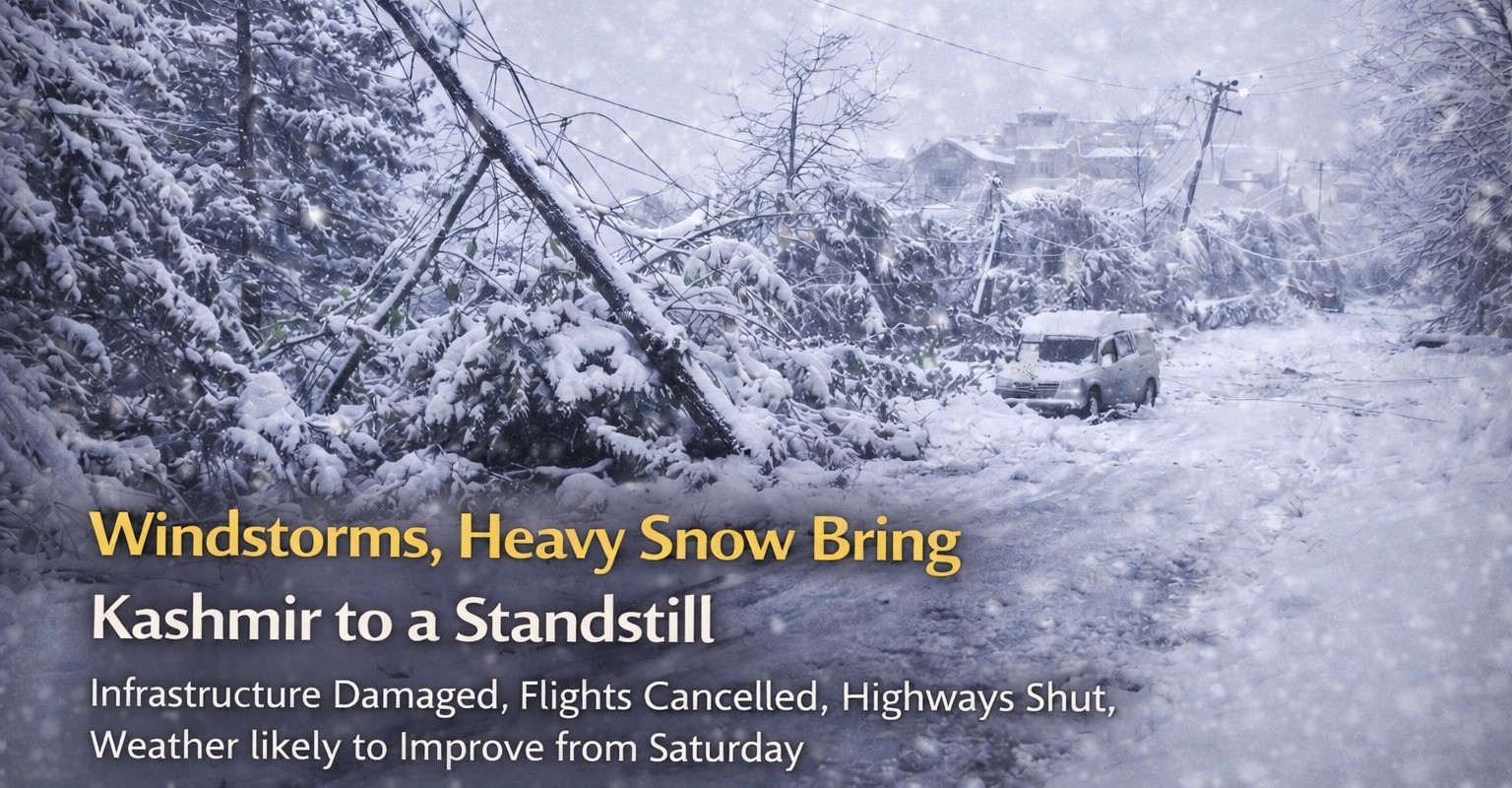
Kashmir Weather Crisis Deepens: Snowstorms, Gusty Winds, Flight Cancellations and Highway Closures Paralyse the Valley
By: Javid Amin | 27 January 2026
50 Flights Cancelled at Srinagar Airport as Chillai Kalan Tightens Grip; Nearly 100 Houses Damaged, Power Supply Disrupted, NH-44 Shut for Days
A Valley Under Siege by Weather
Kashmir is once again battling the full force of winter as heavy snowfall, powerful winds, and repeated Western Disturbances have combined to disrupt air travel, road connectivity, power supply, housing, tourism, and daily life across the Valley.
From flight cancellations at Srinagar Airport to nearly 100 houses damaged in Bandipora, and from villages battered by gale-force winds to the Srinagar–Jammu National Highway remaining shut for the third consecutive day, the weather crisis has laid bare Kashmir’s vulnerability during peak winter.
What makes this episode particularly significant is its timing: it has unfolded during the final stretch of Chillai Kalan, the harshest 40-day winter phase, when infrastructure, livelihoods, and households are already under immense strain.
50 Flights Cancelled at Srinagar Airport as Snowfall Grounds Air Traffic
On January 27, 2026, operations at Srinagar International Airport were severely disrupted, with 50 scheduled flights cancelled, including both arrivals and departures.
What Caused the Disruptions
-
Continuous snowfall reduced runway visibility
-
Snow accumulation made safe landing and take-off impossible
-
Airport authorities enforced safety protocols, grounding flights until conditions improved
Airlines Affected
Major domestic carriers operating to and from Srinagar were impacted, including:
-
IndiGo
-
Air India
-
Vistara
-
Go First
Hundreds of passengers were left stranded, many of them tourists, students, and business travellers, while airlines advised rebooking or refunds and waived rescheduling charges.
Air Connectivity vs Reality: Why Flying Isn’t Always a Guarantee
Although air travel is often promoted as the most reliable winter option for Kashmir, this episode highlights a crucial reality:
even flights are vulnerable during intense snowfall, particularly when visibility drops sharply and runway clearance becomes difficult.
Repeated cancellations over consecutive days have reinforced the need for:
-
Flexible travel planning
-
Real-time flight monitoring
-
Improved winter aviation infrastructure
Srinagar–Jammu National Highway Shut for Third Day
The 270-kilometre Srinagar–Jammu National Highway (NH-44) — Kashmir’s lifeline to the rest of India — remained closed for the third consecutive day, further isolating the Valley.
Ground Situation
-
Heavy snowfall near Navyug Tunnel
-
Landslides and slippery conditions in Ramban and Kulgam
-
Hundreds of trucks and passenger vehicles stranded at:
-
Qazigund
-
Banihal
-
Ramban
-
Udhampur
-
Despite continuous efforts by BRO and traffic police, fresh snowfall has slowed restoration.
Rail and Alternate Routes Also Hit
-
Banihal–Baramulla rail service remains suspended
-
Mughal Road, Sinthan Top, and Srinagar–Sonamarg–Gumri routes are also closed
This effectively leaves the Valley dependent on intermittent air connectivity, which itself has been unreliable due to weather.
Nearly 100 Houses Damaged in Bandipora Snowstorm
One of the most severe impacts was reported from Bandipora district, where a powerful snowstorm combined with gusty winds damaged nearly 100 houses and structures.
Worst-Hit Areas
-
Gurez
-
Tulail
-
Abdullan village
-
Sumbal
Nature of Damage
-
Tin rooftops blown off
-
Boundary and residential walls collapsed
-
Ancillary structures partially destroyed
Fortunately, no casualties were reported, but the material damage has pushed many families into distress at the peak of winter.
Villages Ravaged by Gusty Winds Across Central & North Kashmir
Earlier, on January 22–23, strong winds linked to a Western Disturbance swept across parts of Baramulla, Kupwara, Budgam, and Bandipora.
Affected Villages
-
Gulab Daji
-
Bernar
-
Malwah
-
Obera
-
Kharpora
Wind speeds of 40–60 km/h, unusual for January, caused:
-
Roofs to be blown off
-
Walls to collapse
-
Trees to uproot
-
Panic-driven evacuations as families rushed outdoors
Power Crisis Deepens as Transmission Lines Snap
The weather has worsened Kashmir’s already fragile power situation.
Current Challenges
-
Transmission lines damaged by snow and falling trees
-
Widespread outages in rural and semi-urban areas
-
Increased dependence on heating appliances amid sub-zero temperatures
For many households, prolonged power cuts during Chillai Kalan mean:
-
Loss of heating
-
Water supply disruptions
-
Increased health risks for elderly and children
Tourism: Scenic Beauty Meets Harsh Reality
Snowfall has transformed Gulmarg, Pahalgam, Sonamarg, and other destinations into winter postcards, drawing tourists eager for snow experiences.
However, access restrictions tell a different story:
-
Roads blocked intermittently
-
Tourists stranded in resorts
-
Itineraries disrupted due to flight and highway closures
Tourism operators are now advising flexible bookings and buffer days during winter travel.
IMD Forecast: Another 2-Day Wet Spell Ahead
Even as overnight temperatures showed a slight rise, the India Meteorological Department (IMD) has forecast another 2-day wet spell from January 26 onward.
Temperature Snapshot
-
Srinagar: -1.6°C
-
Qazigund: -3.1°C
-
Kupwara: -3.5°C
-
Pahalgam: -6.2°C
-
Gulmarg: -10.2°C
Despite marginal improvement, temperatures remain below freezing across the Valley.
Chillai Kalan: Why the Impact Feels So Severe
Kashmir is nearing the end of Chillai Kalan, the most intense winter phase.
Why Chillai Kalan Amplifies Damage
-
Frozen ground weakens structures
-
Heavy snow loads strain roofs
-
Power demand peaks amid supply disruptions
-
Roads become highly vulnerable to landslides and black ice
With 35 of the 40 days completed, the Valley is experiencing the cumulative effect of prolonged cold, making every weather event more destructive.
Avalanche Risk Looms Large
Authorities have issued avalanche warnings for higher reaches, particularly:
-
Gurez
-
Tulail
-
Kupwara
-
Upper Kulgam
Heavy snow accumulation combined with wind loading significantly raises risk levels.
Economic and Social Impact
Households
-
Repair costs for damaged homes
-
Loss of income for daily wage earners
-
Increased spending on heating and essentials
Trade & Supplies
-
Delayed movement of essential goods
-
Stranded freight vehicles
-
Rising prices in local markets
Mental Health
-
Anxiety among families forced to evacuate
-
Stress due to prolonged isolation and outages
Administrative Response and Relief Measures
-
District teams deployed for damage assessment
-
Relief and shelter arranged for stranded travellers
-
Continuous monitoring of avalanche-prone zones
-
Snow clearance operations ongoing on priority routes
However, officials acknowledge that weather windows remain narrow, limiting the pace of restoration.
What Residents and Travellers Should Do
Advisory
-
Avoid non-essential travel
-
Check flight status before heading to airport
-
Secure rooftops and loose structures
-
Keep emergency supplies ready
-
Follow official weather and traffic updates only
A Bigger Picture: Weather Volatility on the Rise
This winter followed months of unusually dry conditions, making the sudden shift to intense snowstorms even more disruptive. Experts point to increasing weather volatility, with longer dry spells punctuated by short, high-impact events.
Conclusion: Winter’s Grip Remains Firm
From cancelled flights and blocked highways to damaged homes and power outages, Kashmir’s current weather crisis is a stark reminder of how fragile connectivity and livelihoods remain during winter.
While snowfall brings beauty and tourism potential, the human and economic cost during Chillai Kalan is heavy. With more wet weather forecast, preparedness, patience, and accurate information remain the Valley’s strongest tools.
