Tradition Interrupted, Voices Silenced
By: Javid Amin | 02 January 2026
On the first Friday of 2026, the historic Jama Masjid in Srinagar—a central site of religious and cultural life in Kashmir—once again witnessed a symbolic absence. Mirwaiz Umar Farooq, the Valley’s chief cleric and a long-standing advocate for dialogue on the Kashmir issue, was placed under house arrest and prevented from delivering the Friday sermon, a practice that has become increasingly common over recent years.
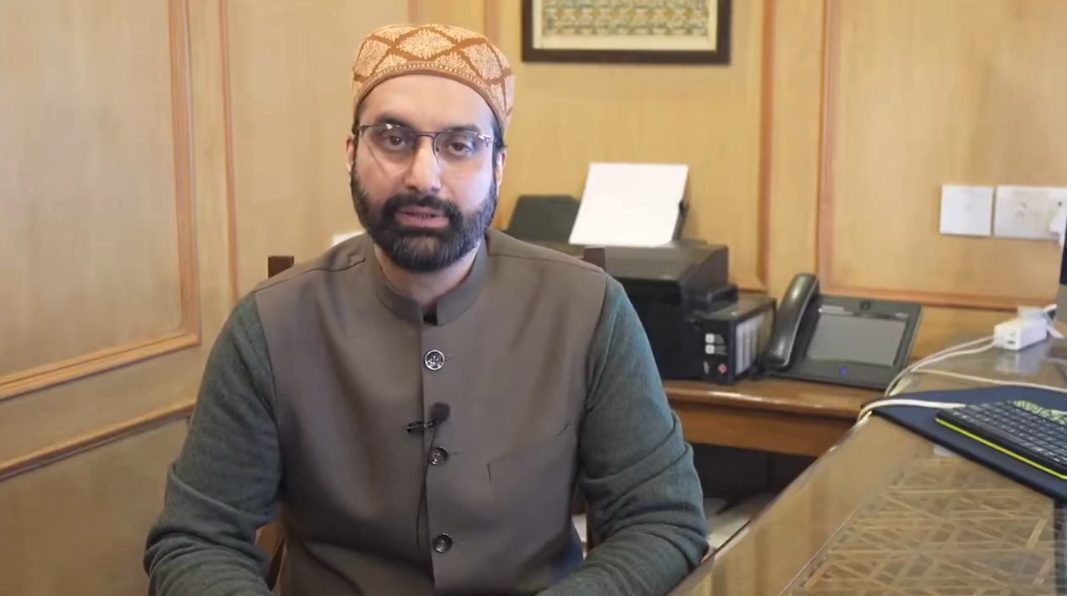
The cleric instead addressed followers through an online sermon, underscoring a deepening “trust deficit” between Kashmiris and the state and renewing his call for substantive dialogue. This incident is emblematic not only of restrictions on a religious leader but also of broader political and social tensions that continue to define life in Jammu and Kashmir.
Who Is Mirwaiz Umar Farooq? Custodian of Faith and Voice of Kashmir
Religious Role at Jama Masjid
Mirwaiz Umar Farooq occupies a unique position in Kashmir: as chief cleric of the Jama Masjid in Srinagar and as a key religious figure for thousands of worshippers, especially on Fridays—the central day for communal prayer in Islam. His sermons traditionally blend religious guidance with commentary on social and political issues.
Political Background and Influence
Beyond his religious role, Mirwaiz has a long history of political engagement. He previously served as chairman of the All Parties Hurriyat Conference (APHC)—a coalition of political groups advocating, in various ways, for Kashmiri autonomy and dialogue with New Delhi. While he recently removed that title from his social media profile under pressure from authorities, he insists this does not change his beliefs or commitments.
House Arrest on First Friday of 2026: What Happened
Prevented from Jama Masjid
On January 2, 2026, Mirwaiz was confined to his residence in the Nageen area of Srinagar by security authorities, barred from leaving to lead the Friday prayers at Jama Masjid. Instead of addressing congregants in person, he recorded a message on social media describing his confinement and the situation in the region.
He explained that he was addressing followers online because, once again, he was “put under arrest” and unable to take his traditional place at the pulpit.
Recurring Pattern of Restrictions
This most recent house arrest continues a pattern in which Mirwaiz has frequently been confined at home on Fridays, preventing his public engagement. As he noted in his message, he was placed under house arrest for 14 Fridays in the previous year alone, a situation he described as “deeply suffocating” for himself and for Kashmiri society, which he says feels increasingly “voiceless.”
Key Themes of the Online Sermon
In his video message and social media statements, Mirwaiz highlighted several key concerns:
1. Deepening Trust Deficit
He argued that despite political shifts since the abrogation of Article 370 in 2019, which changed Jammu and Kashmir’s constitutional status, the conflict remains unresolved. He insisted that dialogue “finds no takers”, suggesting a widening gap between people in Kashmir and the authorities in New Delhi.
2. Enforced Silence and Curtailment of Expression
Mirwaiz lamented that dissenting views are increasingly criminalised or labelled “anti-national”, limiting the space for public discourse and reducing access to media platforms, press interactions, and even movement without official permission.
3. Religious and Political Expression Interlinked
His inability to access Jama Masjid—beyond being a restriction on a cleric—is seen by many as a curtailment of religious freedom and an intrusion on a community’s right to hear spiritual guidance. Jama Masjid has long served as both a spiritual and a social forum for collective reflection and discussion on local issues.
Why It Matters: Beyond a Religious Appointment
Religious Freedom and Political Expression
In regions marked by political tension, religious spaces often serve dual roles: places of worship and forums for public dialogue. Barriers to access or expression at such sites raise questions about both religious freedom and political space.
Critics argue that preventing Mirwaiz from accessing Jama Masjid interferes with the community’s religious life and sends a message of restricted civic participation. Local managing bodies like the Anjuman Auqaf Jama Masjid have previously condemned such moves as interference in religious affairs.
Trust Deficit and Public Sentiment
Mirwaiz’s emphasis on a trust deficit reflects broader public sentiments in parts of the Valley. For many Kashmiris, restrictions on political and religious figures contribute to a sense of alienation and loss of agency. The perception that voices critical of official policies are suppressed can deepen societal divisions and fuel long-standing grievances.
Symbolic Impact of a Silenced Pulpit
The pulpit of Jama Masjid is not merely a physical platform; it is a cultural and historical symbol. Its enforced silence week after week signals more than an isolated event—it encapsulates an ongoing cycle of restriction experienced by many in the region.
The Wider Kashmir Context: Conflict, Change, and Continued Uncertainty
Despite major political shifts, including the restructuring of Jammu and Kashmir’s governance in 2019, Kashmir remains an unresolved flashpoint. Mirwaiz’s remarks referenced incidents throughout 2025—including security incidents, communal anxieties, and cross-border tensions—as indicators of a region still grappling with deep sociopolitical fault lines.
He made clear that while wars might be paused, he believes they are not fully resolved, and meaningful dialogue remains elusive.
Responses and Reactions
Local and Community Voices
Local Muslim worshippers and religious bodies have often expressed disappointment and pain when Mirwaiz is barred from Jama Masjid. For many, his sermon is not just religious instruction but a connection to community identity and historical continuity.
Critics of Restrictions
Supporters of greater civic space argue that frequent house arrests and curbs on public appearances undermine confidence in governance and deepen disillusionment among Kashmiris who see limited avenues for expression.
Government Position
Authorities have, at various times, defended public order measures and restrictions by citing security concerns—a narrative common in areas facing long-term conflict and unrest. Official statements on individual house arrests are often limited, with emphasis placed instead on broader law-and-order considerations.
Looking Ahead: Dialogue, Trust, and the Path Forward
Mirwaiz’s online appeal for renewed dialogue and an end to enforced silence reflects the aspirations of many who seek a peaceful resolution to longstanding tensions in Kashmir. Whether this message resonates with policymakers or finds ear space within official channels remains an open question.
What is clear from this episode is that religious identity, political expression, and civic trust remain deeply intertwined in the Valley’s unfolding narrative. The symbolic absence of Mirwaiz at Jama Masjid on a major religious day only highlights the complexities that continue to define life in Kashmir today.


