Jammu Celebrates as NMC Withdraws MBBS Nod to Vaishno Devi Medical College
By: Javid Amin | 07 January 2026
The National Medical Commission’s (NMC) decision to withdraw permission for running the MBBS course at the Shri Mata Vaishno Devi Institute of Medical Excellence (SMVDIME), Katra, has triggered starkly opposite reactions across Jammu & Kashmir, turning a regulatory action into a major political flashpoint.
While sections of Jammu welcomed the move with celebrations, Valley-based political parties strongly condemned it as communal and politically motivated.
Why NMC Withdrew the MBBS Permission
According to the NMC, the decision followed:
-
Adverse findings by the Medical Assessment and Rating Board (MARB)
-
A surprise inspection conducted under the National Medical Commission Act, 2019
-
Non-compliance with minimum standards, prompting withdrawal of the Letter of Permission (LoP) for 50 MBBS seats for AY 2025–26
The regulator has maintained that the move is purely procedural and academic.
Valley Parties Condemn the Decision
The decision drew sharp criticism from National Conference (NC) and PDP leaders.
-
NC leaders warned that communalising educational institutions threatens democracy.
-
Chief Minister Omar Abdullah questioned why a medical college was being shut down when “elsewhere people fight to establish such institutions.”
-
PDP chief Mehbooba Mufti termed the move discriminatory and politically driven.
-
Congress (J&K unit) accused the BJP of giving a communal spin to divert attention from governance failures.
Valley leaders argue that shutting down a medical college in a region with limited healthcare infrastructure hurts students, patients, and public health capacity.
Celebrations and Support in Jammu
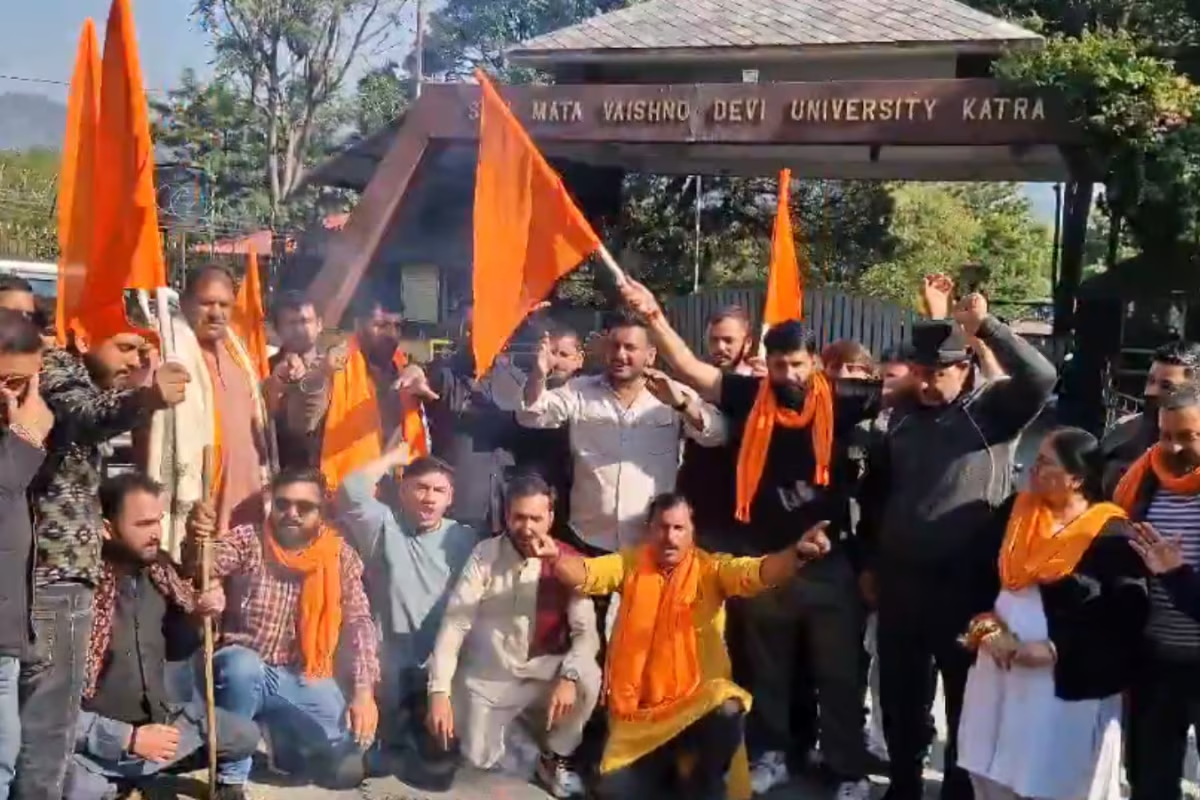
In contrast, several organisations in Jammu welcomed the NMC’s decision.
Leader of Opposition Sunil Sharma (BJP) called it a “historic move”, stating that:
-
The NMC acted strictly under law after finding serious deficiencies
-
Students admitted to SMVDIME would be accommodated in other J&K medical colleges as supernumerary seats, safeguarding their future
Sharma thanked the Union Health Minister, NMC, and Lieutenant Governor Manoj Sinha, and praised the Shri Mata Vaishno Devi Sangharsh Samiti for leading what he described as a peaceful movement.
He rejected allegations of communal bias, insisting:
“This was never about Hindus versus Muslims. It was a matter of faith, accountability, and lawful use of donations.”
A Regionally Polarised Moment
The episode has further deepened regional and political fault lines:
-
Jammu groups frame the closure as a victory for fairness, faith, and regulatory accountability.
-
Valley parties see it as exclusionary, discriminatory, and damaging to inclusivity.
What might otherwise have been a routine regulatory action has become a symbol of competing political narratives in Jammu & Kashmir.
Why This Matters
-
Education policy has emerged as another sensitive arena of political contestation
-
Healthcare infrastructure, already limited, risks becoming collateral damage
-
Public trust depends on whether regulatory actions are seen as neutral or politicised
Bottom Line
The withdrawal of MBBS permission for SMVDIME has exposed how deeply education, identity, and politics intersect in Jammu & Kashmir. With celebrations in Jammu and outrage in the Valley, the episode underscores a hard reality: in J&K, even regulatory decisions rarely remain just administrative—they quickly become political.
How authorities communicate and manage the fallout may shape not just this case, but future trust in educational governance across the region.