Omar Abdullah to BJP: You Split J&K Once, We Demand Ladakh’s Reunification
By: Javid Amin | 25 January 2026
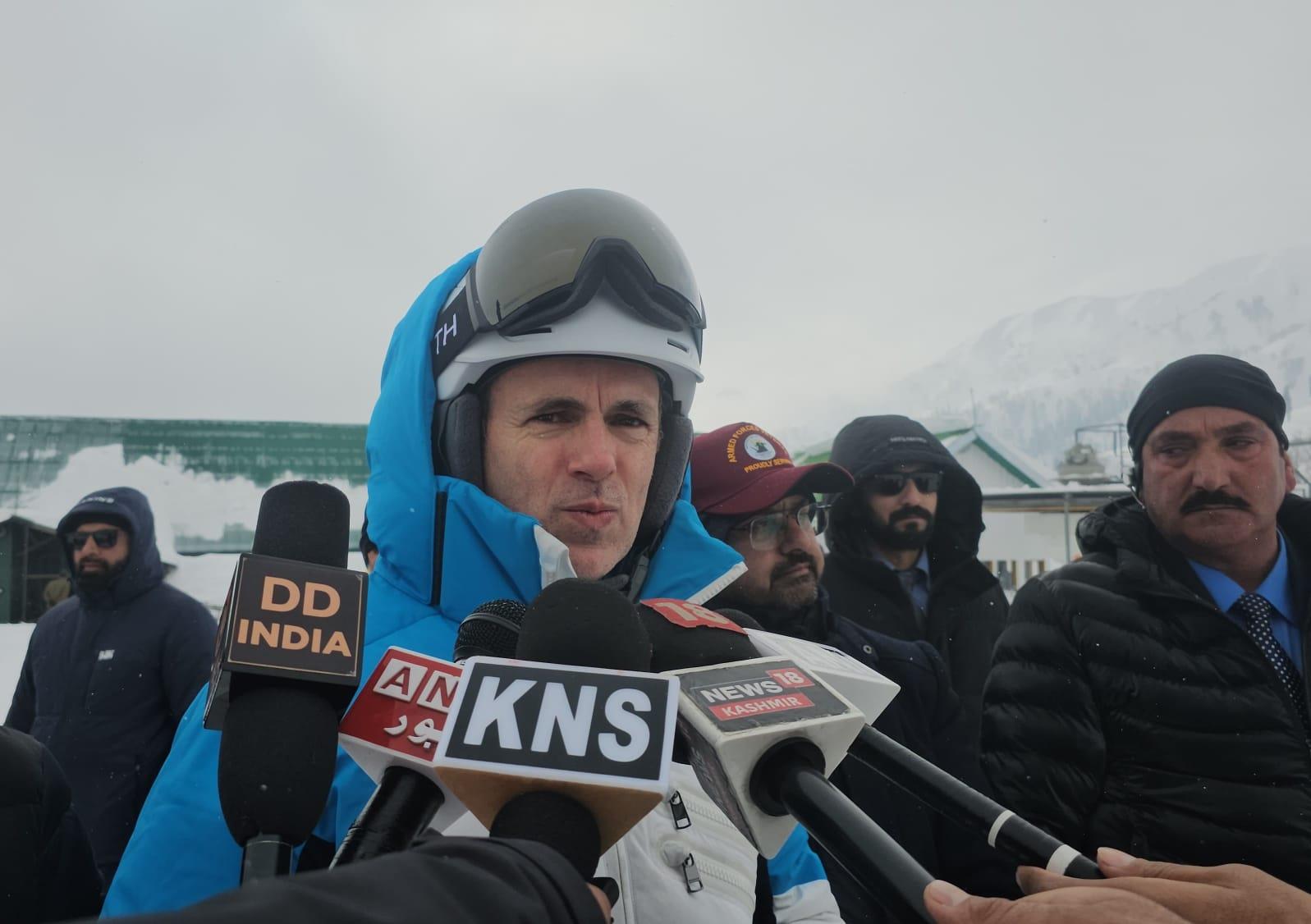
Jammu & Kashmir Chief Minister Omar Abdullah launched a sharp attack on the BJP, accusing it of fracturing the erstwhile state by carving out Ladakh as a separate Union Territory in 2019. Calling the move a failure that has “ruined Ladakh,” Abdullah demanded reunification and warned against any fresh attempts to further divide Jammu & Kashmir.
A Statement That Reopened an Unfinished Debate
When Jammu and Kashmir Chief Minister Omar Abdullah declared, “You divided J&K, we want Ladakh back,” he did more than launch a political attack on the Bharatiya Janata Party (BJP). He reopened one of the most complex and emotionally charged debates in contemporary Indian politics: the consequences of the 2019 reorganisation of Jammu & Kashmir and the future of Ladakh as a Union Territory.
Delivered amid renewed speculation about carving out Jammu as a separate state, Omar Abdullah’s remarks brought together multiple fault lines — regional identity, democratic representation, federalism, security, and development. At its core, the statement reflects a broader unease shared by many political actors and civil society groups: whether the administrative changes of August 2019 have delivered stability and empowerment, or whether they have created new governance and representation gaps.
This explainer examines the full political context behind Abdullah’s demand for Ladakh’s reunification with Jammu & Kashmir. It traces the historical roots of the issue, the rationale behind the 2019 reorganisation, the evolving governance challenges in Ladakh, the Jammu statehood debate, and the constitutional and strategic implications that shape the discourse today.
1. Jammu & Kashmir Before 2019: A Brief Historical Context
For decades after its accession to India in 1947, Jammu & Kashmir occupied a unique constitutional position. Governed under Article 370 and Article 35A, the state enjoyed a degree of autonomy unmatched by any other Indian state. Internally, however, J&K was never a monolith.
Three Regions, One State
The former state comprised three distinct regions:
- Jammu, largely Hindu-majority with pockets of Muslim and Sikh populations, culturally closer to the plains of North India.
- Kashmir Valley, predominantly Muslim, with a distinct linguistic, cultural, and political identity.
- Ladakh, sparsely populated, predominantly Buddhist (with a significant Shia Muslim population in Kargil), geographically vast and culturally closer to the Tibetan plateau.
While Ladakh often complained of neglect by Srinagar-centric politics, it also benefited from being part of a full-fledged state with an elected legislature and representation in decision-making processes.
Political Fault Lines
Discontent within Ladakh was not new. Demands for Union Territory status surfaced intermittently, particularly from Leh, while Kargil often opposed separation from J&K. These internal differences were managed within the framework of a single state, albeit imperfectly.
2. The 2019 Reorganisation: What Changed and Why
On August 5, 2019, the BJP-led central government revoked Article 370 and bifurcated Jammu & Kashmir into two Union Territories:
- Union Territory of Jammu & Kashmir (with a legislature)
- Union Territory of Ladakh (without a legislature)
Government’s Rationale
The Centre argued that the move would:
- Promote deeper integration with India
- Improve governance and transparency
- Accelerate development
- Enhance national security
Ladakh’s elevation to UT status was projected as a long-standing demand being fulfilled, particularly for Leh.
Immediate Political Fallout
Mainstream regional parties, including the National Conference (NC) and the Peoples Democratic Party (PDP), opposed the move, calling it unconstitutional and a betrayal of democratic federalism. In Ladakh, reactions were mixed — celebratory in Leh, cautious and critical in Kargil.
3. Ladakh as a Union Territory: Governance Without Representation
More than six years after becoming a Union Territory, Ladakh’s governance model has emerged as a central point of contention.
Absence of an Elected Legislature
Unlike Jammu & Kashmir, Ladakh was created as a UT without an विधानसभा. Decision-making powers rest largely with the Lieutenant Governor and bureaucratic structures answerable to New Delhi.
Local leaders argue this has resulted in:
- Democratic deficit
- Reduced local accountability
- Limited say in policy-making
Civil Society Mobilisation
By 2023–24, demands for:
- Statehood, or
- Inclusion under the Sixth Schedule
began to gain momentum, cutting across Leh and Kargil. The Apex Body of Leh and the Kargil Democratic Alliance emerged as key platforms articulating these demands.
Development vs Participation
While infrastructure spending increased, critics argue development without participation risks alienation. This forms the backdrop of Omar Abdullah’s claim that Ladakh has been “ruined” administratively, not materially.
4. Omar Abdullah’s Argument: Reunification as a Political Statement
Omar Abdullah’s call for Ladakh’s reunification must be understood less as an immediate policy proposal and more as a political critique of the BJP’s governance model.
Core Assertions
His argument rests on three pillars:
- The 2019 division weakened regional balance
- Ladakh’s UT status has failed to empower locals
- Further fragmentation (like Jammu statehood) would deepen instability
By linking Ladakh’s experience with the Jammu statehood debate, Abdullah positioned himself as warning against a domino effect of regional fragmentation.
5. BJP’s Position: Integration, Not Fragmentation
The BJP has consistently defended the 2019 reorganisation as a historic correction.
Official Line
Senior leaders, including Tarun Chugh, have denied any agenda to divide Jammu & Kashmir further. The party maintains that:
- UT status strengthens integration
- Governance is more efficient
- Development has accelerated
On Ladakh
The Centre has acknowledged concerns but insists solutions lie within the UT framework, through safeguards, dialogue, and administrative reforms — not reunification.
6. The Jammu Statehood Debate: Parallel but Connected
Recent political chatter about a separate Jammu state reignited anxieties across the region.
Roots of the Demand
Some groups in Jammu cite:
- Perceived political marginalisation
- Cultural distinction from Kashmir
However, no formal proposal exists at the party or government level.
Omar Abdullah’s Warning
By stating, “You couldn’t handle Ladakh, now you want to ruin Jammu too,” Abdullah framed the debate as one of governance capacity rather than regional aspiration.
7. Constitutional and Federal Questions
The debate also raises fundamental constitutional questions.
Can Reunification Happen?
Legally, Parliament holds the power to reorganise states and UTs. Politically, however, reunification would require:
- Broad consensus
- Significant policy reversal
- Rewriting the post-2019 governance narrative
Federal Balance
Critics argue repeated reorganisations weaken cooperative federalism, while supporters see them as tools for administrative efficiency.
8. Strategic and Security Dimensions
Ladakh’s location — bordering China and Pakistan — adds another layer of complexity.
Security Considerations
The Centre views direct administrative control as crucial for:
- Border infrastructure
- Military logistics
- Strategic responsiveness
Any governance model must reconcile democratic aspirations with strategic imperatives.
9. Voices From Ladakh: Beyond Political Rhetoric
Importantly, Ladakh’s demands today focus less on reunification and more on autonomy, safeguards, and representation.
Many residents argue the issue is not where Ladakh belongs administratively, but how it is governed.
10. What Lies Ahead: Scenarios and Possibilities
Several paths lie ahead:
- Status Quo with Reforms: Greater local participation within UT framework
- Constitutional Safeguards: Sixth Schedule or similar protections
- Statehood Demand: A longer-term political goal
- Reunification Debate: Remaining largely rhetorical
Each carries political and administrative costs.
Conclusion: A Debate About Governance, Not Geography Alone
Omar Abdullah’s demand for Ladakh’s reunification is best understood as a critique of governance outcomes rather than a literal roadmap. It reflects unresolved tensions following the 2019 reorganisation and highlights the need for inclusive, representative governance models in sensitive regions.
As Jammu & Kashmir, Ladakh, and the Centre navigate these debates, the core question remains unchanged: how to balance integration, democracy, security, and regional identity in one of India’s most complex political landscapes.
In that sense, the debate over Ladakh’s future is not merely about borders — it is about the meaning of federalism, representation, and trust in post-2019 India.