Pro-Iran Rallies Held in Kashmir and Kargil as Shia Groups Express Solidarity with Tehran
By: Javid Amin | 16 January 2026
Global Tensions Echo in the Himalayas
As Iran confronts one of the gravest crises in its post-revolutionary history—marked by nationwide protests, a deadly crackdown, and rising fears of confrontation with the United States—its reverberations are being felt far beyond the Middle East. On January 16, 2026, large pro-Iran rallies were held in Kashmir’s Budgam district and Ladakh’s Kargil, where thousands gathered to express solidarity with Iran’s Supreme Leader Ayatollah Ali Khamenei and denounce the United States and Israel.
The demonstrations, held after Friday prayers, reflected deep ideological, religious, and historical connections between sections of India’s Shia Muslim communities and Iran. They also underscored how international geopolitical crises increasingly find expression in local and regional political spaces within India.
While peaceful, the rallies carry significant political, diplomatic, and security implications, particularly at a time when New Delhi is delicately balancing relations with Tehran, Washington, and Tel Aviv.
Budgam, Kashmir: Procession After Prayers, Slogans Against the West
The Rally
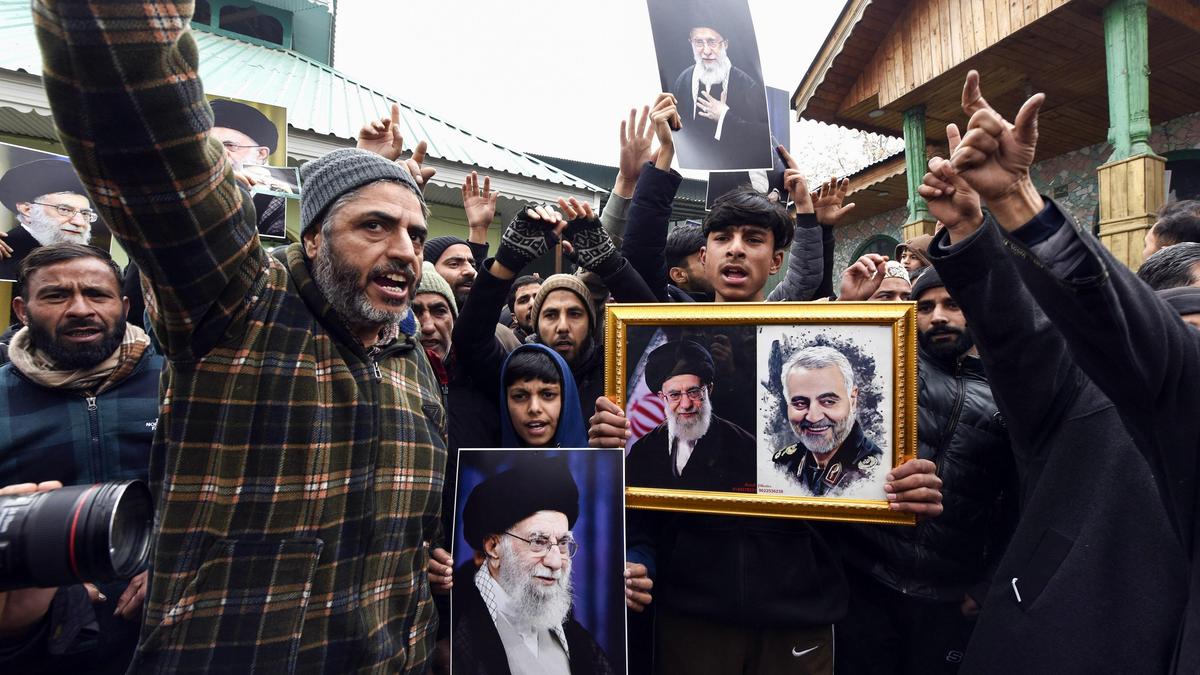
In Budgam district, central Kashmir, worshippers poured out of the Budgam Imambara following Friday prayers and marched toward the main chowk, forming one of the largest pro-Iran demonstrations seen in the area in recent years.
Participants:
-
Raised slogans against the United States and Israel
-
Expressed explicit support for Ayatollah Ali Khamenei
-
Condemned Western pressure and threats against Iran
Placards and chants framed Iran’s struggle as not merely a national crisis but part of a broader resistance against what speakers described as Western domination of the Muslim world.
Local Significance
Budgam has a substantial Shia population, and religious institutions there have historically played a role in shaping community opinion on international Islamic issues. Clerics addressing the gathering emphasized:
-
Iran’s role as a protector of Shia interests globally
-
Opposition to foreign military intervention
-
Solidarity with Iran “in its hour of trial”
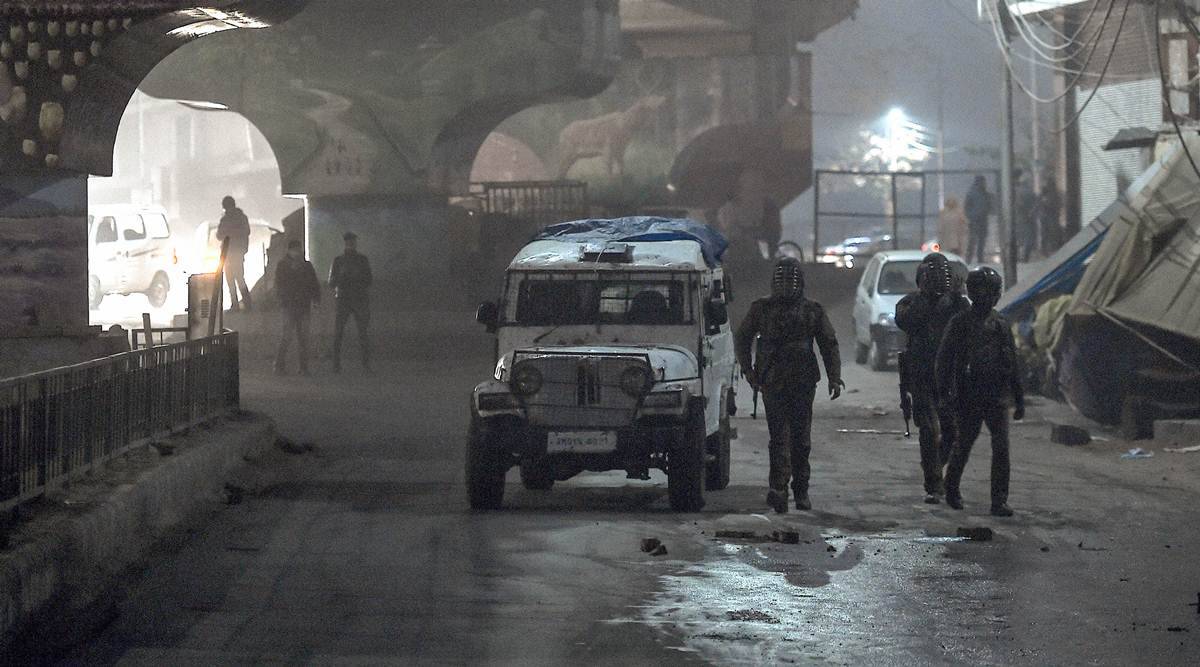
Importantly, the rally was conducted without major violence, though authorities maintained heightened vigilance.
Kargil, Ladakh: Thousands Gather in a Shia Stronghold
A Larger, More Organized Mobilization
In Kargil, a Shia-majority district in Ladakh, the scale of mobilization was significantly larger. Thousands of people gathered across multiple locations, making it one of the most prominent public expressions of support for Iran anywhere in India during the current crisis.
The rallies were organized under the banner of the Imam Khomeini Memorial Trust, a well-known Shia organization with ideological roots linked to the Iranian Revolution.
Leadership and Messaging
The demonstrations were led by Sheikh Sadiq Rajai, chairman of the Trust, who delivered a strongly worded address accusing:
-
The United States and Israel of destabilizing the Middle East
-
Western powers of exploiting Iran’s internal unrest
-
Global institutions of double standards on human rights
Speakers repeatedly invoked:
-
Ayatollah Khomeini’s legacy
-
Iran’s role in shaping modern Shia political identity
-
Resistance to sanctions and military threats
The crowd responded with coordinated slogans, signaling a high degree of organizational planning.
Lucknow Connection: Pan-Indian Shia Mobilization
While the physical rallies occurred in Kashmir and Ladakh, Shia clerics in Lucknow—India’s most influential Shia religious center—played a notable role in amplifying the messaging.
Statements from Lucknow Clergy
Clerics in Uttar Pradesh:
-
Urged the Indian government to adopt a sympathetic stance toward Iran
-
Called for sanctions relief and dialogue
-
Warned against military escalation in West Asia
Though no large street protests were reported in Lucknow on the same scale, sermons and statements created a coordinated ideological narrative, linking Shia communities across regions.
Why Lucknow Matters
Lucknow’s Shia clergy have historically influenced Shia opinion nationwide. Their involvement indicates that:
-
The response is not localized
-
A broader Shia discourse is emerging across India
-
Iran’s crisis is being framed as a collective concern
Why Iran Resonates So Deeply with Shia Communities
Religious and Ideological Bonds
Iran holds a unique place in Shia consciousness:
-
It is the only Shia-majority state with a theocratic system
-
The 1979 Islamic Revolution remains a powerful ideological symbol
-
Ayatollah Khamenei is viewed by some as a global Shia authority figure
In regions like Kargil, Iran’s religious seminaries, literature, and clerical exchanges have shaped religious life for decades.
Political Identity and Resistance Narrative
For many participants, solidarity with Iran is not merely religious but political:
-
Opposition to U.S. and Israeli power
-
Identification with anti-imperialist narratives
-
Perception of Iran as resisting global hegemony
These themes were repeatedly emphasized during the rallies.
Domestic Implications for India
Security and Law-and-Order Concerns
While the rallies were largely peaceful, large gatherings with anti-Western slogans inevitably attract attention from security agencies. Authorities are particularly sensitive to:
-
Cross-border ideological influences
-
Potential radicalization narratives
-
Spillover into sectarian or political tensions
Community Polarization Risks
India’s Muslim population is diverse, and views on Iran vary widely:
-
Shia groups expressed solidarity
-
Sunni groups and secular voices may not share the same outlook
-
Other communities may view the rallies as politically provocative
Managing these divergent perspectives remains a challenge for local administrations.
Diplomatic Sensitivity: India’s Balancing Act
India maintains:
-
Historic civilizational ties with Iran
-
Strategic and economic relations with the United States
-
Strong security and technology partnerships with Israel
Public demonstrations that are:
-
Explicitly pro-Iran
-
Openly anti-U.S. and anti-Israel
complicate this balancing act, especially at a time when India has:
-
Issued evacuation advisories for its citizens in Iran
-
Expressed concern over instability
-
Avoided taking overt sides in the confrontation
Geopolitical Context: Why These Rallies Matter Now
The timing of the rallies is critical:
-
Iran faces nationwide protests and thousands of deaths
-
The U.S. has threatened military action and imposed trade pressure
-
Israel has hardened its posture toward Tehran
-
Regional escalation appears possible
In this context, even symbolic rallies take on heightened geopolitical meaning, signaling how global conflicts resonate at the grassroots level.
Risks and Challenges Ahead
1. Heightened Surveillance and Scrutiny
Authorities may monitor religious and political gatherings more closely.
2. Diplomatic Optics
Public displays of solidarity with Iran may complicate India’s foreign messaging.
3. Internal Polarization
Differing interpretations of Iran’s role could sharpen communal debates.
4. Escalation Abroad, Impact at Home
Any direct Iran–U.S. or Iran–Israel conflict could intensify emotions domestically.
Key Takeaways
-
Pro-Iran rallies in Budgam and Kargil reflect deep Shia solidarity with Tehran.
-
The demonstrations were organized, peaceful, but politically charged.
-
Involvement of Lucknow clerics points to a pan-Indian Shia narrative.
-
The rallies come amid extreme geopolitical tension, amplifying their significance.
-
India faces a delicate task of maintaining internal harmony while balancing global relations.
Conclusion: Global Crises, Local Echoes
The pro-Iran rallies in Kashmir and Kargil are a reminder that international crises do not remain distant abstractions. They filter into local identities, religious affiliations, and political expressions—especially in regions with deep historical and ideological connections.
As Iran teeters between domestic upheaval and external confrontation, these demonstrations highlight how events in Tehran can shape discourse thousands of kilometers away in the Himalayas. For India, the challenge lies in safeguarding democratic expression and community harmony while navigating an increasingly volatile global landscape.
The coming weeks—both in West Asia and within India—will test how these complex layers of faith, politics, and geopolitics intersect.