Reservation Virus in Kashmir: Crisis for General Category | Jobs, Merit & Unrest
How the quota system in Jammu & Kashmir is triggering youth unrest, undermining merit, and fuelling a crisis of trust
By: Javid Amin | 03 January 2026
The Quota Conundrum
When Jammu & Kashmir’s Services Selection Board (JKSSB) recently advertised 502 government jobs, barely 106 were truly open to all candidates after vertical and horizontal reservations were carved out — and only 67 posts remained for the pure General category. For a population where nearly 70 per cent identify as general category or open merit aspirants, this translates to a paltry 13 per cent opportunity share in public recruitment — triggering widespread resentment, protests, and accusations of systemic bias.
This isn’t merely a numbers issue. It is a crisis unfolding at the intersection of constitutional rights, demographic realities, and the hopes of an entire generation competing for a future in government employment.
This feature unpacks the reservation structure’s trajectory, the lived reality of aspirants, the socio-economic drivers of unrest, legal challenges, government responses, and what it means for Kashmir’s youth and governance.
Understanding Kashmir’s Reservation Framework: Beyond the Headlines
1. The Policy Landscape
Jammu & Kashmir’s reservation policy underwent significant changes after the repeal of Article 370 and reconstitution of the region as a Union Territory. The framework now comprises:
-
Constitutionally protected quotas (Scheduled Castes, Scheduled Tribes, OBCs).
-
Local special categories such as Residents of Backward Areas (RBA), Actual Line of Control (ALC), International Border (IB) residents.
-
Horizontal reservations for Ex-Servicemen and Persons with Disabilities.
These categories cumulatively account for reportedly up to 70 percent of available posts in some notifications and recruitments — leaving a shrinking portion for Open Merit (OM) aspirants.
2. The Real Numbers — A Case Study
In the recent 502-post recruitment:
-
106 posts remained open after quota carve-outs.
-
Only 67 posts were allocated to the pure General category, roughly 13 percent of total. (This mirrors broader patterns seen across recruitments, where OM seats shrink further after reservations fill some open merit slots.)
Parallel recruitment data reflects similar patterns:
-
In the 1815 constable posts, only 40% were kept for OM aspirants before further horizontal reservations were applied.
-
For 480 medical officer posts, just 192 were marked for Open Merit.
Experts say these configurations result in an effective reduction of real open competition seats below initial allocations, because reserved category candidates can also compete and succeed in OM pools under some rules.
Why This Matters: Socio-Economic Impacts of the Imbalance
1. Meritocracy Under Strain
At its core, the controversy isn’t about reservation per se — it is about proportion and fairness. Reservation in India aims to uplift disadvantaged sections lacking adequate representation in public services. But when quotas cumulatively exceed 50 percent and are applied without clear, updated socio-economic data, critics argue this shifts from protective to exclusionary policy.
One petition admitted by the Jammu & Kashmir High Court argues that the current system routinely reduces open merit representation below 40 percent in many recruitments — far lower than demographic proportions — disrupting the constitutional principle of fair competition under Article 16(4).
2. Youth Unrest: From Classrooms to Freezing Parks
Anger among the youth has manifested in multiple forms:
-
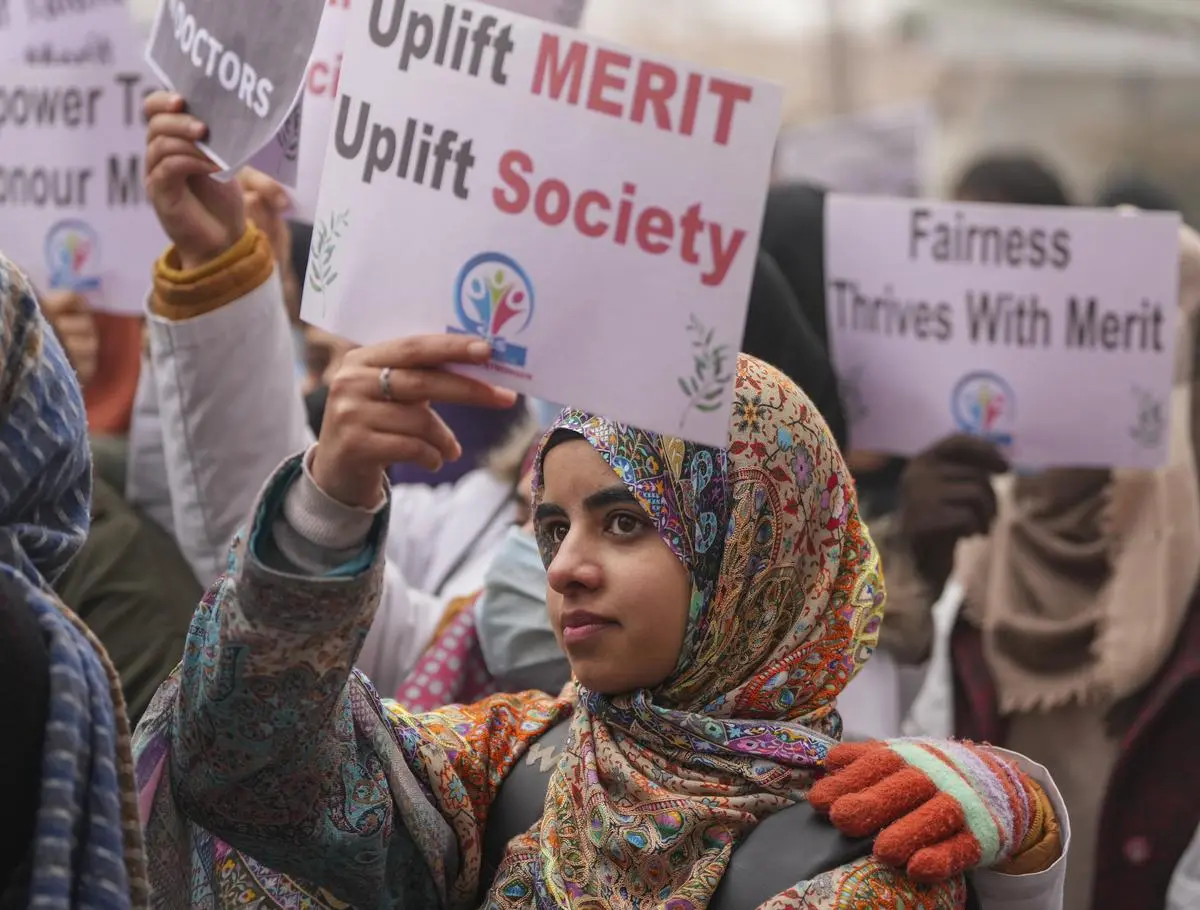
Mass protests against reduced OM quotas.
-
Vigils in public spaces during harsh weather.
-
Heightened social media campaigns demanding transparency and policy overhaul.
One affected student noted that limited vacancies and shrinking open competition slots have turned “competition for government jobs from fierce to nearly impossible” — eroding hopes after years of academic preparation. This sentiment is echoed across communities, with young Kashmiris increasingly expressing not entitlement, but exhaustion and desperation.
3. Trust Deficit and Alienation
Protests in Kashmir are not isolated to job posts; they signify a trust deficit between young citizens and the administrative apparatus. The perception that policy adjustments were made without full stakeholder engagement, transparent data, or clear communication has deepened a sense of alienation — especially among aspirants who see limited pathways to stable employment in a region with already constrained economic prospects.
Beyond recruitment, similar grievances arise in higher education admissions and promotions where anomalies in reservation have been challenged legally and socially.
Ground Reports: Voices from the Frontline
Inside Recruitment Notifications:
In the recently advertised posts for Junior Engineers, only 117 of 292 posts were under open merit — and even some were claimed by reserved candidates based on scoring patterns — leaving actual general aspirants with barely 60–70 seats.
Medical Sector Impact:
Medical officer and healthcare recruitments show that a significant share of positions, vital for community health outcomes, may be effectively out of reach for general category youth — raising concerns about future service quality if merit is perceived to be overshadowed by quota targets.
Societal Sentiments:
In conversations with local aspirants, the dominant theme is not opposition to reservation, but frustration at the perceived absence of proportional justice. Students also highlight that reserved category backlogs often remain unfilled — a structural paradox where vacancies exist but opportunities shift away from merit candidates.
Legal and Policy Responses
1. Judiciary’s Role
Multiple petitions have reached the Jammu & Kashmir High Court challenging the reservation framework, particularly the disproportionate impact on open merit representation. Arguments center on constitutional provisions and lack of updated data proving under-representation for groups benefitting from expanded quotas.
The Court has also intervened in issues of reservation in promotions, reminding authorities of constitutional rights under Article 16(4A) and the necessity of equitable implementation.
2. Government Moves Toward Rationalisation
In response to mounting criticism and protests, a Cabinet Sub-Committee report has recommended increasing the Open Merit quota and rationalising category shares. Proposals include boosting OM from around 30 percent to 40 percent and reducing some categories’ allocations to accommodate demographic balance.
Recent cabinet decisions indicate a push toward restoring 50 percent general category opportunities, pending formal approval from the Lieutenant Governor — a potentially significant policy shift acknowledging the unrest.
Broader Political and Social Dynamics
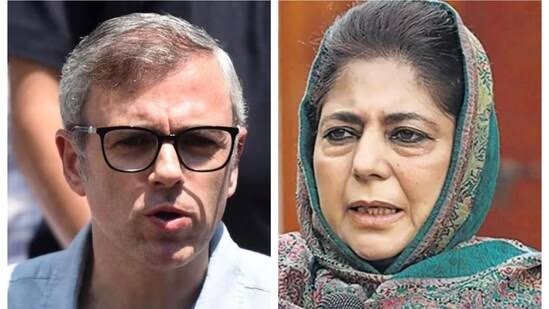
The reservation debate in Jammu & Kashmir intersects with regional political fault lines. Some parties have supported rationalisation, while others caution against rolling back protective measures. Critics of the current policy argue that decisions made without broad consensus risk reinforcing regional divides instead of uniting communities around shared economic aspirations.
In Kashmir especially, some political commentators argue that regional imbalances in reservation certificate issuance contribute to perceptions of marginalisation. For instance, data showed disproportionate numbers of certificates issued in Jammu compared to Kashmir across multiple categories — a dynamic feeding into wider debates about fairness.
Pathways to Resolution: What Needs to Change?
To end the current impasse and restore confidence among aspirants, several foundational steps are essential:
1. Transparent, Data-Driven Policy Design
Reservation should be responsive to real-time socio-economic data, not static formulas. Regular, transparent demographic assessments can ensure quotas serve genuine under-representation without undermining fair competition.
2. Inclusive Dialogue with Stakeholders
Youth representatives, civil society, and academic experts must be engaged in policy formulation — ensuring reforms reflect broad interests rather than administrative fiat.
3. Clear Communication and Legal Compliance
Detailed explanations of quota calculations and how open merit seats are affected by horizontal reservations are critical. Such transparency helps build trust and reduce misinformation.
4. Judicial Clarity and Oversight
Courts should guide policy reforms to align reservation practices with the Constitution, especially regarding the upper limit of reservation and proof of under-representation — ensuring protective measures do not turn into exclusionary systems.
Conclusion: Fairness, Not Frustration — A Call for Balanced Reform
The issue in Jammu & Kashmir is not reservation itself — it is imbalance, opacity, and perceived injustice. When 70 percent of the population finds itself realistically competing for only a fraction of opportunities, and when policy changes appear disconnected from grassroots realities, unrest is inevitable.
Kashmir’s youth are not just seeking jobs. They are demanding fairness, dignity, and clarity — the fundamental tenets that make reservation a tool for uplift rather than alienation. Policymakers must seize this moment not with defensive justifications but with bold, inclusive solutions that preserve the spirit of social justice while honouring merit and equal opportunity.
Only then can the system fulfil its constitutional promise instead of becoming a “reservation virus” that threatens careers, trust, and social cohesion across the Valley.