Summoning of Journalists in Kashmir: Mehbooba Mufti Urges CM Omar Abdullah to Intervene, Police Asked to Desist
By: Javid Amin | 22 January 2026
Concerns grow over press freedom as political leaders warn against a chilling effect on independent journalism
A Fresh Flashpoint Over Media Freedom in Kashmir
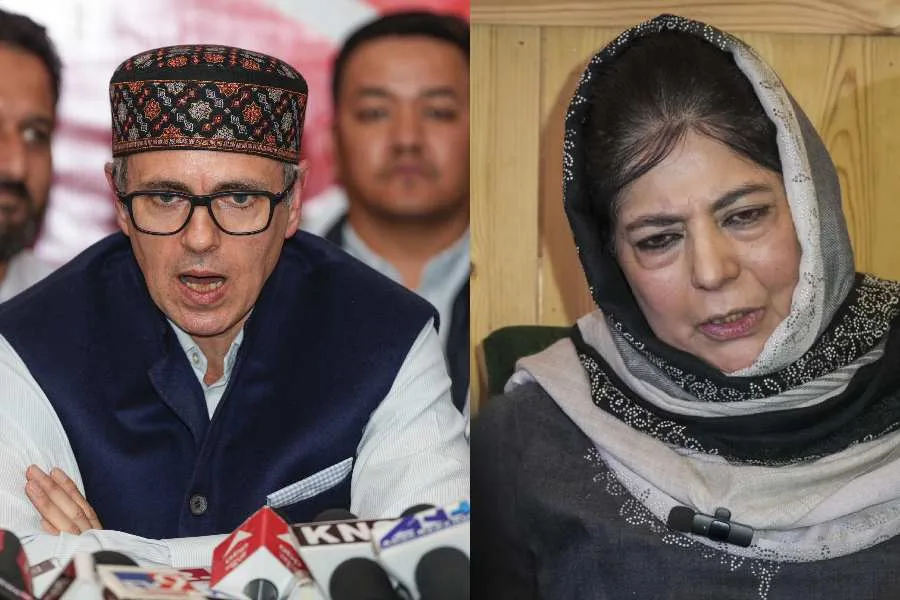
The summoning of journalists by police in Kashmir has once again brought press freedom in the region under sharp public and political scrutiny. Former Jammu and Kashmir Chief Minister Mehbooba Mufti has urged incumbent Chief Minister Omar Abdullah to intervene, calling on the administration to ensure that law-enforcement agencies desist from actions that intimidate media professionals.
Describing the reported police summons as deeply concerning, Mehbooba warned that such practices risk creating an atmosphere of fear, discouraging independent reporting and weakening democratic norms in a region already grappling with political sensitivities and prolonged conflict.
Her remarks have reignited a long-running debate in Kashmir: where does legitimate security oversight end, and where does pressure on the press begin?
What Sparked the Controversy
According to reports circulating within media and journalist circles, several journalists in Kashmir have recently been summoned by police for questioning, reportedly in connection with their professional work and published reports.
While official details regarding the nature and scope of the questioning remain limited, the very act of summoning journalists has raised alarms among press bodies and civil rights advocates, who argue that:
-
Journalists should not be treated as suspects for carrying out their professional duties
-
Police questioning, even when informal, can function as a tool of intimidation
-
Lack of transparency around such summons fuels uncertainty and fear
In conflict-prone regions, critics note, the process itself often becomes the punishment, regardless of whether formal charges are filed.
Mehbooba Mufti’s Appeal: A Call for Political Intervention
Reacting to these developments, Mehbooba Mufti made a direct appeal to Chief Minister Omar Abdullah, urging him to step in and prevent further summoning of journalists.
Key Elements of Her Statement
-
Immediate intervention: Mehbooba asked the Chief Minister to personally intervene and review the actions of the police.
-
Warning against harassment: She cautioned that repeatedly calling journalists for questioning amounts to harassment, even in the absence of formal cases.
-
Defence of democratic values: Emphasizing the role of a free press, she argued that such practices undermine democratic institutions and public trust.
Mehbooba’s remarks are significant not only because of her political standing, but also because they frame the issue as one of governance and ethics, not merely law and order.
Why Summoning Journalists Raises Serious Red Flags
Across democratic societies, press freedom is protected not only by law, but by convention and restraint. Summoning journalists—especially without clear, publicly stated reasons—raises several concerns.
1. Chilling Effect on Journalism
Even when journalists are released without consequence, the message travels quickly:
-
Sensitive stories may invite scrutiny
-
Critical reporting may lead to questioning
-
Silence may feel safer than investigation
This phenomenon, commonly described as a “chilling effect,” can gradually erode the diversity and depth of reporting.
2. Blurring the Line Between Reporting and Policing
Journalists are observers and chroniclers, not participants in the events they report. When police actions blur this distinction, it risks:
-
Criminalizing journalistic inquiry
-
Undermining source confidentiality
-
Weakening investigative reporting
3. Impact on Young and Freelance Journalists
The pressure is often felt most acutely by:
-
Freelancers without institutional backing
-
Young reporters early in their careers
-
Local journalists operating in smaller districts
For them, police summons can carry disproportionate psychological and professional costs.
Kashmir’s Media Landscape: A History of Pressure and Constraints
The current controversy cannot be viewed in isolation. Kashmir’s press ecosystem has long operated under extraordinary constraints, shaped by conflict, security concerns, and shifting political frameworks.
Persistent Challenges
-
Restrictions on movement and access
-
Internet shutdowns and communication curbs
-
Surveillance and monitoring of media activity
-
Legal and administrative pressures
Over the years, local journalists have frequently reported intimidation, questioning, and self-censorship, often justified under the rubric of security.
International Attention
Global press freedom watchdogs have repeatedly flagged shrinking media space in Kashmir, noting that journalists face risks not commonly encountered elsewhere in the country.
Mehbooba’s intervention, therefore, taps into a broader and well-documented pattern, rather than an isolated incident.
Political Sensitivity and the Role of the Chief Minister
By appealing directly to Omar Abdullah, Mehbooba has elevated the issue from an administrative concern to a political test of leadership.
Why the CM’s Response Matters
-
The Chief Minister has oversight over the civil administration
-
His stance can set the tone for how dissent and criticism are handled
-
Silence or inaction may be read as tacit approval of police conduct
For a government seeking legitimacy and public trust, especially in a sensitive region, protecting journalistic independence is a key signal of democratic intent.
Governance, Transparency, and Accountability
At its core, the controversy touches on a fundamental question: Can governance be accountable without a free press?
When journalists are constrained:
-
Public scrutiny weakens
-
Policy failures remain hidden
-
Citizens lose access to ground realities
Mehbooba’s warning underscores that intimidating the press ultimately harms governance itself, not just journalists.
Voices from the Media Community
While formal reactions from journalist unions and editors are still evolving, informal conversations within the media community reflect:
-
Anxiety over increased scrutiny
-
Frustration over lack of clarity from authorities
-
Fear that normal reporting could be misconstrued as provocation
Many journalists argue that if authorities have concerns about factual inaccuracies, established mechanisms such as clarifications, rebuttals, or legal notices already exist—making police summons unnecessary and excessive.
Broader Societal Impact
The implications of press intimidation extend beyond newsrooms.
For Society at Large
-
Reduced flow of reliable information
-
Narrower range of perspectives
-
Greater reliance on unofficial or unverified sources
In regions like Kashmir, where misinformation can have serious consequences, professional journalism serves as a stabilizing force.
Conclusion: A Test Case for Media Freedom in Kashmir
The summoning of journalists in Kashmir and Mehbooba Mufti’s appeal to Chief Minister Omar Abdullah mark another critical moment in the region’s ongoing struggle over media freedom, state authority, and democratic norms.
Whether the administration chooses to intervene decisively or allow the situation to persist will signal how dissent, criticism, and independent reporting are treated in the current political climate.
As Mehbooba cautioned, a democracy weakened by fear cannot serve its people effectively. Ensuring that journalists can work without intimidation is not a concession—it is a constitutional obligation.