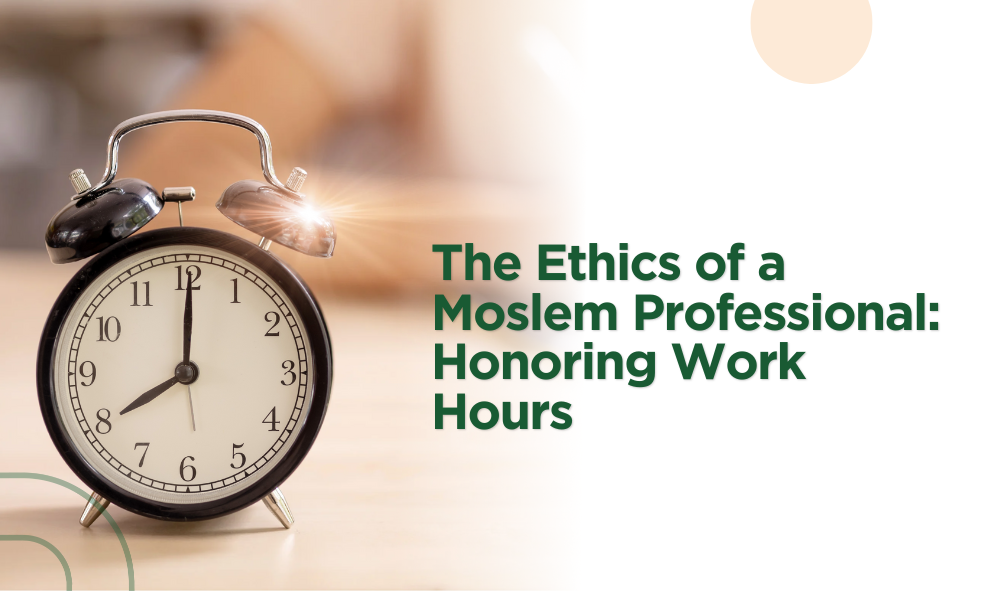
Work as Worship: Islamic Work Ethics, Sincerity, and Accountability in Kashmir
By: Javid Amin | 31 January 2026
When Religion Becomes a Cover, Not a Character
Islam was never meant to be reduced to rituals alone. Yet in many Muslim societies today, outward religiosity has slowly replaced inner accountability. Long prayers, visible piety, and religious language often coexist with delayed work, misuse of authority, bribery, and indifference to public suffering.
This contradiction raises a serious question: Can a Muslim claim righteousness while betraying trust at work?
Islam answers clearly: No.
In Islam, work is not separate from faith. A Muslim’s job—whether in government, private service, or self-employment—is part of his accountability before Allah. The hours one is paid for are an amanah (trust). Misusing them is not a “small issue”; it is a moral and religious failure.
This article explores Islamic rulings on work ethics, sincerity, and accountability, with special reference to contemporary realities in Kashmir.
Work in Islam: Not a Worldly Matter, but an Act of Worship
Islam does not divide life into “religious” and “worldly” compartments. Earning a livelihood through lawful means and sincere effort is itself worship.
Allah says:
“And that there is not for man except that for which he strives.”
(Surah An-Najm 53:39)
This verse establishes a fundamental principle: reward is tied to effort and sincerity, not claims or appearances.
The Prophet ﷺ himself worked, traded, negotiated, and fulfilled responsibilities with excellence. His companions were farmers, traders, administrators, and judges—yet none considered work inferior to worship.
When work is done honestly, with the intention of fulfilling trust and serving people, it becomes ibadah.
The Islamic Concept of Time: A Trust That Never Returns
Among all the blessings Allah gives, time is the most unforgiving. Wealth can be regained, reputation repaired, strength restored—but time, once lost, is gone forever.
Allah swears by time in the Qur’an:
“By time, indeed mankind is in loss.”
(Surah Al-Asr 103:1–2)
Classical scholars explain that Allah swears only by matters of extreme importance. Time is one of them.
In Islam, wasting time while being paid is not a minor fault—it is a form of deception. When an employee scrolls aimlessly, delays work intentionally, or avoids responsibility, he is not merely inefficient; he is consuming wealth unjustly.
Imam Al-Ghazali warned that the greatest regret on the Day of Judgment will be for moments wasted without benefit.
For a salaried employee, wasted time has double accountability:
-
Before the employer
-
Before Allah
Halal Income and the Moral Weight of Every Rupee
Islam does not judge income by amount, but by source and honesty.
The Prophet ﷺ said:
“Allah is pure and accepts only what is pure.”
(Sahih Muslim)
Salary earned through:
-
negligence
-
deliberate delay
-
misuse of authority
-
bribery (direct or indirect)
-
emotional coercion of citizens
…is morally polluted, even if legally sanctioned.
This has deep spiritual consequences:
-
Duas are rejected
-
Barakah disappears
-
Inner peace is lost
-
Society suffers collective decay
The Prophet ﷺ described a man who prays intensely, raises his hands to Allah, yet his food, drink, and clothing are haram—and asked:
“How can his supplication be accepted?”
Public Service in Islam: Authority as Burden, Not Privilege
Islam treats public office with extreme seriousness.
The Prophet ﷺ refused to appoint people who desired authority, saying:
“We do not give this responsibility to one who asks for it.”
(Sahih Muslim)
Public servants are not owners of power; they are caretakers of people’s rights.
In Islamic governance:
-
Delaying a file is oppression
-
Ignoring an applicant is injustice
-
Making citizens run office to office is humiliation (haram)
Umar ibn Al-Khattab (RA) used to patrol at night, fearing that a hungry dog on the banks of the Euphrates might be questioned against him before Allah.
Compare this with modern reality, where:
-
citizens beg for signatures
-
offices close early
-
responsibility is passed endlessly
Islam rejects this culture outright.
The Sin of Hurting People Through Administrative Negligence
Islam recognizes indirect harm.
If your delay causes:
-
a patient to miss treatment
-
a student to miss admission
-
a widow to lose pension
-
a laborer to lose wages
…you are morally responsible, even if you never met them.
The Prophet ﷺ said:
“A Muslim is the one from whose hand and tongue others are safe.”
Harm is not only physical. Administrative cruelty—apathy, arrogance, delay—is also harm.
Religious Hypocrisy: One of the Gravest Warnings in Islam
The Qur’an strongly condemns hypocrisy (nifaq), not disbelief.
Why?
Because hypocrisy damages society from within.
Allah says:
“So woe to those who pray, yet are heedless of their prayer—those who make a show.”
(Surah Al-Ma’un 107:4–6)
Scholars explain that “heedless of prayer” does not mean abandoning prayer, but praying without moral impact.
A Muslim who prays yet:
-
cheats at work
-
accepts bribes secretly
-
delays files knowingly
-
uses religion as cover
…falls dangerously close to this warning.
Islam values integrity over image.
Excuses Islam Does NOT Accept
Islam rejects the following justifications outright:
❌ “Everyone does it”
Truth is not determined by majority.
❌ “System hi aisa hai”
A corrupt system does not permit personal sin.
❌ “I have family pressures”
Rizq comes from Allah, not dishonesty.
❌ “I pray and fast”
Worship does not cancel injustice.
Allah says:
“Do not let hatred—or convenience—cause you to be unjust.”
Kashmir’s Moral Crossroads: Faith Without Accountability
Kashmir has deep Islamic roots, scholarship, and spiritual tradition. Yet today, many citizens experience:
-
Endless delays
-
Office absenteeism
-
Disrespectful behavior
-
Casual misuse of authority
This creates moral dissonance:
“If Islam is so strong here, why is justice so weak?”
The answer lies not in religion, but in selective obedience.
Islam cannot be practiced partially. Ritual without ethics is hollow.
Women, Widows, and the Poor: The First Victims of Work Negligence
Islam gives special protection to:
-
widows
-
orphans
-
the poor
-
women seeking rights
The Prophet ﷺ said:
“I and the one who sponsors an orphan will be like this in Paradise.”
Yet in reality, these groups suffer the most due to:
-
paperwork delays
-
indifferent staff
-
repeated visits
-
humiliation
Hurting the vulnerable is among the fastest ways to earn Allah’s anger.
Fear of Allah vs Fear of Vigilance
Many employees work sincerely only when:
-
cameras are present
-
inspections are announced
-
seniors are visiting
Islam teaches constant accountability.
“Does he not know that Allah sees?”
(Surah Al-Alaq 96:14)
A true Muslim works with excellence even when:
-
alone
-
unseen
-
unmonitored
This is the difference between legal compliance and spiritual integrity.
Rebuilding an Islamic Work Culture: Practical Steps
For Employees:
-
Treat work hours as sacred
-
Refuse bribes—even small ones
-
Complete tasks on time
-
Respect citizens’ dignity
For Officers:
-
Simplify procedures
-
End gatekeeping culture
-
Be accessible
-
Protect whistleblowers
For Society:
-
Stop glorifying “smart corruption”
-
Respect honest workers
-
Demand accountability without abuse
What True Taqwa Looks Like at Work
Taqwa is not fear alone. It is moral awareness.
A muttaqi employee:
-
fears harming others
-
fears unjust income
-
fears wasted time
-
fears standing before Allah empty-handed
This fear liberates, not burdens.
The Day When Files Will Speak
Allah says:
“That Day, every soul will be shown what it put forth.”
On that Day:
-
delayed files will speak
-
ignored applications will testify
-
silent suffering will surface
No stamp, no signature, no excuse will help.
Only sincerity will.
Final Conclusion: Islam Demands More, Not Less
Islam does not demand perfection—but it demands honesty.
A Muslim may struggle, but he cannot justify betrayal.
In Islam:
-
Work is worship
-
Time is trust
-
Authority is responsibility
-
Character is faith
Namaz without honesty is incomplete.
Faith without integrity is fragile.
Work without sincerity is sin.
Final Reminder
You were paid for time.
You were trusted with responsibility.
You will be questioned by Allah.
Let your character speak louder than your claims.

