First Time in 67 Years: Jammu & Kashmir’s Fairytale Run Reaches the Ranji Trophy Final
By: Javid Amin | 18 Febuary 2026
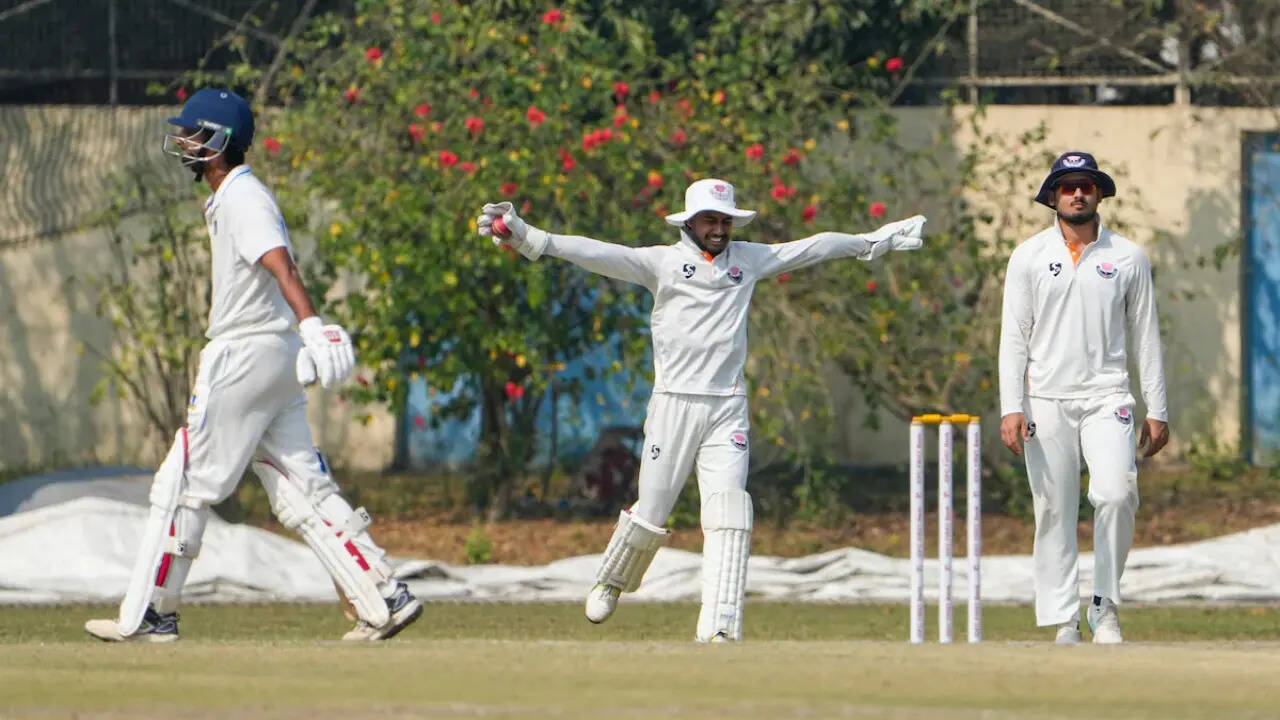
For decades, Jammu & Kashmir cricket lived in the margins of Indian domestic sport — competitive, passionate, but rarely central to the national conversation. That changed dramatically in Kalyani, where a six-wicket semifinal victory over Bengal rewrote the state’s sporting history.
After 67 seasons of participation, Jammu & Kashmir have reached their maiden Ranji Trophy final. The result is more than a match win. It is a generational breakthrough — one that transforms the narrative of a team long labeled underachievers into a side defined by belief, structure, and fearless execution.
This is not just a cricketing statistic. It is a cultural moment.
A Semifinal That Felt Like a Statement
The semifinal was expected to follow a familiar script. Bengal arrived with pedigree: two-time champions, seasoned domestic stalwarts, and a reputation for thriving in knockout cricket. Jammu & Kashmir arrived with momentum, discipline, and the hunger of a side with nothing to lose.
From the first session, the match defied expectations.
J&K’s bowling unit refused to be intimidated by Bengal’s batting depth. They attacked lengths, moved the ball late, and forced errors. Every session tilted the psychological balance further toward the underdogs. By the time the chase began, the contest was no longer about survival — it was about finishing history.
The six-wicket victory was clinical. No panic. No collapse. Just controlled aggression and composure.
The Bowling Spell That Broke Bengal
Every historic win has a turning point. For Jammu & Kashmir, it came through the seam bowling of Auqib Nabi.
Auqib’s spell was not just effective — it was authoritative. He attacked the corridor relentlessly, forcing Bengal’s batters to play. His rhythm never dipped. Each wicket tightened the pressure, shrinking Bengal’s scoring options and amplifying scoreboard anxiety.
This wasn’t a lucky burst. It was tactical precision.
The J&K bowlers worked in partnerships. One end built pressure; the other delivered breakthroughs. Field placements were aggressive, signaling intent: they weren’t defending parity — they were hunting a result.
Bengal’s lineup, known for grinding opponents down, suddenly looked rushed. Footwork faltered. Shot selection deteriorated. The collapse wasn’t dramatic; it was systematic.
That distinction matters. It showed preparation, not fortune.
A Chase Built on Nerves of Steel
Chasing in a semifinal carries a unique psychological weight. Scoreboards grow heavier. Singles feel longer. Dot balls echo louder.
Jammu & Kashmir approached the chase with clarity.
Vanshaj Sharma’s 43 was an innings defined by maturity. He absorbed pressure without stagnation, rotating strike and refusing to let Bengal dictate tempo. His role was structural: anchor the pursuit, preserve wickets, and ensure the required rate never spiraled.
At the other end, Abdul Samad provided the finishing authority. His unbeaten 30 wasn’t about fireworks; it was about timing. He chose his moments, punished loose deliveries, and closed the match with the calm of a veteran closer.
Together, they turned a historic chase into a composed walk toward destiny.
From Underachievers to Contenders
For years, Jammu & Kashmir were seen as a promising but inconsistent side. Talent was visible, but results rarely aligned. Structural limitations, infrastructure gaps, and limited exposure often slowed progress.
This campaign has shattered that ceiling.
Their run to the final has been built on:
-
Tactical discipline
-
Fitness and fielding standards
-
Depth in pace bowling
-
Fearless middle-order batting
-
Cohesive leadership
This is not a one-match miracle. It is the culmination of years of incremental improvement within India’s domestic framework governed by the Board of Control for Cricket in India.
Investment in domestic competitions, better scouting networks, and expanded exposure tournaments have created pathways that players from emerging regions are now exploiting.
J&K are the proof.
The Emotional Weight of 67 Years
When Jammu & Kashmir joined the Ranji circuit in 1959–60, participation itself was a milestone. Competing consistently against established cricketing states was an uphill battle. Wins were rare; deep tournament runs even rarer.
Each generation carried the dream forward.
Former players laid foundations without tasting glory. Coaches worked with limited resources. Young cricketers grew up watching other states lift trophies while believing their moment would someday come.
That emotional backlog erupted in this semifinal.
For veterans of J&K cricket, the win represents validation. For current players, it is responsibility — to carry the badge further than anyone before them.
The Himalayan Breakthrough
This achievement carries geographic symbolism. Jammu & Kashmir are now the first team from the Himalayan belt to reach a Ranji Trophy final.
That matters beyond cricket.
It challenges long-standing assumptions about where elite Indian cricket can emerge. Talent is not region-bound. Infrastructure gaps can be bridged. Competitive culture can be built.
Young athletes across mountainous and remote regions now have a visible blueprint: top-tier domestic success is achievable.
Representation creates ambition. Ambition creates ecosystems.
Tactical Masterclass: How J&K Outplayed Bengal
A closer analysis reveals why this wasn’t an upset driven by chance.
1. Seam-First Strategy
J&K identified early movement as their weapon. Rather than defensive containment, they attacked with full lengths, inviting drives and exploiting edges.
2. Fielding Intensity
Every half-chance was hunted. Bengal were denied easy singles, forcing risky strokes. Pressure multiplied organically.
3. Batting Clarity
There was no scoreboard panic. Each batter understood role hierarchy — anchor, accelerator, finisher. That clarity prevented collapse.
4. Session Control
J&K didn’t chase moments; they won sessions. Domestic knockout cricket is often decided in micro-phases. They dominated more of them.
A Cultural Shift in Valley Cricket
Cricket in Jammu & Kashmir has always been passionately followed, but systemic challenges historically slowed elite progress. This final appearance signals a structural shift.
Potential long-term impacts include:
-
Increased funding for training academies
-
Modern pitch and fitness facilities
-
Professional coaching pipelines
-
Greater talent scouting in rural belts
-
Corporate sponsorship interest
Success attracts investment. Investment sustains success.
The semifinal win may become the inflection point where cricket transitions from aspiration to industry in the region.
Youth Inspiration: The Real Trophy
The most important audience watching this match wasn’t in the stadium. It was in homes, schools, and local grounds across the Valley.
Children saw players who look like them, speak like them, and grew up where they grew up — beating one of India’s strongest domestic sides.
That visibility reshapes dreams.
Sporting ecosystems change when belief becomes normalized. Instead of asking “Is it possible?” the next generation asks “How do I get there?”
That question fuels academies, discipline, and professional ambition.
The Final Awaits: Pressure and Opportunity
Reaching the final is historic. Winning it would be transformational.
The challenge ahead will be mental management. Finals compress expectation. Opponents arrive hyper-prepared. Media attention intensifies. Emotional fatigue becomes a factor.
For Jammu & Kashmir, the blueprint remains the same:
-
Trust bowling partnerships
-
Bat deep and patient
-
Maintain fielding intensity
-
Treat the final as another session battle
Their strength has been collective execution. Individual heroics are bonuses, not dependencies.
Why This Story Resonates Nationally
Indian domestic cricket often operates outside the mainstream spotlight, but moments like this pull it into national consciousness.
This is a reminder that the Ranji Trophy remains the backbone of Indian cricket — a competition where careers are built, resilience is tested, and regional pride fuels elite performance.
Jammu & Kashmir’s run adds a new chapter to that legacy: the rise of a region once peripheral, now central to the title race.
It’s a sporting story. It’s a social story. It’s a developmental story.
And it’s still unfolding.
The Legacy Already Secured
Regardless of the final’s result, this campaign has permanently altered J&K cricket’s identity.
They are no longer the team hoping to compete.
They are finalists.
Future squads will inherit a different psychological baseline. Expectations have shifted upward. Standards have been reset. Opponents will prepare differently.
That is the true power of a breakthrough season — it changes how a team sees itself.
Conclusion: A Fairytale Rooted in Hard Work
Fairytales in sport are rarely accidental. They are built on invisible years of training, frustration, adaptation, and persistence.
Jammu & Kashmir’s entry into the Ranji Trophy final is the visible peak of a long climb. It reflects discipline, planning, and belief converging at the right moment.
The semifinal win over Bengal will be remembered as the match that turned possibility into reality.
And for a region that has waited 67 years, the timing could not be more poetic.
The story is no longer about participation.
It is about arrival.