J&K Assembly to Debate Return of NHPC Power Projects Among 14 Private Member Resolutions
By: Javid Amin | 23 February 2026
NHPC Projects Return Proposal Set to Dominate J&K Assembly Session
The upcoming session of the Jammu & Kashmir Legislative Assembly is poised for a politically charged debate as 14 Private Member Resolutions have been finalized for discussion on March 31 and April 2, 2026.
Among them, the demand for the return of NHPC-operated power projects to the Union Territory Government stands out as the most significant and potentially contentious.
The NHPC Resolution: Economic Autonomy at the Core
Legislators from the Jammu & Kashmir National Conference (NC) have moved resolutions calling for the transfer of hydropower projects operated by NHPC Limited back to J&K.
Key Elements of the Proposal:
-
Phased and mutually agreed transfer of operational control.
-
Greater fiscal retention of hydropower revenue within J&K.
-
Enhanced local electricity allocation and pricing benefits.
NC MLA Sajad Shaheen’s resolution emphasizes constitutional provisions and inter-governmental arrangements as the basis for renegotiation.
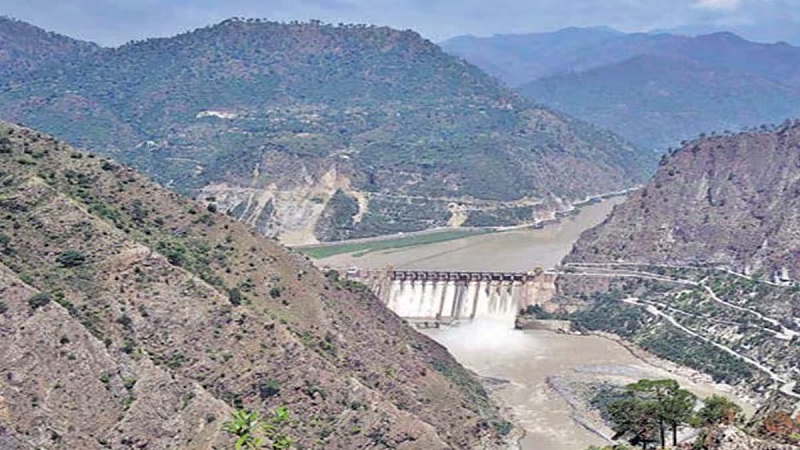
Currently, NHPC controls approximately 2,250 MW of hydroelectric capacity in Jammu & Kashmir. The UT receives a limited share of the generated power, often purchasing additional electricity at market rates despite being a hydropower-rich region.
Revenue vs Local Development: The Sewa-II Example
The Sewa-II Hydroelectric Project in Kathua has reportedly generated over ₹3,674 crore in revenue since 2010.
However, according to proponents of the resolution:
-
Local developmental expenditure from this revenue has been minimal.
-
Infrastructure and employment benefits have not proportionately reflected the project’s financial output.
-
Fiscal gains primarily accrue outside the UT’s consolidated fund.
This argument frames the issue not merely as administrative control, but as a question of economic justice and regional equity.
Government’s Position: No Proposal at Present
The J&K Government has clarified that it currently has no proposal under consideration to seek the return of NHPC-operated projects.
Officials have indicated:
-
The matter falls within the jurisdiction of the Centre.
-
Any transfer would require high-level negotiations.
-
Existing power purchase agreements and financial structures complicate immediate restructuring.
This divergence sets the stage for a sharp debate in the Assembly.
Full Picture: The 14 Private Member Resolutions
Breakdown by Party
National Conference (11 Resolutions)
-
Return of NHPC-operated power projects.
-
Regularization of State and Shamilat land used by registered educational institutions.
-
Promotion-linked service in far-flung areas for Education & Health Departments.
-
Recognition of Kashmiri as a mandatory subject in schools.
-
Ban on polythene.
-
Lake restoration measures.
-
Empowering Panchayats with greater administrative authority.
8–11. Additional governance and public welfare proposals.
BJP (2 Resolutions)
The Bharatiya Janata Party has introduced:
-
Establishment of a Vedic & Sanskrit University in Jammu.
-
Infrastructure development initiatives (details to be debated).
These focus on cultural heritage and structural development priorities.
PDP (1 Resolution)
The Jammu & Kashmir Peoples Democratic Party has proposed:
-
Making Kashmiri language mandatory across institutions.
This overlaps partially with NC’s cultural agenda, indicating possible cross-party alignment on language policy.
Themes Emerging from the 14 Resolutions
1. Economic Autonomy
-
Return of NHPC projects.
-
Fiscal retention and power-sharing structures.
2. Education & Cultural Identity
-
Mandatory Kashmiri language.
-
Vedic & Sanskrit University.
-
Service-linked promotions in remote areas.
3. Environmental Sustainability
-
Ban on polythene.
-
Lake conservation and ecological restoration.
4. Grassroots Governance
-
Panchayat empowerment.
-
Land regularization for educational institutions.
Why the NHPC Debate Will Dominate
While cultural and environmental resolutions may find broader consensus, the NHPC resolution strikes at deeper structural questions:
-
Who controls J&K’s natural resources?
-
How should hydropower revenue be distributed?
-
Can fiscal autonomy strengthen political autonomy?
The issue ties into a long-standing regional narrative that energy-rich Jammu & Kashmir should derive greater direct economic benefit from its hydro potential.
Political Stakes Ahead of Debate
The debate is expected to test:
-
Centre–UT power dynamics.
-
Opposition coordination within the Assembly.
-
The balance between economic pragmatism and political symbolism.
For the NC, the resolution reinforces its narrative of strengthening regional fiscal autonomy. For the government, the issue involves contractual, financial, and constitutional complexities beyond the Assembly’s unilateral authority.
Conclusion: More Than Power Projects
The March 31 and April 2 sessions will reflect the evolving priorities of J&K’s political landscape — balancing economic self-reliance, cultural preservation, environmental reform, and institutional restructuring.
At the heart of it lies the NHPC question — not merely about electricity generation, but about control, revenue, and autonomy in a region where governance remains deeply intertwined with constitutional and economic debates.
The Assembly’s deliberations could shape the next chapter of resource politics in Jammu & Kashmir.