Opposition Slams J&K Budget 2026–27: “NC-Centric, Bureaucrat-Driven, Anti-People,” Say Sunil Sharma and Sajad Lone
By: Javid Amin | 06 February 2026
Budget Debate Intensifies in J&K Assembly
The Jammu and Kashmir Budget 2026–27 has triggered a sharp political confrontation, with opposition leaders accusing the Omar Abdullah-led government of presenting a budget that is politically skewed, bureaucratically driven, and disconnected from everyday public needs.
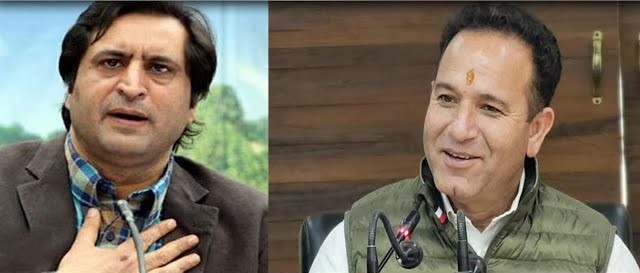
Leader of Opposition Sunil Sharma (BJP) and Jammu & Kashmir Peoples Conference chief Sajad Lone emerged as the most vocal critics, framing the budget debate as a clash between the government’s claim of fiscal discipline and the opposition’s charge of social neglect.
Their remarks have turned the budget session into a broader referendum on governance priorities in the Union Territory.
Sunil Sharma: “NC-Centric and Anti-People”
Sunil Sharma accused the government of crafting what he called an “NC-centric” budget, alleging that allocations disproportionately favor constituencies aligned with the ruling National Conference (NC).
According to Sharma:
-
Budget priorities reflect political favoritism rather than balanced regional development.
-
Rural districts and marginalized communities appear underfunded.
-
Welfare-linked spending fails to match the scale of economic distress in agriculture and informal sectors.
He characterized the document as “anti-people,” arguing that headline infrastructure spending does not translate into immediate relief for farmers, laborers, and low-income households.
Sharma’s criticism taps into a longstanding regional grievance narrative in J&K politics — the perception that budgetary allocation mirrors political alignment.
Sajad Lone: “A Bureaucratic Document, Not a Political Vision”
Sajad Lone’s critique took a different angle. He argued that the budget reads less like a political roadmap and more like a technocratic fiscal manual.
Lone alleged:
-
The budget was drafted primarily by bureaucrats with limited political consultation.
-
It lacks ground-level political ownership.
-
It prioritizes administrative neatness over social responsiveness.
He warned that when budgets become overly technocratic, they risk losing democratic accountability.
“A budget must be a political expression of people’s needs, not merely an accounting exercise,” Lone said, emphasizing that elected representatives must shape fiscal priorities, not just endorse them.
His remarks reflect a deeper ideological concern: whether modern governance is drifting toward managerial efficiency at the expense of participatory politics.
Government’s Position: Growth, Discipline, and Youth Focus
The Omar Abdullah government has defended the budget as growth-oriented and fiscally responsible, emphasizing:
-
Infrastructure investment
-
Youth employment programs
-
Financial discipline
-
Long-term economic stabilization
Officials argue that strong fiscal management today is necessary to prevent debt burdens that would harm future welfare spending.
From the government’s perspective, critics are focusing on short-term optics while ignoring structural reforms aimed at sustainable development.
Core Fault Lines in the Debate
The controversy revolves around three central disputes:
1. Inclusivity vs. Political Bias
The administration presents the budget as inclusive.
Opposition leaders see selective distribution benefiting ruling party strongholds.
2. Fiscal Prudence vs. Immediate Welfare
The government prioritizes macroeconomic stability.
Opposition voices argue urgent rural distress requires heavier welfare outlays.
3. Bureaucratic Efficiency vs. Democratic Ownership
Supporters praise administrative discipline.
Critics warn of reduced legislative influence in fiscal design.
This tension is not unique to J&K; it reflects a broader national debate over how modern budgets balance technocracy and politics.
Rural and Agricultural Concerns at the Center
A recurring theme in opposition criticism is the perceived insufficient emphasis on agriculture and rural livelihoods.
Farmers’ groups and rural representatives have long demanded:
-
Irrigation upgrades
-
Crop insurance expansion
-
Market access support
-
Rural employment buffers
Opposition leaders argue the budget’s capital expenditure tilt risks leaving these areas behind.
The government counters that infrastructure investments will indirectly stimulate rural economies through connectivity and market integration.
Political Stakes Beyond the Numbers
The budget debate carries symbolism beyond fiscal spreadsheets.
For the opposition, attacking the budget is a way to question the ruling coalition’s political legitimacy and priorities.
For the government, defending the document is about projecting administrative credibility and economic stewardship.
As the assembly session continues, budget discussion is expected to dominate political messaging — shaping public perception ahead of future electoral contests.
Public Reaction: Cautious Observation
Among citizens, reactions remain mixed.
Urban middle-class voices tend to welcome infrastructure and fiscal discipline narratives.
Rural constituencies are watching closely for tangible welfare outcomes.
Ultimately, public judgment will depend less on speeches and more on whether allocations translate into visible change on the ground.
The Bigger Picture
The J&K Budget 2026–27 has become a test case for how governance is negotiated in a politically sensitive region balancing autonomy, development, and representation.
The clash between Sharma, Lone, and the government underscores a central democratic truth: budgets are not just financial documents — they are political statements about whose priorities matter.
As debate unfolds, the question is not only how money is spent, but how power, voice, and accountability are distributed in shaping that spending.