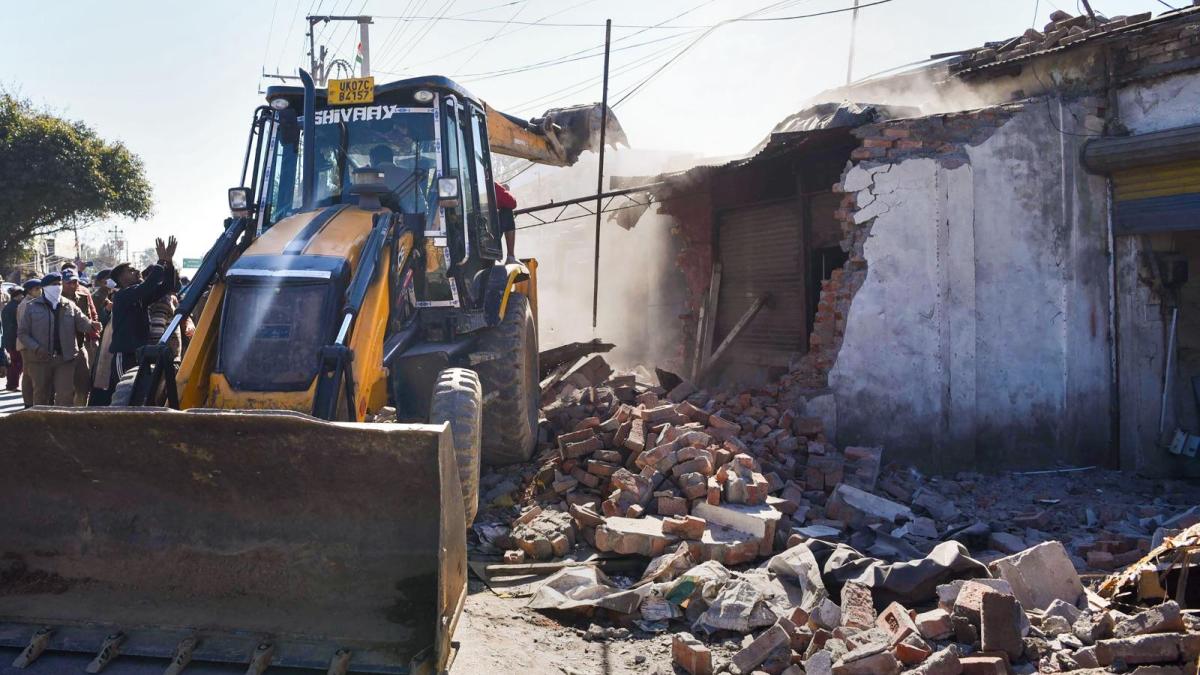
Kashmir Sees More Demolitions Than Jammu, J&K Government Tells Assembly: Inside the Anti-Encroachment Drive
By: Javid Amin | 12 February 2026
Over 1,200 structures razed since October 2024 as government defends legality of demolitions amid growing public concern
A Stark Disclosure in the Assembly
The Jammu and Kashmir Legislative Assembly was told that Kashmir has witnessed more demolitions of houses and structures than Jammu, as the government intensified its campaign against illegal encroachments and unauthorised constructions across the Union Territory.
The disclosure, made during the ongoing Assembly session, has reignited public debate over the scale, fairness, and impact of the demolition drive—particularly in the Kashmir Valley, where the numbers are significantly higher.
According to the government, the action is part of a law-driven effort to reclaim public land, restore urban order, and enforce planning regulations that have been ignored for decades.
The Numbers: Over 1,200 Structures Demolished
Responding to a query in the House, the government stated that:
-
Between 1,200 and 1,425 residential and commercial structures have been demolished since October 2024
-
Demolitions were carried out across both Jammu and Kashmir divisions
-
The Kashmir division accounted for a higher share of the demolished structures
While the exact district-wise breakup was not detailed in the response, the broad trend was clear: the Valley has been more heavily impacted than the Jammu region.
Who Carried Out the Demolitions?
The government clarified that the drive was not limited to a single department.
Demolitions were executed by:
-
Urban Local Bodies
-
Development Authorities
-
Revenue officials
-
Housing and Urban Development Department agencies
Each agency acted within its jurisdiction, targeting structures identified as unauthorised or encroaching on public land.
The Legal Basis: Public Premises Act and Other Laws
Officials told the Assembly that demolitions were conducted under:
-
The Jammu and Kashmir Public Premises (Eviction of Unauthorised Occupants) Act, 1988
-
Other relevant municipal, revenue, and urban development laws
The government emphasised that:
-
Notices were issued
-
Due legal procedure was followed
-
Actions were taken only after statutory requirements were met
This point was repeatedly stressed to counter allegations of arbitrary or selective action.
Why Kashmir Saw More Demolitions
While the government did not explicitly explain why Kashmir recorded higher demolitions, several structural factors are often cited in policy discussions:
-
Dense urbanisation in parts of the Valley
-
Long-standing encroachments on state and kahcharai land
-
Expansion of residential and commercial structures without approvals
-
Weak enforcement of planning laws in earlier decades
The disclosure suggests that the current administration is attempting to address legacy violations, many of which predate the present government.
The Journalist’s House: A Case That Drew Attention
Among the demolished structures, one case stood out prominently:
-
The house of journalist Arfaz Ahmad Daing in Jammu
The demolition attracted public and media attention, highlighting the sensitivity of the drive and raising questions about its social and professional impact.
While the government has not made case-specific comments in the Assembly, the mention of this demolition underscores how the drive has touched individuals from diverse backgrounds—not just commercial encroachers.
Government’s Defence: ‘This Is Not Targeted’
Officials maintained in the House that:
-
The drive is not region-specific
-
No community or profession is being singled out
-
Action is based purely on legal status of structures
By revealing that Kashmir has seen more demolitions than Jammu, the government appeared to counter claims that enforcement was disproportionately focused on one region or group.
Public Reaction: Concern, Fear, and Uncertainty
Despite official assurances, the demolition drive has triggered widespread concern:
-
Families fear loss of shelter
-
Small business owners worry about livelihoods
-
Questions persist about rehabilitation or compensation
-
Legal awareness among residents remains uneven
In Kashmir, where land ownership records are often complex, demolitions have amplified anxiety—especially among those unsure of their legal standing.
Encroachment vs Survival: The Social Dilemma
While the government frames the drive as a matter of law enforcement, critics argue that:
-
Many structures were built due to housing shortages
-
Informal settlements filled gaps left by weak planning
-
Ordinary citizens are paying for decades of administrative neglect
This tension—between rule of law and social reality—lies at the heart of the controversy.
Urban Planning Failures of the Past
The scale of demolitions has also exposed deeper governance issues:
-
Inconsistent enforcement over decades
-
Unchecked construction in ecologically sensitive zones
-
Political patronage enabling illegal structures
-
Absence of affordable housing alternatives
The current drive, while legally grounded, is being seen by many as a delayed correction to long-standing failures.
Assembly Debate: Accountability and Transparency
Inside the Assembly, the disclosure has fuelled calls for:
-
Greater transparency in identification of illegal structures
-
Clear timelines and guidelines
-
Protection for vulnerable households
-
Public access to land records and notices
While the government insists procedures were followed, legislators continue to press for human-centric implementation.
Why the Kashmir–Jammu Comparison Matters
The revelation that Kashmir recorded more demolitions than Jammu is politically and administratively significant because:
-
Regional balance is a sensitive issue in J&K
-
Perceptions of selective governance can inflame tensions
-
Data-driven disclosure helps counter narrative-based criticism
By placing figures on record, the government has anchored the debate in official data rather than speculation.
What Happens Next?
Going forward, key questions remain:
-
Will demolitions continue at the same pace?
-
Will there be rehabilitation or relief mechanisms?
-
Can enforcement be paired with housing policy reforms?
-
How will public trust be rebuilt?
The answers will determine whether the drive is seen as corrective governance or coercive enforcement.
A Lawful Drive With Human Consequences
The government’s statement in the Assembly makes one thing clear:
The anti-encroachment drive is not slowing down—and Kashmir has borne a larger share of its impact so far.
Yet, beyond numbers and laws lie real people, homes, and livelihoods.
Conclusion: Enforcement, Equity, and the Road Ahead
The disclosure that more houses were demolished in Kashmir than Jammu underscores the scale of Jammu and Kashmir’s anti-encroachment campaign—and the complexity of enforcing legality in a region shaped by decades of unregulated growth.
While the government insists that due process has been followed, the challenge ahead lies in ensuring that enforcement is fair, transparent, and humane.
Because in a region as sensitive as Jammu and Kashmir, governance is not judged only by legality—but by legitimacy in the eyes of the people.


