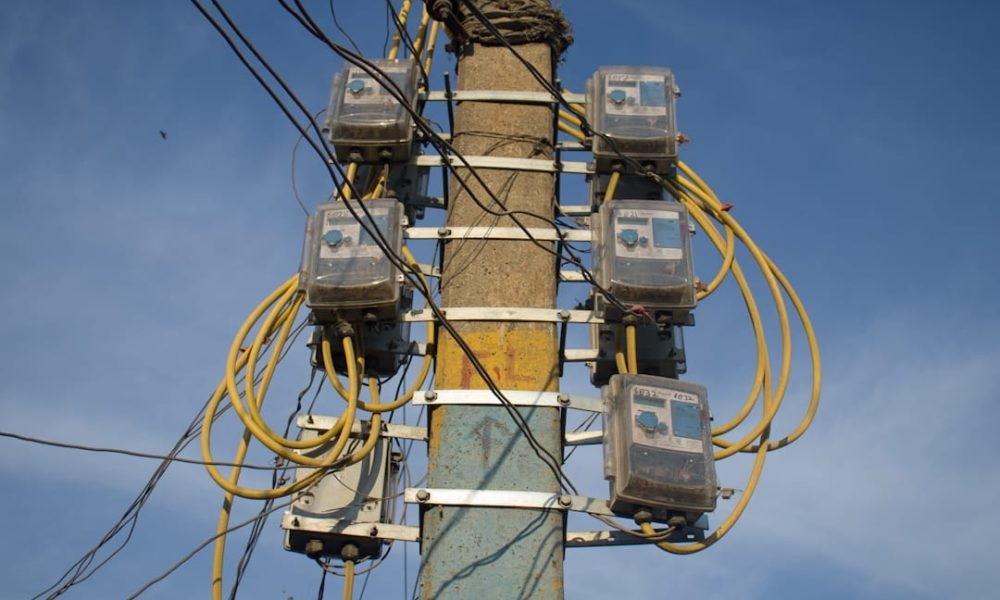
Kashmir Smart Meter Controversy: Consumers Face Steep Power Bills, Protests Spread
By: Javid Amin | 22 February 2026
A Reform Meant to Modernize — Now at the Center of Public Anger
The ambitious rollout of smart electricity meters across Jammu and Kashmir has triggered widespread protests, mounting consumer complaints, and a deepening trust deficit between residents and the administration.
What began as a technical reform aimed at modernizing power distribution has evolved into a social flashpoint. Across districts such as Anantnag and Budgam, residents claim their electricity bills have doubled or even tripled following the installation of smart meters — despite what they describe as unchanged or reduced consumption.
The government insists the technology improves accuracy and eliminates manual manipulation. Consumers say the numbers simply do not add up.
What Is Changing: The 7.5 Lakh Smart Meter Target
The administration plans to install 7.5 lakh smart meters by March 2026, positioning the initiative as part of a broader power-sector reform agenda.
Officials argue the goals are clear:
-
Reduce power theft
-
Eliminate manual billing errors
-
Improve revenue recovery
-
Enable real-time monitoring
-
Ensure round-the-clock supply
Smart meters are designed to automatically transmit consumption data, reducing dependence on meter readers and manual entries — long considered vulnerable to human error and irregularities.
From a policy perspective, this aligns with nationwide electricity reforms focused on digitalization and loss reduction.
But in Kashmir, the reform has collided with public perception.
Consumer Experience: “Bills Have Doubled”
Residents in multiple districts report sudden billing spikes immediately after installation.
In Anantnag, individuals such as Sabzar Ahmad Dar publicly questioned how their electricity charges surged despite similar household usage patterns. Similar complaints have surfaced from urban neighborhoods and rural pockets alike.
Common grievances include:
-
Monthly bills far exceeding historical averages
-
Confusion over unit calculations
-
No clear breakdown of charges
-
Inability to reconcile consumption with bill amounts
For families accustomed to predictable billing patterns — even if supply was erratic — the shock has been severe.
In Budgam, groups of women staged demonstrations demanding that installations be halted until authorities explain billing mechanisms clearly.
The issue is no longer confined to technical discussion; it has become visible street dissent.
Why the Backlash Feels Different
The anger surrounding smart meters cannot be reduced to a billing dispute alone.
1. The Trust Deficit
For decades, Kashmir’s electricity system operated under a fragile but familiar arrangement:
-
Erratic supply
-
Limited hours of power
-
Predictable billing norms
-
Informal adjustments
Smart meters disrupted that equilibrium overnight.
When technology alters a long-standing social contract without adequate explanation, suspicion fills the vacuum.
2. Lack of Public Awareness
One of the strongest criticisms centers on communication gaps.
There was no large-scale public awareness campaign explaining:
-
How smart meters calculate consumption
-
How tariff slabs apply
-
How peak load pricing works
-
How consumers can monitor usage in real time
Without clarity, higher bills appear arbitrary rather than algorithmic.
3. Economic Strain
Electricity costs directly impact household budgets, especially in winter-heavy regions like Kashmir where heating demand surges.
For low-income families:
-
Higher bills reduce spending on essentials
-
Winter electricity demand magnifies charges
-
Fixed incomes offer little flexibility
The burden is felt disproportionately in rural and economically vulnerable communities.
Government’s Position: Accuracy Over Approximation
Authorities maintain that smart meters are not inflating bills — they are exposing actual consumption levels that traditional meters failed to capture.
Officials argue:
-
Earlier manual systems under-recorded usage
-
Theft and leakage inflated system losses
-
Accurate billing is essential for financial sustainability
-
Revenue recovery funds infrastructure upgrades
From the administration’s perspective, the reform is a structural correction, not a price hike.
They also emphasize that smart meters eliminate human interference and corruption risks associated with manual readings.
Yet policy rationality does not automatically translate into public acceptance.
Climate and Seasonal Demand Complications
Electricity usage in Kashmir is highly seasonal:
-
Winter heating spikes consumption
-
Summer cooling increases load
-
Extreme weather intensifies reliance on appliances
Smart meters measure real-time consumption precisely. During peak periods, that precision can produce noticeably higher bills compared to flat-rate or approximate historical calculations.
This seasonal surge, combined with tariff slabs, may partly explain perceived inflation — but without transparent explanation, consumers interpret it as malfunction.
Political Fallout
Opposition parties have begun amplifying public complaints, framing the issue as evidence of governance insensitivity.
The narrative being shaped includes:
-
Reforms imposed without consultation
-
Technology introduced without awareness
-
Financial burden shifted to citizens
-
Lack of audit transparency
In politically sensitive regions, economic dissatisfaction can quickly acquire political overtones.
The Reform Paradox
Kashmir’s smart meter controversy exemplifies a classic governance dilemma:
Technology promises efficiency.
Efficiency demands transparency.
Transparency requires trust.
Trust cannot be automated.
Without public buy-in, even well-designed reforms risk backlash.
The paradox lies in sequencing: modernization implemented before confidence-building often generates resistance.
Risks Ahead
If concerns remain unaddressed, several risks emerge:
1. Escalating Protests
Localized demonstrations could spread, especially in rural districts.
2. Social Unrest
Electricity is a daily necessity. Billing disputes easily become emotive.
3. Technical Credibility Crisis
If calibration doubts persist, the entire reform could face suspension or rollback pressure.
4. Political Polarization
Opposition mobilization could deepen divisions over governance reforms.
What Could Restore Confidence
Experts suggest a multi-step response:
-
Independent third-party audit of smart meters
-
Public demonstration sessions explaining billing logic
-
Transparent tariff breakdowns on bills
-
Helpline and grievance redress portals
-
Temporary transition subsidies for vulnerable households
-
Public dashboard showing area-level consumption trends
Reform sustainability depends not only on hardware but on institutional credibility.
The Broader Energy Context
Jammu & Kashmir historically faces:
-
High aggregate technical and commercial (AT&C) losses
-
Heavy subsidy dependence
-
Infrastructure maintenance gaps
-
Rising consumption demand
Without revenue reform, power utilities struggle financially. Smart meters are meant to plug this structural deficit.
But structural reform must coexist with social sensitivity.
Conclusion: Reform at a Crossroads
The smart meter rollout in Jammu & Kashmir is not inherently flawed — but its rollout strategy may be.
Consumers feel blindsided by sudden bill increases. The government insists it is correcting systemic inefficiencies. Both narratives can coexist.
What determines the outcome is not technology itself, but transparency.
In a region where governance trust remains fragile, policy design must account for perception as much as performance.
Smart meters may modernize Kashmir’s power grid.
But unless confidence is restored, the reform risks being remembered not for efficiency — but for unrest.