Winter Without Winter: Kashmir’s 7°C Heat Shock Signals a Climate Turning Point
By: Javid Amin | 16 February 2026
A February That Feels Like Spring in the Middle of Harsh Winter
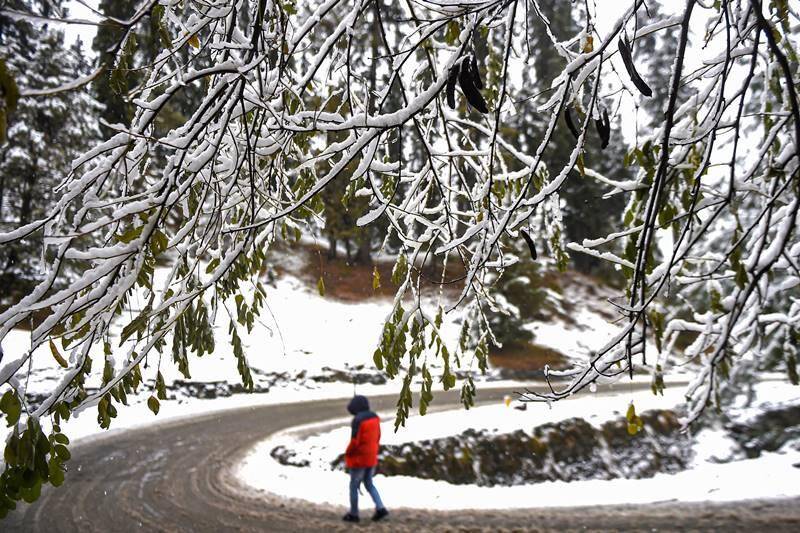
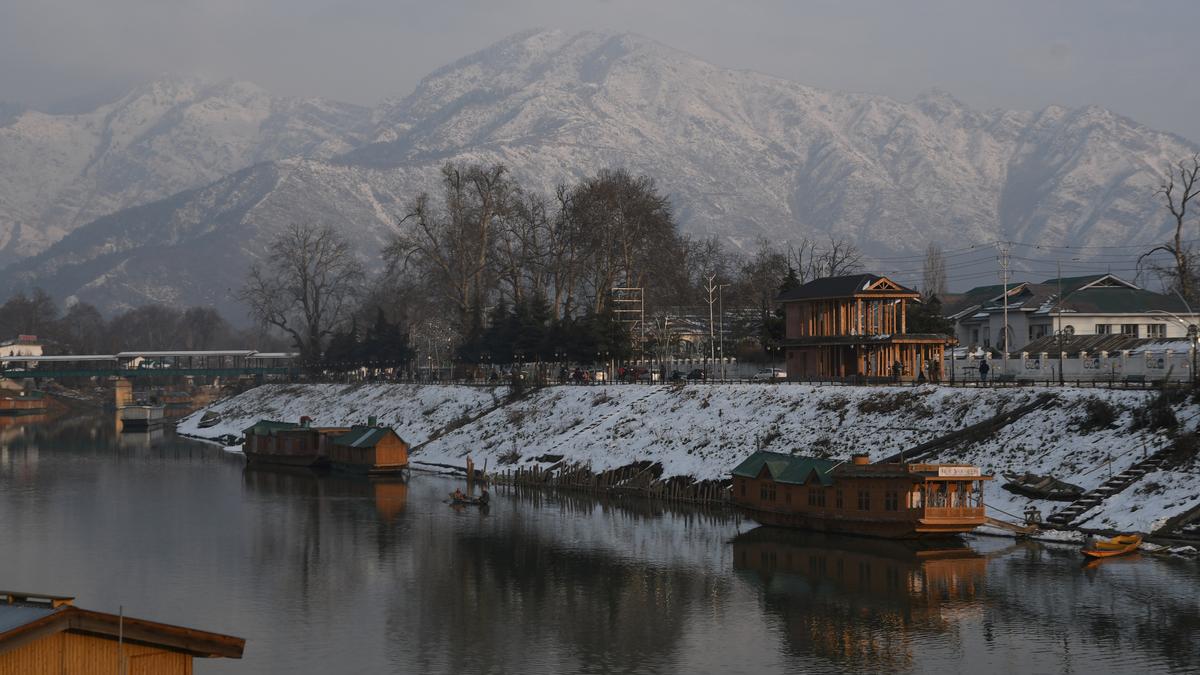
Jammu & Kashmir, February 2026 — Kashmir is living through a winter that barely resembles winter. During what should be the harshest stretch of the Valley’s traditional 70-day cold period, daytime temperatures are running 7–8°C above normal, snowfall is scarce, and anxiety is spreading across farms, ski resorts, and water departments.
Instead of frozen afternoons and silent snowfalls, much of the Valley is seeing bright sunshine and early-spring warmth. Meteorologists say February 2026 may enter local climate records as one of the warmest winter months in decades — not as an isolated curiosity, but as part of a worrying pattern.
For a region whose ecology, economy, and identity depend on snow, this is more than unusual weather. It is a structural warning.
The Numbers Behind the Anomaly
In Srinagar, February daytime temperatures normally hover around 6–10°C. This year, repeated highs of 17–18°C have turned winter afternoons into springlike days. Frost that typically lingers until noon now disappears by mid-morning.
Across higher elevations, the pattern holds. In Gulmarg, a destination known for deep snowpack and sub-zero winters, temperatures near 10°C have replaced the expected 1–2°C chill. Snow cover is patchy, and slopes that should be layered in white look prematurely exposed.
Overall winter precipitation has fallen to less than half of seasonal averages, marking the second consecutive year of severe snowfall deficit. Meteorologists attribute the shortfall to weakened western disturbances — the storm systems that deliver winter snow to the western Himalayas.
When these systems weaken or shift track, the Valley’s natural water cycle loses its winter foundation.
Snow as Kashmir’s Hidden Reservoir
Snow in Kashmir is not seasonal decoration. It is hydrological infrastructure.
Winter snow accumulates slowly and melts gradually, feeding rivers, springs, irrigation canals, and aquifers through spring and early summer. It acts as a delayed-release water system that stabilizes agriculture and drinking supply.
A thin snowpack has cascading consequences:
-
early depletion of surface water
-
reduced groundwater recharge
-
stressed irrigation systems
-
lower hydropower generation
-
shrinking municipal reserves
The true impact of a weak winter is not felt immediately. It arrives months later, when meltwater fails to sustain the landscape.
Hydrologists warn that Kashmir is entering spring already in deficit.
Tourism Without Snow: An Industry in Suspension
Winter tourism is one of Kashmir’s most visible economic engines. Skiing, snow trekking, alpine sightseeing, and hospitality employment depend on reliable snowfall.
This year, many resorts report cancellations, reduced footfall, and shortened activity windows. Seasonal workers — drivers, guides, instructors, hotel staff — face income gaps during what should be their peak earning period.
Tourism markets operate on expectation. Visitors do not book winter trips on probability; they book them on certainty. When snow becomes uncertain, confidence erodes.
A snow economy cannot thrive on speculation.
Local businesses worry that repeated weak winters could reshape Kashmir’s global image as a winter destination, forcing the industry to rethink its seasonal model.
Agriculture Enters the Risk Zone
Farmers across the Valley are watching the warmth with unease. Winter snow determines soil moisture and groundwater availability for spring crops.
Without sufficient snow:
-
soil dries earlier
-
irrigation demand spikes
-
pumping costs rise
-
crop yields become unpredictable
Wheat and mustard are particularly sensitive to early moisture conditions. Orchard systems — apples, walnuts, cherries — require both winter chill and spring hydration. Warmer winters disrupt flowering cycles, pest balance, and productivity.
For farmers, climate variability is not abstract science. It is financial uncertainty measured in harvests.
Agriculture becomes a gamble against the sky.
Rivers Losing Their Seasonal Rhythm
Kashmir’s rivers evolved around predictable melt cycles. Engineers designed dams, canals, and hydropower infrastructure based on historical snow patterns.
That rhythm is now unstable.
Thin snowpack causes:
-
earlier runoff peaks
-
shorter melt seasons
-
weaker late-summer flows
-
reservoir underperformance
Water timing is becoming as critical as water volume. Systems built for stable hydrology must now adapt to volatility.
Infrastructure that assumes historical averages risks underdelivering in a warming climate.
Avalanche Risk in a Warmer Winter
Paradoxically, warmer winters can increase avalanche unpredictability. Rapid thaw-freeze cycles weaken layered snow structures, making slopes unstable.
Authorities warn that irregular snow conditions demand caution in high-altitude zones. Thin snowpacks respond more dramatically to temperature swings, increasing the risk of sudden collapses.
Less snow does not automatically mean less danger.
It often means less predictable danger.
Mountain safety now requires real-time weather awareness rather than reliance on seasonal assumptions.
Climate Debate Moves Into the Assembly
The snowfall deficit has moved beyond meteorological discussion into political debate. Lawmakers in Jammu and Kashmir are openly confronting climate risk following two consecutive weak winters.
Officials acknowledge that monitoring systems show persistent precipitation shortfalls. Opposition members argue that contingency planning should have accelerated after the first failed season.
The debate marks a turning point: climate is no longer background noise. It is now a governance issue tied directly to budgets, livelihoods, and public stability.
Once climate affects economics, it becomes legislative.
A Signal Larger Than One Winter
Scientists caution against attributing every warm season solely to climate change. Weather fluctuates naturally. But patterns carry meaning.
Kashmir has now experienced:
-
consecutive snowfall deficits
-
above-normal winter temperatures
-
shortened snow persistence
-
erratic precipitation timing
These align with broader Himalayan warming trends observed across research networks. Mountain regions warm faster than global averages, amplifying ecological stress.
This winter is not proof of collapse.
It is evidence of acceleration.
And acceleration demands preparation.
The Psychological Shock of a Missing Winter
Snow is embedded in Kashmir’s cultural identity. It shapes architecture, clothing, seasonal rituals, and collective memory. A winter without snow feels incomplete.
Residents describe emotional disorientation. Familiar sensory cues — silent snowfall, frozen mornings, snow-laden rooftops — are fading.
Climate change alters how a place feels before it alters how it functions.
That emotional shift often precedes political urgency. People respond faster to lost identity than to abstract data.
Planning for a New Baseline
The central question facing Kashmir is not whether this winter was warm. It is whether warm winters must now be considered part of the planning baseline.
Every major sector depends on that answer:
-
water management
-
crop selection
-
tourism investment
-
urban infrastructure
-
hydropower design
Planning for a climate that no longer exists is the real danger.
Adaptation does not begin with catastrophe. It begins with updated assumptions.
The Strategic Window
Kashmir is not yet in ecological collapse. It stands at a threshold — early enough to adapt, late enough to feel urgency.
Regions that act during thresholds modernize smoothly. Regions that delay enter cycles of emergency response.
The Valley still has agency.
Early adaptation is cheaper than crisis recovery.
A Future Without Certainty — But Not Without Options
Snow can no longer be taken for granted. That is the lesson of Winter 2026.
From now on, resilience must replace expectation.
Water systems must plan for deficit years.
Agriculture must diversify against heat risk.
Tourism must expand beyond snow dependency.
Cities must prepare for warmer winters and stressed supply.
Governance must integrate climate into every development plan.
This is not pessimism. It is modernization.
Kashmir has survived centuries of upheaval — geographic, political, and economic. Climate change is another transformation, but not an impossible one.
The snow may thin.
The Valley’s capacity to respond does not have to.