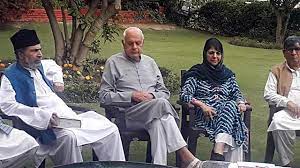
‘Highly Unacceptable’: Tarigami Slams Kishtwar DM’s Ramadhan Donation Order; Parties Lock Horns Over Religious Freedom vs Regulation
By: Javid Amin | 20 Febuary 2026
Kishtwar Ramadhan Donation Order Triggers Political Storm Across Jammu & Kashmir
A directive issued by the District Magistrate of Kishtwar regulating Ramadhan donations has ignited a sharp political controversy in Jammu & Kashmir, drawing strong reactions from almost all major political parties in the Union Territory.
The order — reportedly mandating prior approval and verification for fundraising during Ramadhan by NGOs, trusts, and individuals — has been described by critics as an “unconstitutional interference” in religious practices. Supporters, however, argue that it ensures transparency and prevents misuse of funds.
The controversy has once again exposed the delicate balance between governance, security oversight, and religious freedom in J&K’s sensitive socio-political environment.
Tarigami Calls Order ‘Highly Unacceptable’
Senior CPI(M) leader and MLA M Y Tarigami reacted sharply, terming the directive “highly unacceptable.”
Tarigami argued that:
-
The order interferes with established religious traditions.
-
Community-led charity during Ramadhan is an integral spiritual practice.
-
Administrative oversight of religious donations risks violating constitutional guarantees.
He emphasized that charity (Zakat and Sadaqah) during Ramadhan is not merely a financial act but a core pillar of faith for Muslims, and any bureaucratic intrusion must be legally justified and proportionate.
“Such measures,” he suggested, “should not undermine people’s confidence in constitutional freedoms.”
Congress MLAs: ‘Unconstitutional and Bad in Law’
MLAs from the Indian National Congress strongly criticized the directive, calling it “unconstitutional and bad in law.”
Congress legislators argued that:
-
Religious charity falls under fundamental rights protected by Articles 25 and 26 of the Constitution.
-
Administrative regulation of religious donations without compelling legal basis sets a dangerous precedent.
-
Governance should facilitate, not restrict, community-driven welfare initiatives.
Some Congress leaders also questioned whether similar regulatory measures were applied uniformly across all religious fundraising activities, suggesting selective enforcement could further complicate the issue.
National Conference: ‘Unnecessary Intrusion Into Religious Freedom’
Leaders of the Jammu & Kashmir National Conference (NC) described the order as an “unnecessary intrusion” into religious affairs.
NC spokespersons stressed that:
-
The administration must distinguish between legitimate oversight and overreach.
-
Religious practices should not be subjected to excessive bureaucratic scrutiny.
-
Community trust is critical in a region with complex political sensitivities.
They urged the administration in Kishtwar district to reconsider and withdraw the directive in the interest of social harmony.
PDP: ‘Bureaucratizing Faith’ Risks Alienation
The People’s Democratic Party (PDP) joined the chorus of criticism, calling the directive an attempt to “bureaucratize faith.”
PDP leaders argued that:
-
Faith-based charity is deeply embedded in community life.
-
Excessive regulation could alienate ordinary citizens.
-
The move may unintentionally create perceptions of targeted administrative action.
They warned that in a region where community confidence in institutions is essential, symbolic actions can carry disproportionate political consequences.
BJP Defends Directive: ‘Transparency and Accountability’
In contrast, leaders of the Bharatiya Janata Party (BJP) defended the Kishtwar District Magistrate’s directive.
BJP representatives argued that:
-
The order is aimed at preventing misuse of charitable funds.
-
It ensures transparency and financial accountability.
-
It protects donors from fraudulent schemes during peak charitable seasons like Ramadhan.
Party leaders maintained that the directive is administrative in nature and not directed against any religion.
They framed the order as part of broader governance reforms focused on monitoring financial flows, especially in sensitive districts.
What the Order Entails
According to reports, the directive requires:
-
Prior permission for fundraising drives during Ramadhan.
-
Verification of credentials of NGOs, trusts, or individuals collecting donations.
-
Documentation and oversight to prevent unauthorized collection.
While such measures are sometimes justified under security or financial compliance laws, critics argue that timing and communication are crucial to avoid perceptions of religious interference.
The Constitutional Question
At the heart of the debate lies a constitutional tension:
-
Article 25 guarantees freedom of conscience and free profession, practice, and propagation of religion.
-
However, this freedom is subject to public order, morality, and health.
Supporters of the order contend that administrative regulation falls within permissible limits of maintaining public order and preventing fraud.
Opponents argue that blanket approval requirements during a sacred month risk exceeding reasonable restrictions.
Legal experts suggest that the sustainability of the directive would depend on:
-
Its legal basis under specific statutes.
-
Whether it is applied uniformly across communities.
-
Whether it is proportionate to the objective pursued.
Why Ramadhan Charity Is Especially Sensitive
Ramadhan is a month marked by heightened charitable giving across Muslim communities. Zakat (obligatory alms) and voluntary donations increase significantly during this period.
In districts like Kishtwar — which have diverse religious demographics and a history of occasional communal tension — administrative interventions during religious periods are scrutinized intensely.
Any directive that touches religious observance can rapidly transform into a broader political issue.
Governance vs Religious Autonomy: The Larger Debate
This episode highlights a recurring governance dilemma in Jammu & Kashmir:
-
How to ensure financial transparency without appearing intrusive.
-
How to enforce law and order while preserving religious autonomy.
-
How to regulate NGOs and informal fundraising networks without disrupting community trust.
Given J&K’s layered political history, administrative orders often carry symbolic weight beyond their technical content.
Political Timing and Sensitivity
The timing of the directive — during Ramadhan — has amplified reactions.
Opposition leaders argue that even well-intentioned measures require sensitive timing and inclusive consultation.
Political observers note that in J&K, perception management is often as important as policy design.
Potential Fallout
If the controversy escalates, it could lead to:
-
Demands for formal clarification in the Assembly.
-
Legal scrutiny of the directive.
-
Public protests or community mobilization.
-
Political narratives framing governance as intrusive.
Alternatively, if the administration clarifies its legal basis and scope, tensions may subside.
Conclusion: A Test of Administrative Sensitivity in J&K
The Kishtwar Ramadhan donation order has evolved from a district-level administrative directive into a Union Territory-wide political debate.
For CPI(M)’s M.Y. Tarigami, Congress MLAs, NC, and PDP, the issue centers on religious freedom and constitutional propriety. For the BJP, it is about transparency and governance reform.
Ultimately, the controversy underscores a central reality of Jammu & Kashmir politics: policies intersecting with faith must be crafted — and communicated — with extraordinary care.
In a region where governance, security, and identity are tightly interwoven, administrative decisions rarely remain administrative for long.