Mehbooba Mufti Demands Divisional Status, Rail Connectivity for Chenab Valley
By: Javid Amin | 07 February 2026
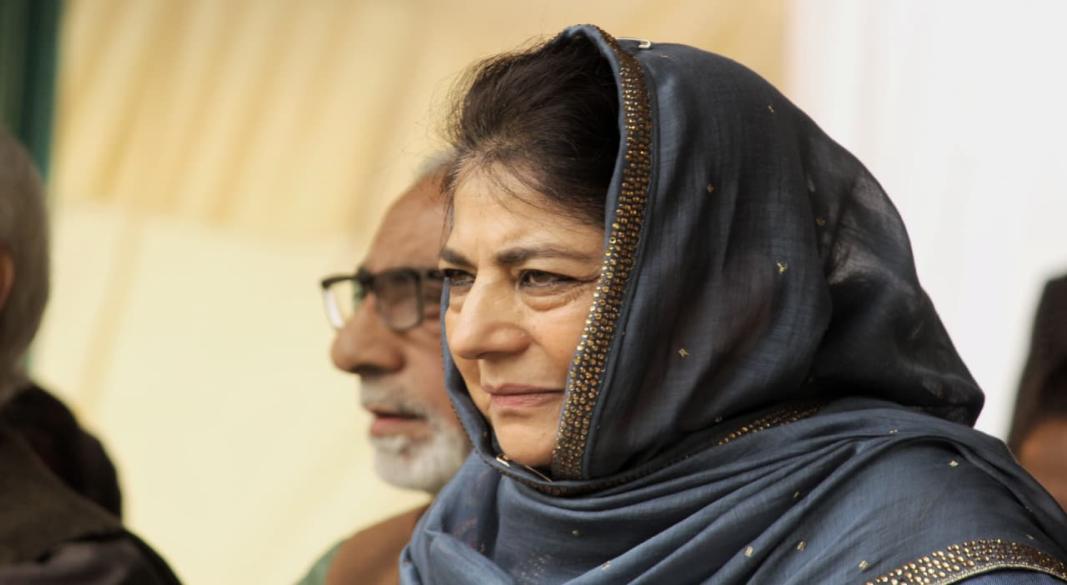
Former Jammu & Kashmir Chief Minister and Peoples Democratic Party (PDP) president Mehbooba Mufti has once again brought national and regional attention to the Chenab Valley, demanding divisional status and rail connectivity for the strategically important yet historically underserved region. Raising these issues during her “Baat Cheet” outreach programme in Doda, Mufti framed the demands not as political bargaining points but as overdue correctives to decades of institutional neglect.
Her intervention taps into a sentiment deeply felt across Doda, Kishtwar, and Ramban districts—areas rich in human capital and natural resources but constrained by geography, weak infrastructure, and limited administrative reach.
What Is the Chenab Valley—and Why It Matters
The Chenab Valley comprises the districts of Doda, Kishtwar, and Ramban, stretching across rugged Himalayan terrain carved by the Chenab River. Despite its strategic location linking Jammu with Kashmir, the region has remained administratively peripheral.
Residents often describe Chenab Valley as caught between regions—neither fully prioritised in Jammu-centric planning nor adequately represented in Kashmir-focused political narratives. This structural invisibility, Mufti argues, is at the heart of its developmental lag.
Demand for Divisional Status: Governance Closer to the People
At the core of Mufti’s demand is the call to recognise Chenab Valley as a separate administrative division. Currently split administratively, residents must travel long distances to Jammu for divisional-level services.
Divisional status would mean:
- Dedicated administrative machinery
- Faster decision-making
- Region-specific planning
- Better disaster response in a landslide- and flood-prone zone
Mufti also demanded the establishment of a High Court division bench in the region, arguing that access to justice remains prohibitively difficult for residents who must undertake arduous journeys to Jammu.
Rail Connectivity: Breaking the Cycle of Isolation
Perhaps the most transformative of Mufti’s demands is rail connectivity for the Chenab Valley. While major rail projects have reshaped connectivity in other parts of J&K, the Chenab region remains excluded from the rail map.
Mufti argued that rail access would not only integrate the region economically but also enhance disaster resilience, military logistics, and tourism.
Strategic Tunnels: All-Weather Lifelines
Mufti specifically flagged three critical tunnel projects:
- Kapran–Dessa Tunnel
- Sudhmahadev–Marmat Tunnel
- Improved inter-district road tunnels
These tunnels, she said, are essential for ensuring year-round connectivity, particularly during harsh winters when roads are frequently blocked.
Tourism Potential: From Transit Zone to Destination
The Chenab Valley boasts alpine meadows, dense forests, pilgrimage sites, and adventure tourism potential. Yet it remains largely a transit corridor rather than a destination.
Mufti proposed the creation of a Doda Development Authority to ensure planned, sustainable tourism that prioritises local employment and environmental safeguards.
‘Baat Cheet’ in Doda: Grassroots Politics
The demands were articulated during Mufti’s interaction with civil society members under the PDP’s “Baat Cheet” initiative. Participants raised issues ranging from unemployment and poor healthcare access to environmental degradation.
Mufti’s outreach signals PDP’s attempt to reconnect with peripheral regions often overshadowed in Valley-centric politics.
Ground Reality: What Locals Say
Local residents broadly welcomed the demands, particularly rail connectivity and divisional status. However, scepticism remains about whether political advocacy will translate into policy action.
Younger residents emphasised employment opportunities, while elders stressed administrative dignity and recognition.
Political Context: Why Now
Mufti’s renewed focus on Chenab Valley comes at a time when regional parties are seeking to reassert relevance in a changed political landscape. Highlighting neglected sub-regions allows PDP to project itself as a party of decentralised development.
What Would Change If Demands Are Met
If implemented, divisional status and rail connectivity could:
- Reduce administrative alienation
- Boost local economies
- Improve justice delivery
- Encourage sustainable tourism
However, these outcomes depend on sustained political will and financial commitment.
Final Word: Beyond Symbolism
Mehbooba Mufti’s intervention underscores a larger truth: development debates in Jammu & Kashmir cannot remain binary. Regions like Chenab Valley demand tailored governance solutions.
Whether these demands gain traction or fade into political rhetoric will determine if Chenab Valley finally moves from the margins to the mainstream of J&K’s development narrative.