‘Caged Within J&K, Thrashed Outside’: PDP Protest After Police Stop March Against Attacks on Kashmiris
By: Javid Amin | 31 January 2026
A Protest Halted, A Message Amplified
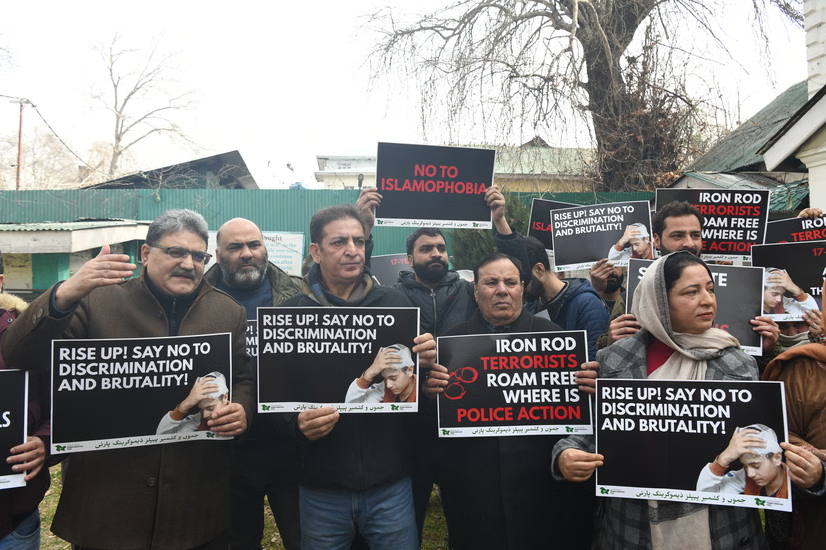
The People’s Democratic Party (PDP) on Tuesday staged a protest in Srinagar to condemn a series of attacks on Kashmiris in other Indian states, only to be stopped by police before the march could proceed. What followed was not merely a confrontation over public order, but a sharp political statement that has since resonated across Jammu and Kashmir: Kashmiris, PDP leaders said, are “caged within J&K and thrashed outside.”
The phrase, stark and emotionally charged, captured a growing sense of unease in the Valley — that Kashmiris face restrictions, surveillance, and curtailed political expression at home, while simultaneously confronting violence, harassment, and insecurity when they venture outside the Union Territory in search of education or livelihoods.
Why PDP Took to the Streets
PDP leaders said the protest was triggered by a spate of recent incidents in which Kashmiri traders, students, and workers were allegedly assaulted or harassed in states such as Uttarakhand and Haryana. The most disturbing among them involved a young Kashmiri shawl seller who was beaten by a mob in Dehradun, leaving him seriously injured.
According to the party, these are not isolated incidents but part of a recurring pattern of vulnerability faced by Kashmiris living or working outside their home region. The protest, they said, was meant to demand accountability, protection, and dignity — not just sympathy after each incident goes viral.
Police Stop the March
As PDP workers attempted to march through Srinagar to register their protest, police and security personnel intervened, citing concerns over law and order. Barricades were erected, movement was restricted, and the march was effectively halted.
PDP leaders criticised the action, arguing that peaceful political expression itself is being curtailed. Stopping a protest against violence elsewhere, they said, only reinforces the perception that Kashmiris are denied democratic space within J&K even as they face hostility beyond it.
‘Caged Within, Thrashed Outside’: The Symbolism
The slogan used by the PDP struck a chord because it compresses multiple grievances into a single frame:
- Within J&K: Political restrictions, limits on protests, preventive detentions, and a shrinking space for dissent.
- Outside J&K: Attacks on migrant workers, traders, and students, often accompanied by identity-based hostility.
By linking these two experiences, the PDP sought to argue that Kashmiris are facing a dual vulnerability — constrained at home and unsafe elsewhere.
A Pattern of Attacks Beyond the Valley
In recent months, several incidents involving Kashmiri vendors and students have been reported from different parts of India. Seasonal traders selling shawls, dry fruits, or handicrafts — many of them teenagers or young men — have traditionally travelled to northern and western states during winter to earn a livelihood.
These journeys, once seen as economic necessity, are now increasingly viewed with anxiety. Political leaders across parties in J&K have warned that repeated attacks risk choking off an important livelihood lifeline for thousands of families.
Political Responses Across the Spectrum
The Dehradun assault and similar incidents have drawn condemnation from across Jammu and Kashmir’s political spectrum:
- Omar Abdullah, Chief Minister of J&K, said he could not ask his people to seek livelihoods outside the region when their safety cannot be guaranteed.
- BJP leader Ashok Kaul termed the attack on the shawl seller “unfortunate and wrong,” calling for strict action.
- Mirwaiz Umar Farooq described such assaults as “disturbing and unacceptable,” warning of rising intolerance.
PDP leaders argue that their protest must be seen in this wider chorus of concern, rather than dismissed as partisan agitation.
The Freedom of Movement Question
At the heart of the controversy lies a fundamental question: Can Kashmiris move freely and safely within their own country?
While the Indian Constitution guarantees freedom of movement and residence, the lived experience of many Kashmiris, political leaders argue, tells a more complicated story. Fear of profiling, harassment, or violence has begun to shape decisions about migration for work or study.
The PDP warned that if this trend continues unchecked, it will deepen alienation and mistrust — outcomes that carry long-term social and political costs.
Employment, Migration, and Compulsion
The issue is closely tied to unemployment in J&K. With limited local opportunities, thousands of young Kashmiris depend on seasonal or informal work outside the Union Territory. When that option becomes unsafe, the pressure shifts back inward.
This has revived calls — echoed by leaders like Sajad Lone — for serious, outcome-driven job creation within J&K, particularly in tourism, horticulture, handicrafts, and small enterprises.
Law and Order vs Democratic Expression
The police decision to stop the PDP march has also reopened debate on how law and order considerations are balanced against democratic rights in the region. Critics argue that preventing peaceful protests fuels resentment rather than stability.
Supporters of the administration counter that restrictions are necessary to prevent escalation. The PDP, however, insists that silencing protest does not resolve the underlying grievance.
A Larger National Question
Beyond party politics, the controversy touches a broader national concern: how India protects its internal migrants, minorities, and informal workers. Attacks on Kashmiris, if left inadequately addressed, risk being read as failures of governance rather than isolated crimes.
Leaders in J&K have urged both state and central governments to ensure swift justice, visible accountability, and clear messaging that violence against any group will not be tolerated.
Conclusion: Protest as a Mirror
The PDP’s halted march in Srinagar may not have covered physical distance, but it has travelled far in political discourse. The slogan “caged within J&K, thrashed outside” acts as a mirror — reflecting anxieties about freedom, safety, and dignity that many Kashmiris say define their everyday reality.
Whether the response comes in the form of stronger protections, policy reform, or renewed dialogue will determine if this moment becomes another fleeting outrage — or a turning point in addressing a deepening sense of insecurity.


