FIRs Against Youth Under PSA to Be Scrapped After Statehood: Sakina Itoo’s Big Promise Explained
By: Javid Amin | 09 February 2026
A Statement That Echoed Beyond the Assembly
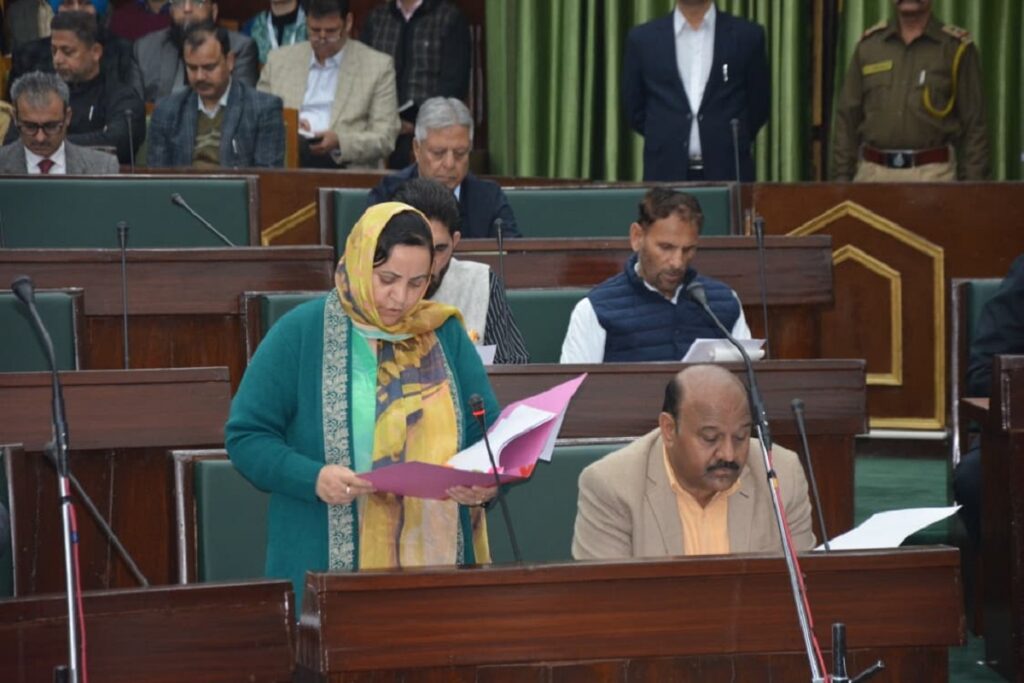
When Jammu and Kashmir Minister Sakina Itoo rose to speak in the Legislative Assembly on February 9, 2026, her words carried more than just political intent—they carried the weight of years of anxiety, legal uncertainty, and unresolved trauma for thousands of families across the Union Territory.
Her announcement was clear and unequivocal:
All FIRs registered against youth under the Public Safety Act (PSA) will be scrapped once statehood is restored to Jammu and Kashmir.
In a region where the PSA has long been one of the most debated, criticised, and emotionally charged laws, the declaration immediately stood out—not merely as a policy position, but as a promise tied directly to the restoration of democratic authority.
This was not a vague assurance. It was framed as:
-
A manifesto commitment
-
A post-statehood action
-
A structural change dependent on the return of the Home Department to an elected government
To understand the significance of this statement, one must look beyond the Assembly floor and examine what the PSA represents, what statehood restoration changes, and why this promise resonates so deeply in Jammu and Kashmir’s political landscape.
What the Minister Said—and Why Her Words Matter
Sakina Itoo’s statement came during a charged Assembly session where issues of governance, security, youth detention, and political autonomy were already under debate.
Addressing the House, she stated:
“We have mentioned in our election manifesto that we will try to restore statehood. After that, FIRs registered against youth under the PSA will be scrapped. The FIRs registered against them will be ended. Only then will we bring these youth back from outside jails when we have statehood and when we have the Home Department under our control.”
This single statement contained three critical political assertions:
-
The commitment exists in the ruling party’s election manifesto
-
The scrapping of FIRs is contingent on statehood restoration
-
Control of the Home Department is essential for implementation
Each of these points carries legal and political implications that go far beyond rhetoric.
Understanding the Public Safety Act: Why PSA Detentions Are Different
The Public Safety Act (PSA) is not an ordinary criminal law.
It allows for:
-
Preventive detention without trial
-
Detention for up to two years
-
Incarceration based on administrative orders, not judicial verdicts
For decades, the PSA has been used as a tool of preventive security in Jammu and Kashmir, particularly during periods of unrest.
Why PSA FIRs Are So Contentious
Unlike standard criminal cases:
-
Detainees can be held without formal charges
-
Bail provisions are limited
-
Judicial review is often delayed
-
Families frequently lack clarity on detention grounds
When FIRs under PSA remain active, even after detention periods end, they:
-
Prevent rehabilitation
-
Restrict employment opportunities
-
Create long-term legal vulnerability
-
Reinforce cycles of alienation among youth
This is why the promise to scrap FIRs, not merely release detainees, is significant.
Youth Detentions and the Reality of Outside Jails
One of the most emotionally charged aspects of Sakina Itoo’s statement was her reference to youth lodged in prisons outside Jammu and Kashmir.
Why Youth Are Shifted Outside the UT
In many PSA cases:
-
Detainees are transferred to prisons in other states
-
Families must travel long distances for visits
-
Legal hearings become logistically difficult
According to Itoo, many of these youth:
-
Are not receiving proper hearings
-
Face communication barriers with legal counsel
-
Experience isolation from family support systems
By linking FIR withdrawal with bringing youth back from outside jails, the minister framed the issue as both administrative and humanitarian.
Statehood Restoration: The Missing Link in the Promise
Perhaps the most important part of Sakina Itoo’s announcement was not the promise itself—but the condition attached to it.
Why Statehood Matters Legally
Since Jammu and Kashmir became a Union Territory:
-
The Home Department is not under an elected state government
-
Law and order decisions rest largely with the central administration
-
State-level withdrawal of FIRs is structurally constrained
By stating that FIRs can be scrapped only after statehood restoration, Itoo made a key admission:
The current political setup does not allow the elected government full control over PSA-related decisions.
This transforms the statement from a mere policy pledge into an argument for institutional empowerment.
Manifesto Politics: Promise or Accountability?
Sakina Itoo was explicit in grounding the announcement in the ruling party’s election manifesto.
This matters because:
-
Manifestos are formal political contracts with voters
-
Linking PSA reforms to statehood makes the promise verifiable
-
Failure to deliver would carry electoral consequences
By reiterating the manifesto commitment in the Assembly, the government has effectively:
-
Reaffirmed accountability
-
Publicly tied its credibility to statehood restoration
-
Elevated the issue from activism to governance
Rehabilitation, Not Retaliation: The Political Framing
The minister described the scrapping of FIRs as part of a broader agenda of rehabilitation and reconciliation.
This framing is politically deliberate.
Rather than presenting PSA reform as:
-
A concession
-
A rollback of security policy
-
A response to pressure
It is positioned as:
-
A future-oriented rehabilitation measure
-
A step toward normalisation
-
A means of reintegrating youth into society
In a region where alienation among young people has been a persistent concern, this narrative aims to shift the conversation from control to correction.
Security vs Governance: The Assembly Debate Context
The announcement did not occur in isolation.
The same Assembly session witnessed debates on:
-
The Indus Water Treaty
-
Regional resource allocation
-
Governance autonomy
-
Youth detentions and civil liberties
This context matters because it underscores the intersection of security policy and democratic governance in Jammu and Kashmir.
The PSA issue sits at the heart of that intersection.
Political Reactions: Why the Statement Is Being Closely Watched
While the statement itself was made by a minister, its implications extend across the political spectrum.
For the Ruling Party
-
It reinforces its commitment to youth outreach
-
Positions statehood restoration as a governance necessity
-
Signals intent to reform security-era policies through democratic means
For the Opposition
-
It creates a benchmark against which future action will be measured
-
Raises questions about timelines and feasibility
-
Opens space for scrutiny over implementation
For Civil Society and Families
-
It offers conditional hope
-
Acknowledges long-standing grievances
-
Signals a shift in official discourse
The Legal Mechanics: What Happens After Statehood?
If statehood is restored and the Home Department returns to state control, the government would be able to:
-
Review PSA-related FIRs
-
Withdraw cases administratively
-
Coordinate with police and prosecution
-
Facilitate the return of detainees from outside prisons
However, this process would require:
-
Case-by-case evaluation
-
Coordination with judicial authorities
-
Clear policy guidelines to avoid arbitrariness
The statement sets intent—but execution will determine credibility.
Why This Promise Resonates With Youth
For many young people in Jammu and Kashmir, PSA cases represent:
-
A permanent legal shadow
-
Social stigma
-
Barriers to education and employment
Scrapping FIRs would mean:
-
A chance at a clean slate
-
Psychological closure
-
Reintegration into mainstream society
This is why the announcement, though conditional, has struck an emotional chord.
Statehood as a Political Pivot
By tying PSA reform to statehood, the government has effectively made statehood restoration a prerequisite for healing past wounds.
This reframes statehood as:
-
Not just a constitutional demand
-
But a tool for governance reform
-
A mechanism to correct structural injustices
In political terms, this is a strategic move—linking autonomy with accountability.
Challenges Ahead: From Statement to Policy
Despite its significance, the announcement faces several challenges:
-
Statehood restoration is not entirely within the UT government’s control
-
Administrative complexity in withdrawing FIRs
-
Managing security concerns alongside reform
-
Ensuring transparency to avoid selective implementation
The gap between promise and policy will define the government’s credibility.
A Shift in Language, If Not Yet in Law
Even before legal changes occur, Sakina Itoo’s statement marks a shift in official language.
Where PSA discussions were once framed purely in security terms, they are now increasingly spoken of in the language of:
-
Rehabilitation
-
Youth welfare
-
Democratic governance
-
Political responsibility
Language matters—especially in regions shaped by conflict.
Conclusion: A Conditional Promise With Lasting Implications
Sakina Itoo’s announcement that FIRs against youth detained under the PSA will be scrapped after statehood restoration is not just a policy statement—it is a political signal.
It signals:
-
Recognition of youth grievances
-
Commitment to manifesto accountability
-
The centrality of statehood to meaningful governance
-
A desire to move from coercion to reconciliation
Whether this promise translates into action will depend on factors beyond one Assembly speech.
But for now, the statement has done something important:
It has placed youth, justice, and democratic control at the centre of Jammu and Kashmir’s political conversation—where they arguably belong.