Kashmir’s Silent Food Crisis: Inside the Rotten Meat Crackdown Shaking Public Confidence
By: Javid Amin | 13 February 2026
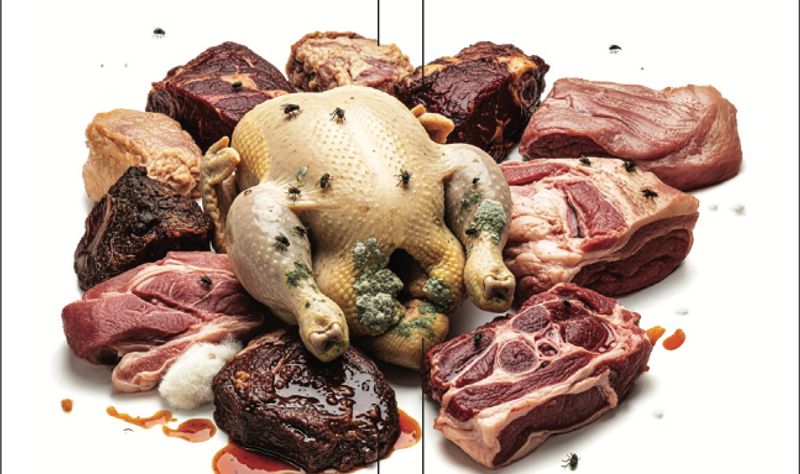
A sweeping enforcement drive across Jammu & Kashmir has uncovered thousands of kilograms of rotten meat and unsafe poultry entering consumer markets, exposing what health experts describe as a serious food safety breach with long-term socio-economic implications.
The seizures are not isolated incidents. They represent a pattern — one that reveals systemic vulnerabilities in supply chains, inspection systems, and urban demand pressures. For ordinary families, this is no longer just an enforcement statistic. It is a question of trust in what reaches the dinner table.
District-Wise Breakdown: The Scale of the Seizures
The compiled figures dated February 12 show a multi-district crackdown spanning urban centers and rural markets alike.
The highest volumes were seized in Srinagar, followed closely by Jammu, highlighting the pressure points of high-consumption zones.
Other districts — including Anantnag, Kupwara, Ganderbal, Pulwama, and Budgam — reveal that the problem is not urban alone. It has penetrated supply chains that stretch deep into rural trade networks.
This is not a fringe hygiene issue. It is a valley-wide market integrity concern.
Why Rotten Meat Circulates: The Economics Behind the Risk
Spoiled meat does not appear by accident. It appears because incentives exist.
Food safety experts explain that rotten stock often emerges from:
-
cold chain failures
-
illegal bulk storage
-
expired imports
-
unauthorized slaughter channels
-
price-driven resale of rejected inventory
Urban demand creates pressure. Vendors operating on thin margins sometimes gamble on unsafe stock to reduce losses. When enforcement weakens, that gamble becomes routine.
This is a classic socio-economic trap: affordability competing with safety.
Consumers chasing lower prices unknowingly fuel a market that rewards risk-taking suppliers.
Public Health Implications: A Hidden Medical Burden
Rotten meat is not just unpleasant. It is medically dangerous.
Consumption can lead to:
-
food poisoning
-
bacterial infections
-
gastrointestinal disease
-
parasitic contamination
-
long-term digestive complications
-
hospitalization in severe cases
Health professionals warn that repeated exposure increases vulnerability, especially among children and elderly populations.
The problem is underreported. Many families treat symptoms at home rather than entering official statistics. That invisibility masks the real scale of the health burden.
A public health system cannot fix what it cannot measure.
Enforcement Drive: A Necessary Shock to the System
Officials describe the crackdown as part of a rolling compliance operation rather than a one-day raid. Inspection teams intensified surprise market checks over several days, targeting supply hubs and retail clusters.
The strategy signals a shift from reactive enforcement to visible deterrence.
When seizures cross multiple districts simultaneously, the message is clear: the system is watching.
But enforcement experts caution that crackdowns only succeed if sustained. One operation cleans markets temporarily. Continuous inspection changes behavior.
The difference between the two determines whether this becomes reform or a headline cycle.
Urban Demand and Supply Chain Stress
Cities consume faster than infrastructure adapts.
High-density markets in Srinagar and Jammu depend on extended distribution chains. Meat often travels long distances before reaching vendors. Every transport delay increases spoilage risk.
Without strict temperature control and licensing discipline, contamination becomes statistically inevitable.
This is not just a policing issue. It is an infrastructure issue.
Cold storage, certified slaughterhouses, and monitored logistics are as important as raids.
The Consumer Trust Crisis
Food markets operate on confidence.
Once consumers suspect contamination, every purchase becomes psychological stress. Families begin second-guessing vendors. Informal rumor networks amplify fear faster than official clarifications.
Trust erodes quietly, but rebuilding it requires visible transparency.
Authorities must communicate:
-
inspection frequency
-
licensing status
-
vendor penalties
-
hygiene certifications
Public dashboards and consumer reporting hotlines can convert fear into cooperative oversight.
Economic Fallout: Vendors Caught in the Middle
Small meat sellers face a dual squeeze:
-
rising compliance pressure
-
shrinking profit margins
Many operate in informal economies with limited refrigeration access. Strict enforcement without infrastructure support risks pushing them into underground markets instead of reforming behavior.
Effective policy must combine punishment with transition support:
-
subsidized cold storage
-
licensing assistance
-
hygiene training
-
inspection education
Punishment alone drives concealment. Incentives drive compliance.
Rural Spread: Why Smaller Districts Matter
Lower seizure numbers in rural districts should not be misread as safety. They may reflect inspection reach rather than absence of risk.
Food safety enforcement historically concentrates in cities. Rural markets often rely on trust-based transactions with minimal oversight.
That gap can become a blind spot.
Public health systems fail not where attention exists — but where it does not.
What the Crackdown Means for the General Public
For ordinary citizens, the situation carries several immediate implications:
-
Increased inspections will likely continue
-
Short-term supply disruptions may affect pricing
-
Higher scrutiny of vendors will become visible
-
Consumer vigilance becomes essential
-
Market standards may rise if enforcement sustains
This is a transitional phase, not a permanent shortage.
Safety reform often begins with discomfort.
The Governance Test Ahead
The real question is not whether rotten meat was seized.
The real question is whether this becomes a turning point.
A one-time crackdown produces headlines. A systemic overhaul produces public health stability.
Sustained reform would require:
-
digitized vendor tracking
-
mandatory certification renewal
-
real-time inspection logs
-
public complaint portals
-
cold chain investment
-
cross-district coordination
Food safety is not a side issue. It is core governance.
A population that cannot trust its food cannot trust its institutions.
The Social Cost of Neglect
Unsafe food disproportionately harms the economically vulnerable. Wealthier households can afford premium vendors. Lower-income families rely on cheaper markets where inspection gaps often exist.
This creates a health inequality loop:
poverty → unsafe food → illness → medical expense → deeper poverty
Breaking that loop requires intervention, not awareness campaigns alone.
Food safety is social justice.
A Moment of Decision
This crackdown exposes a fragile intersection of health, economics, and governance.
Authorities now face a choice:
treat seizures as isolated violations
or
treat them as structural signals
The second path is harder — but transformative.
If sustained, today’s enforcement drive could mark the beginning of a safer food ecosystem across the Valley.
If abandoned, it becomes another forgotten statistic.