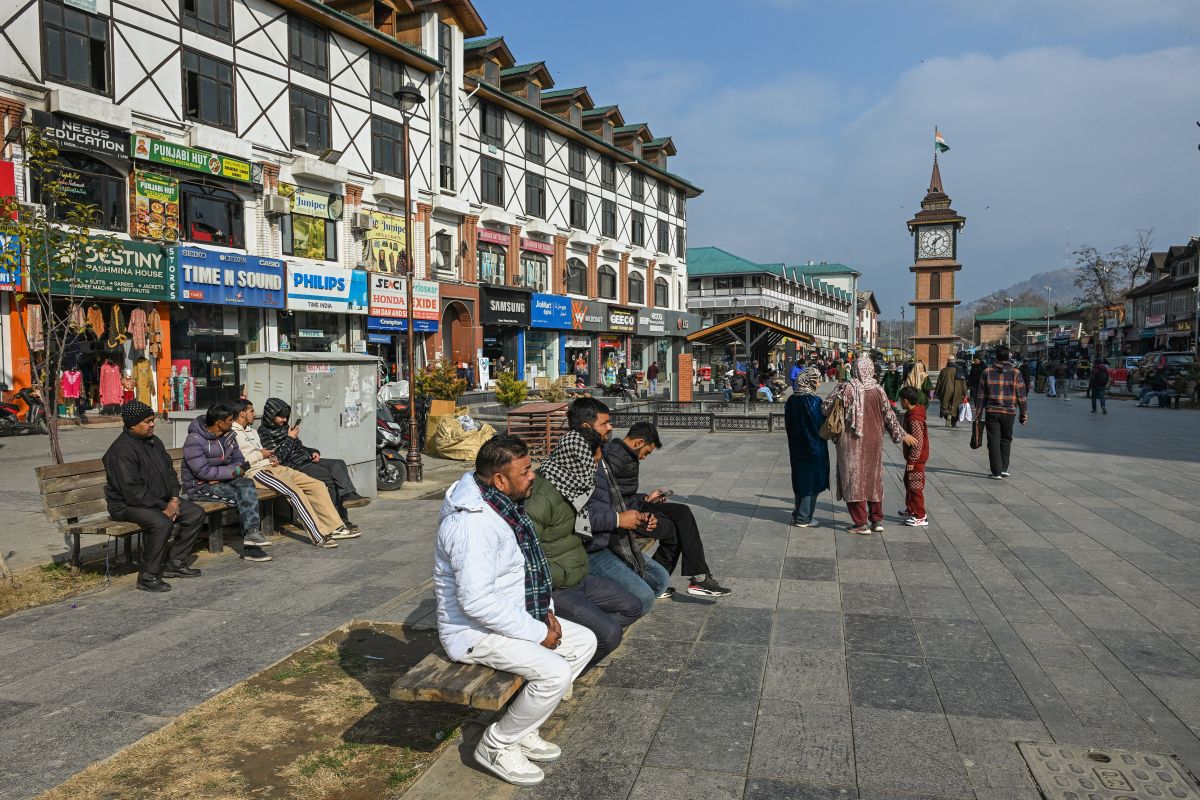
Warm February Rings Alarm Bells for Kashmir Tourism
By: Javid Amin | 26 February 2026
Record Heat, Rapid Snowmelt and a Changing Winter Narrative in the Valley
Kashmir’s tourism industry is confronting a complex paradox in 2026: record visitor optimism on one side, and mounting climate anxiety on the other.
This February has been officially recorded as the warmest in nearly a decade in the Valley. In Srinagar, temperatures climbed to 21°C — significantly above seasonal averages. Meanwhile, in Gulmarg, winter readings touched 11.5°C, unusual for a destination globally marketed as India’s snow capital.
The early blooming of almond flowers at Badamwari — weeks ahead of schedule — has become both a picturesque spectacle and a visible marker of climate disruption.
For a region whose winter tourism economy depends heavily on snow reliability, the signals are difficult to ignore.
Why a Warm February Matters for Kashmir
01. Winter Tourism at Risk
Gulmarg’s international reputation rests largely on snow sports. Ski slopes, gondola rides, winter carnivals, and snow-covered landscapes form the backbone of the Valley’s December–March tourism calendar.
When snowfall is delayed, scarce, or melts prematurely:
-
Ski seasons shorten
-
Hotel bookings fluctuate
-
Event schedules shift
-
Snow-dependent tour packages get cancelled
Winter tourism is not just aesthetic — it is economically structural.
Two consecutive dry winters, combined with February’s heat spike, raise concerns about long-term snow stability.
02. Climate Instability Is No Longer Theoretical
The Valley has traditionally experienced predictable seasonal cycles: heavy snowfall in peak winter, gradual thaw in March, and spring bloom in April.
This year disrupted that rhythm.
Lawmakers in the Jammu and Kashmir Assembly have openly discussed climate volatility, acknowledging that weather anomalies are no longer isolated events but potentially part of a broader warming pattern affecting the Himalayan belt.
The concern is not a single warm spell — it is trend repetition.
03. Economic Ripple Effects
Tourism contributes directly and indirectly to:
-
Hotels and guesthouses
-
Houseboats
-
Taxi and transport unions
-
Ski instructors and pony handlers
-
Local handicrafts markets
A weakened winter season compresses revenue cycles.
For small operators who rely on peak snow months to sustain annual income, unpredictable weather introduces financial instability.
04. Agriculture and Water Security Implications
The issue extends beyond tourism.
Snowpack in the Himalayas functions as a natural water reservoir. Reduced snowfall impacts:
-
Irrigation supply
-
Hydropower generation
-
Spring water recharge
-
Downstream river systems
Less snow today can mean weaker reservoirs in summer.
For Kashmir’s agrarian economy, snow is more than scenery — it is infrastructure.
The Tourism Paradox of 2026
Despite these warning signs, tourism projections for 2026 are strong.
Events such as the Khelo India Winter Games and improved security conditions have boosted visitor confidence.
Domestic tourism, particularly from metropolitan cities, continues to show strong interest in the Valley.
This creates a striking contradiction:
-
Rising tourist numbers
-
Shrinking snow certainty
Short-term resilience may be masking long-term vulnerability.
A Structural Question: Is Kashmir’s Winter Identity Changing?
For decades, Kashmir’s branding revolved around:
-
“Winter Wonderland” imagery
-
Snow-clad pine forests
-
Frozen lakes
-
Ski tourism
If warming trends continue, stakeholders may need to reconsider reliance on snow as the central pillar of winter tourism marketing.
Climate variability introduces reputational risk.
Travelers booking snow experiences months in advance need predictability.
What Stakeholders Are Urging
Diversification Beyond Snow
Tourism planners are increasingly advocating for:
-
Cultural tourism circuits
-
Heritage walks in Srinagar
-
Sufi shrine tourism
-
Spring bloom festivals
-
Rural eco-tourism
-
Culinary tourism
Reducing dependency on snow spreads risk across seasons.
Climate Adaptation Planning
Experts suggest coordinated responses including:
-
Artificial snowmaking infrastructure (with environmental safeguards)
-
Improved water storage systems
-
Sustainable slope management
-
Eco-friendly construction norms
-
Climate risk mapping for tourism zones
Adaptation is now a policy conversation — not an academic one.
Integrated Policy Approach
There is growing consensus that tourism policy must integrate:
-
Climate science
-
Environmental sustainability
-
Sports tourism
-
Cultural programming
-
Infrastructure resilience
Fragmented planning could amplify vulnerability.
Broader Himalayan Context
Kashmir’s warming episode aligns with broader Himalayan climate trends, where glacial retreat and snowfall variability have been documented across multiple states.
High-altitude tourism destinations across northern India are watching these developments closely.
The implications are regional, not isolated.
The Emotional Undertone
For many residents, winter is woven into identity.
Snowfall marks celebration, livelihood, and seasonal rhythm. The sight of early blossoms in February evokes both beauty and unease.
Tourism operators describe this moment as one of “cautious optimism.”
Visitors are returning. Revenues are stabilizing. Yet uncertainty lingers.
What Happens Next?
If March and future winters continue showing warming patterns, policy urgency will intensify.
Possible future scenarios include:
-
Expanded four-season tourism strategy
-
Greater emphasis on spring and autumn travel
-
Investment in sustainable infrastructure
-
Climate-focused branding shifts
The key question is whether adaptation moves faster than disruption.
Conclusion: A Turning Point for Kashmir Tourism
Kashmir stands at a crossroads.
On one hand, the Valley is witnessing renewed tourist enthusiasm, expanding travel circuits, and economic recovery momentum.
On the other, its defining winter asset — reliable snowfall — is becoming less predictable.
The warmest February in a decade is not merely a weather statistic. It is a signal.
For policymakers, entrepreneurs, and local communities, the challenge ahead is clear: preserve the charm of Kashmir’s winter identity while building a tourism model resilient enough to withstand climate volatility.
Resilience is possible.
But it will require planning that is as strategic as it is sustainable.

