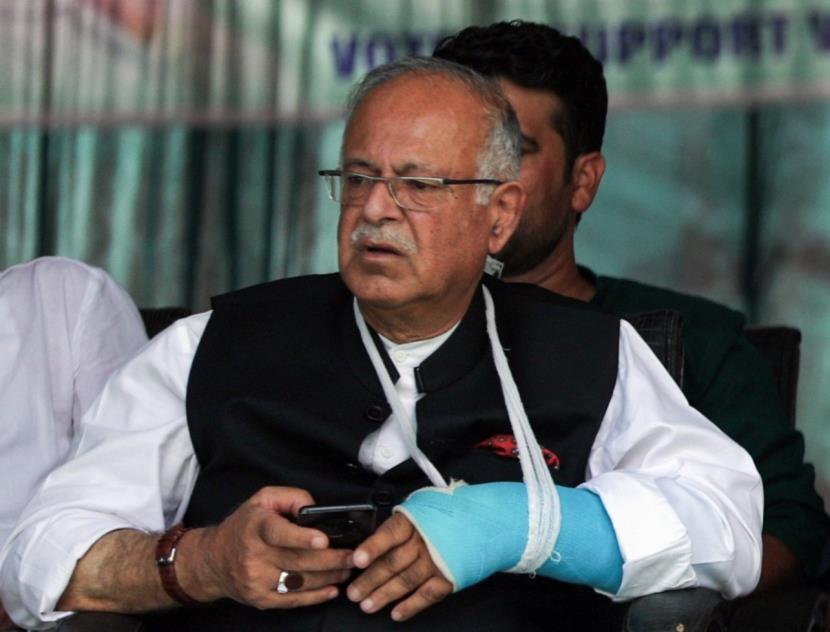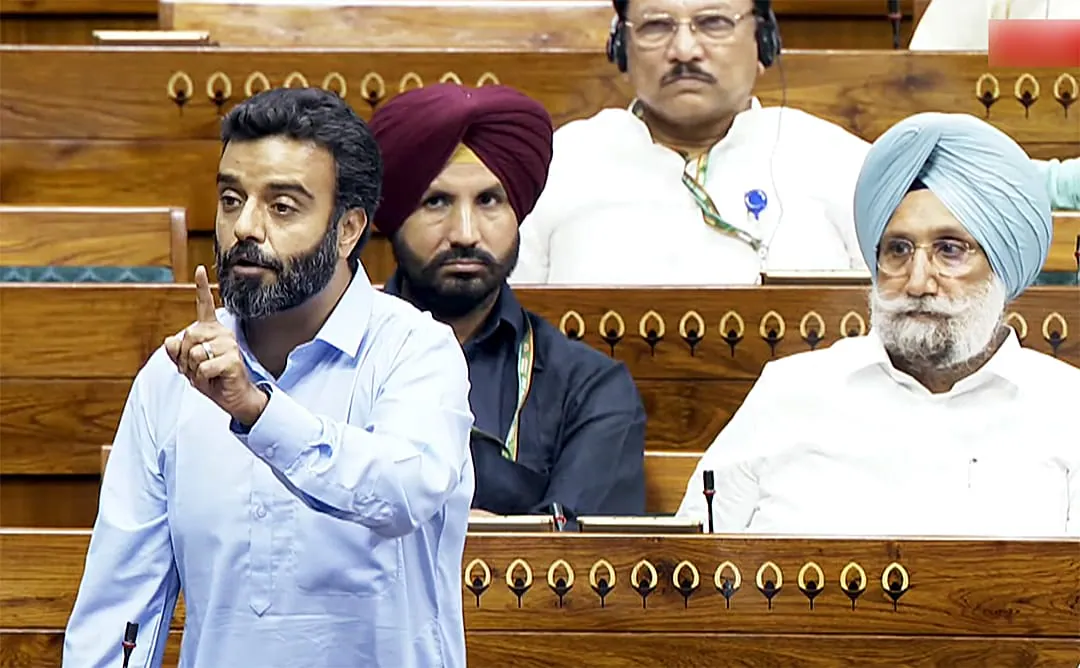
Agha Syed Ruhullah Mehdi in Parliament: Kashmir Voice, Iran-Israel Debate, Jamia Masjid & Political Impact
By: Javid Amin | 18 March 2026
A New Political Voice Rising from Kashmir
In the evolving and often contentious landscape of Indian politics, few voices have recently commanded as much attention — and controversy — as that of Agha Syed Ruhullah Mehdi.
A first-time Member of Parliament from Srinagar, Ruhullah has quickly established himself not merely as a regional representative, but as a sharp, unapologetic political actor willing to challenge dominant narratives — both within the halls of Parliament and on the ground in Kashmir.
His interventions — whether on global conflicts like the Iran–Israel conflict or local issues such as religious restrictions and infrastructure gaps — have sparked debate, admiration, and criticism in equal measure.
For supporters, he represents a long-missing assertive Kashmiri voice in Delhi.
For critics, he embodies a confrontational politics that risks deepening divides.
Either way, his “roar” is impossible to ignore.
Inside Parliament: Confrontation, Conviction, and Controversy
Iran–Israel Conflict: A Speech That Sparked a Storm
Ruhullah Mehdi’s most widely discussed parliamentary intervention came during a heated debate on West Asian geopolitics, particularly the escalating tensions involving Iran, Israel, and the United States.
In a sharply worded speech, he condemned military actions by Israel and the United States, labeling them as aggressors in the conflict. His remarks immediately drew strong reactions from members of the ruling party, particularly those from the Bharatiya Janata Party.
What followed was not just a debate — but a political flashpoint.
Amid heckling and provocative slogans like “Go to Iran” and “Israel your fatherland,” Ruhullah delivered a retort that quickly went viral:
“Israel may be your fatherland, but not ours.”
The statement crystallized the ideological divide in Parliament — not only over foreign policy but over identity, representation, and political expression.
Why This Matters
This exchange was not merely rhetorical.
It exposed deeper fractures:
-
The intersection of foreign policy and domestic identity politics
-
Diverging perceptions of India’s global alliances
-
The role of regional representatives in shaping national discourse
For many observers, this moment marked Ruhullah’s arrival as a national political figure.
Railway Budget Debate: Bringing Kashmir’s Infrastructure Gap to the Fore
Beyond international issues, Ruhullah has also focused on bread-and-butter concerns affecting Kashmir.
During discussions related to railway expansion and infrastructure, he highlighted the long-standing issue of incomplete rail connectivity in Jammu & Kashmir.
Referring to projects like the Udhampur-Srinagar-Baramulla Rail Link, he argued that despite years of promises, Kashmir remains inadequately connected to the national rail network.
Key Arguments Raised
-
Delays in completing critical railway infrastructure
-
Economic isolation caused by poor connectivity
-
Missed opportunities for tourism, trade, and employment
His intervention reframed infrastructure not just as development, but as dignity and integration.
Humanitarian Framing: Linking Kashmir to Global Crises
One of the most distinctive aspects of Ruhullah’s parliamentary approach is his consistent use of a humanitarian lens.
Rather than treating Kashmir as an isolated issue, he situates it within a broader global context — particularly the crises unfolding in West Asia.
By referencing suffering in regions like Palestine and Iran, he creates a narrative that connects:
-
Local grievances in Kashmir
-
Global Muslim solidarity
-
Human rights discourse
This framing resonates strongly with certain sections of society, especially younger audiences who consume politics through both local and global lenses.
Outside Parliament: The Ground Reality Politics
Jamia Masjid and Religious Restrictions
Outside Parliament, Ruhullah’s political engagement becomes even more direct.
He has repeatedly spoken out against restrictions imposed on religious spaces, particularly the historic Jamia Masjid Srinagar.
For him, such restrictions are not merely administrative decisions — they are symbolic of a deeper suppression of Kashmiri identity.
His Core Argument
-
Religious spaces are central to Kashmiri cultural life
-
Restrictions undermine both faith and identity
-
Such policies deepen alienation rather than integration
This stance has earned him strong support among sections of Kashmiri civil society.
Media Interventions: Challenging India’s Foreign Policy Narrative
Ruhullah has also used media platforms to question India’s perceived alignment with Israel in global affairs.
He argues that such positioning:
-
Conflicts with India’s historical support for Palestine
-
Alienates populations in regions like Kashmir
-
Reduces space for nuanced diplomatic engagement
While critics view this as oversimplification, supporters see it as a necessary counter-narrative in an increasingly polarized environment.
Youth Connect: A Leader for a New Generation?
Perhaps the most significant aspect of Ruhullah’s political rise is his connection with Kashmiri youth.
His speeches — often direct, emotionally charged, and politically assertive — resonate in a region where young people have long felt underrepresented in national discourse.
Why Youth Relate to Him
-
He articulates identity concerns openly
-
He challenges mainstream narratives without hesitation
-
He blends local issues with global awareness
In an era dominated by digital media, his statements often circulate widely on social platforms, amplifying his influence beyond traditional political spaces.
Political Impact: Polarization and Representation
A Polarizing Figure in Parliament
Ruhullah’s style has undeniably contributed to heightened polarization.
Members of the Bharatiya Janata Party have frequently criticized his remarks, portraying them as sympathetic to adversarial nations.
At the same time, opposition voices have defended his right to articulate dissent within a लोकतांत्रिक framework.
This dynamic reflects a broader trend in Indian politics — where assertive regional voices often clash with centralized narratives.
Redefining Kashmir’s Representation
Ruhullah’s interventions signal a shift in how Kashmir is represented in Parliament.
Instead of focusing solely on security or development, his discourse integrates:
-
Identity
-
Religion
-
Global geopolitics
-
Human rights
This multidimensional approach sets him apart from many traditional political figures from the region.
Symbolism: When Global Conflicts Enter Domestic Politics
The Iran-Israel debate in Parliament illustrates a growing phenomenon:
Foreign policy is no longer distant — it is deeply embedded in domestic political identity.
In regions like Kashmir, where historical, religious, and geopolitical sensitivities intersect, global events often carry local significance.
Ruhullah’s speeches reflect this reality.
Snapshot: Ruhullah Mehdi’s Recent Political Interventions
| Arena | Issue Raised | Impact |
|---|---|---|
| Lok Sabha | Criticized Israel & U.S. actions | Triggered heated exchanges |
| Infrastructure Debate | Highlighted rail connectivity gaps | Spotlight on regional neglect |
| Public Speeches | Opposed Jamia Masjid restrictions | Resonated locally |
| Media Statements | Questioned foreign policy alignment | Sparked national debate |
Critical Analysis: Strengths and Risks of His Political Approach
Strengths
-
Strong articulation of regional identity
-
Ability to connect local and global narratives
-
Growing appeal among youth and civil society
-
Courage to challenge dominant political discourse
Risks
-
Risk of being labeled ideologically extreme
-
Potential to deepen political polarization
-
Limited room for consensus-building
-
Possibility of misinterpretation at national level
Conclusion: The Rise of a Disruptive Voice
The emergence of Agha Syed Ruhullah Mehdi marks a significant moment in Kashmir’s political evolution.
His interventions — sharp, emotional, and often controversial — reflect a deeper shift:
A move from cautious representation to assertive political expression.
Whether one agrees with his positions or not, his impact is undeniable.
He has forced conversations that many preferred to avoid.
He has brought Kashmir’s voice into national debates with renewed intensity.
And in doing so, he has redefined what it means to represent a region as complex and sensitive as Jammu & Kashmir.
Final Word
Ruhullah’s “roar” is not just about rhetoric.
It is about identity, representation, and the struggle to be heard in a system where narratives often collide.
The coming years will determine whether this voice evolves into a broader political movement — or remains a powerful, but polarizing, force in India’s लोकतांत्रिक landscape.