Ghanta Ghar Closure in Srinagar: Aga Ruhullah Slams ‘Disgrace’ as Lal Chowk Sealed During Mourning Protests
By: Javid Amin | 01 March 2026
Ghanta Ghar Closure in Srinagar: A Landmark, A Lockdown, A Larger Debate
The sealing of Ghanta Ghar at Lal Chowk in Srinagar has triggered a wave of political criticism and public debate across Jammu and Kashmir. What might have appeared as a routine security precaution has quickly transformed into a symbolic flashpoint.
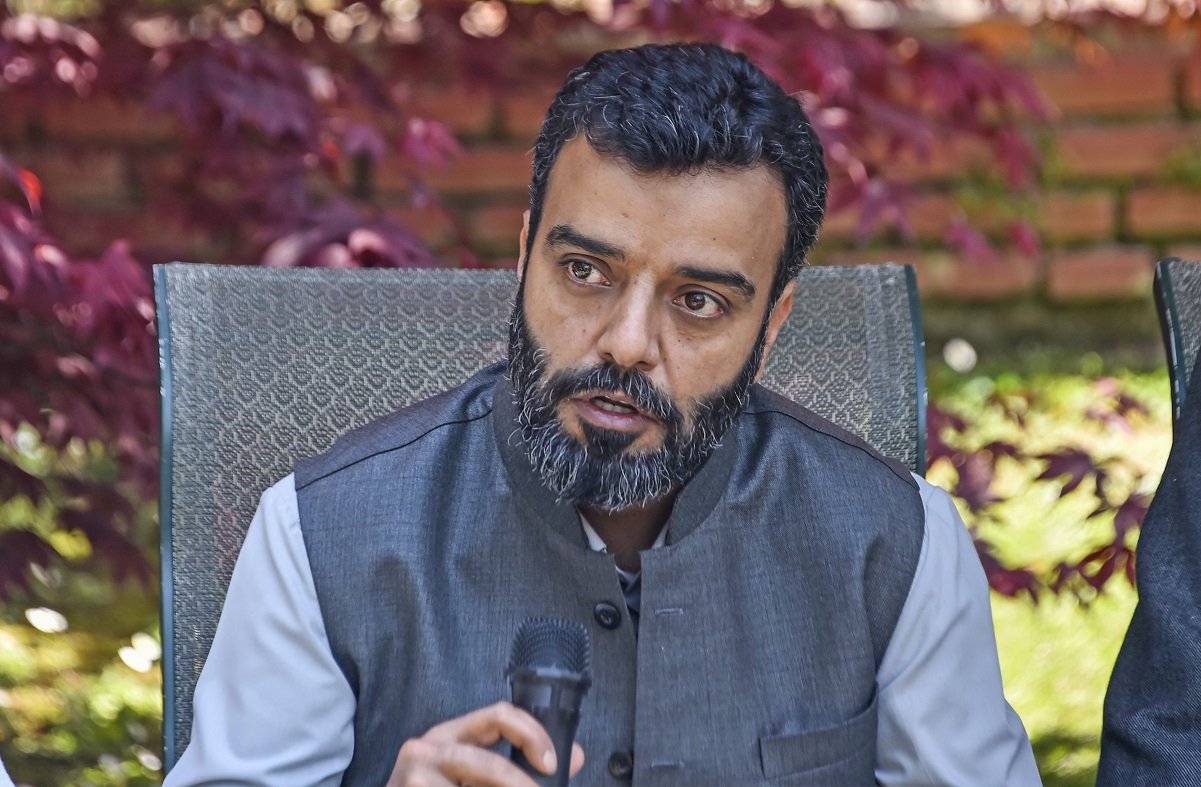
On Sunday, Member of Parliament Aga Ruhullah sharply criticized the administration’s decision to close the iconic Clock Tower area, calling it a “disgrace” and accusing authorities of selectively restricting peaceful expressions of grief.
His remarks have resonated widely — not merely because of the immediate situation, but because Ghanta Ghar is not just another public square. It is a political, cultural, and emotional landmark — one that has witnessed decades of rallies, protests, celebrations, and historical turning points.
This mega-feature examines the ground situation, political reactions, historical context, symbolic transformation post-Article 370, and why the closure of Lal Chowk has become far more than a law-and-order measure.
What Happened: The Immediate Trigger
According to ground reports from Srinagar, authorities cordoned off the Lal Chowk area, including Ghanta Ghar, to prevent gatherings following calls for peaceful mourning after reports surrounding the killing of Iranian Supreme Leader Ali Khamenei.
Security deployment was intensified across the city. Barricades were erected. Movement around Lal Chowk was restricted.
Key Developments on the Ground:
-
Lal Chowk and Ghanta Ghar sealed.
-
Security forces deployed across Srinagar and other districts.
-
Schools and colleges shut for two days.
-
Some examinations postponed.
-
Public gatherings discouraged.
Officials maintained that restrictions were preventive — aimed at avoiding potential unrest. However, critics argue that the gatherings were peaceful and mournful in nature.
Aga Ruhullah’s Sharp Criticism: “Selective Suppression”
In a strongly worded public statement, Aga Ruhullah questioned why Ghanta Ghar is frequently opened for cultural programs — including music and dance events — but closed when citizens gather to mourn.
His central argument:
If the Clock Tower can host celebrations, why can it not host grief?
By framing the issue this way, Ruhullah shifted the narrative from security to selective permission. His remarks reflect a broader frustration among sections of Kashmir’s political class that expressions of solidarity or mourning are increasingly being viewed through a security lens.
Political Reactions Across Kashmir
The criticism was not limited to one leader. Prominent political figures across party lines condemned the killing and simultaneously appealed for calm.
Among those who issued statements urging peace while calling for space for peaceful mourning were:
-
Omar Abdullah
-
Mehbooba Mufti
-
Farooq Abdullah
-
Ghulam Nabi Azad
-
Altaf Bukhari
-
Sajad Lone
-
Mohammad Yousuf Tarigami
While their tones differed, a common thread ran through their messaging:
-
Condemn violence.
-
Maintain peace.
-
Allow space for peaceful expression.
Why Ghanta Ghar Matters: More Than Just a Clock Tower
To understand why this closure is controversial, one must understand what Ghanta Ghar represents.
Located at Lal Chowk, it is often described as the “heart of Srinagar.” But that phrase barely captures its layered symbolism.
For decades, Lal Chowk has been:
-
A rallying ground.
-
A protest site.
-
A stage for national symbolism.
-
A marketplace of everyday life.
-
A cultural meeting point.
It is where Kashmir’s political pulse has historically been measured.
Historical Flashback: Lal Chowk as Political Theatre
The Early Years
After independence, Jawaharlal Nehru addressed crowds at Lal Chowk, reinforcing India’s political claim over Jammu and Kashmir.
The square became an early stage for asserting national authority.
The Sheikh Abdullah Era
Sheikh Abdullah frequently used Lal Chowk for public addresses, embedding it into Kashmir’s political consciousness.
1992: The Flag Hoisting Moment
One of the most dramatic moments came when Murli Manohar Joshi hoisted the Indian tricolor at Ghanta Ghar during peak militancy. The act was heavily guarded and symbolically loaded — asserting sovereignty amid separatist violence.
Modern Era Rallies
In 2014, Narendra Modi addressed a rally in the area during his prime ministerial campaign, directly connecting national politics to Kashmir’s symbolic center.
A Symbol of Global Solidarity
Ghanta Ghar has not only reflected local politics — it has been a rallying point during global crises.
Gulf War (1991)
Demonstrations condemning US military intervention in Iraq were held at Lal Chowk.
Palestine Solidarity
Over the years, pro-Palestine rallies frequently converged at the Clock Tower.
Afghanistan War
Anti-US protests used Lal Chowk as a central meeting space.
Middle East Conflicts
Vigils and solidarity gatherings relating to Syria and Lebanon have also taken place here.
For many Kashmiris, Lal Chowk connects local identity with global Muslim solidarity movements.
Post-Article 370: A Symbol Transformed
The abrogation of Article 370 in August 2019 marked a turning point.
Following constitutional changes, Lal Chowk underwent redevelopment. In 2023, the area was formally reopened after renovation.
The New Narrative
Post-2019, Lal Chowk has increasingly been projected as a symbol of integration and national unity.
-
Independence Day events organized.
-
Large-scale tricolor displays.
-
Publicized patriotic celebrations.
Authorities have framed the transformation as evidence of a “new Kashmir.”
Dual Symbolism: Sovereignty vs. Expression
Today, Lal Chowk holds two simultaneous meanings:
For the State:
-
A symbol of integration.
-
A stage for national pride.
-
A visible marker of sovereignty.
For Many Locals:
-
A historic protest ground.
-
A place of collective grief.
-
A voice of solidarity.
This duality makes any restriction highly sensitive.
Ground Sentiment: Between Security and Silence
On the streets of Srinagar, reactions are mixed but emotionally charged.
Some residents understand preventive measures in a sensitive environment.
Others question:
-
Why peaceful mourning is treated as risk.
-
Why cultural celebrations are permitted but grief gatherings are blocked.
-
Whether public spaces are becoming selectively accessible.
The sealing of Ghanta Ghar is thus perceived by critics not merely as crowd control — but as narrative control.
Freedom of Expression vs. Law and Order
The central debate emerging from the Ghanta Ghar closure revolves around a fundamental tension:
Where does preventive security end and suppression begin?
Authorities argue:
-
Restrictions prevent escalation.
-
Public order must be preserved.
-
Intelligence inputs necessitate caution.
Critics counter:
-
Mourning is not unrest.
-
Peaceful gatherings are democratic rights.
-
Symbolic spaces should not be restricted selectively.
Lal Chowk in Literature and Media
Beyond politics, Lal Chowk lives in Kashmiri poetry, journalism, and art.
Writers often describe it as:
-
The emotional core of Srinagar.
-
A square where history breathes.
-
A crossroads of hope and heartbreak.
Local newspapers have long used “Lal Chowk” as shorthand for the mood of the Valley.
International media frequently references it as the epicenter of Kashmir’s political volatility.
The Emotional Context
For sections of the Shia community in Kashmir, mourning related to Ali Khamenei carries religious and emotional weight.
When Ghanta Ghar was sealed during this period, it was not viewed as administrative — but as symbolic interruption of grief.
This emotional dimension explains why the issue escalated rapidly in political discourse.
The Broader Implications
The closure raises larger questions:
-
Who defines acceptable public expression?
-
Can symbolic spaces be politically neutral?
-
Is Lal Chowk evolving into a curated stage rather than a spontaneous gathering ground?
Insight: Why This Moment Matters
Ghanta Ghar has always been contested — but accessible.
Its closure during mourning highlights a deeper tension:
-
Between integration narratives and grassroots emotion.
-
Between state authority and civic expression.
-
Between security logic and symbolic freedom.
For leaders like Aga Ruhullah, this is not just about a barricaded square. It is about the right to assemble in a place layered with memory.
For the administration, it is about stability and prevention.
For ordinary Kashmiris, it is about whether the heart of Srinagar still beats freely.
Final Word: A Landmark at a Crossroads
The Ghanta Ghar closure in Srinagar is not an isolated administrative act. It is a reflection of Kashmir’s ongoing negotiation between identity, sovereignty, grief, and governance.
As political leaders debate and security forces maintain vigil, one truth remains clear:
Lal Chowk is never just a square.
Ghanta Ghar is never just a clock.
They are symbols — and symbols, especially in Kashmir, carry weight far beyond their physical presence.


