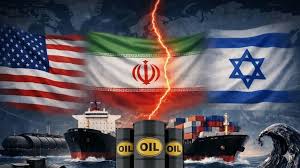
Iran–Israel War Escalation 2026: Who Is Winning, Energy Crisis, and Global Impact
By: Javid Amin | 19 March 2026
The War Has Entered a New Phase: Precision Strikes vs Systemic Disruption
The Iran–Israel war has crossed a critical threshold. What began as a high-intensity military confrontation has now evolved into a system-level conflict affecting global energy flows, regional stability, and economic security.
On one side, Israel and the United States are executing precision warfare—targeting leadership, command structures, and strategic infrastructure.
On the other, Iran is responding with asymmetric escalation, expanding the battlefield across the Gulf and threatening the arteries of the global economy.
This is no longer just a war of territory or retaliation. It is a war of systems: military superiority vs economic disruption.
Battlefield Reality: What Is Actually Happening
Targeted Assassinations: Decapitation Strategy in Action
The killing of senior Iranian figures including Ali Larijani and Gholamreza Soleimani represents a deliberate strategy.
This is classic decapitation warfare, designed to:
-
Disrupt decision-making chains
-
Create confusion within command structures
-
Reduce coordination between military and political leadership
Such strikes are tactically effective, but they also carry risks:
-
They can provoke unpredictable retaliation
-
They may harden Iran’s resolve rather than weaken it
-
They increase the likelihood of longer, more chaotic conflict
Strategic Infrastructure Under Fire
Israeli strikes on Iran’s South Pars gas field mark a major escalation.
South Pars is not just another facility—it is:
-
One of the largest natural gas reserves in the world
-
A cornerstone of Iran’s economy
-
A critical node in global gas supply expectations
Targeting it signals a shift from military targets to economic warfare.
إيران’s Response: Expanding the War Geography
Iran’s retaliation demonstrates a different logic.
Instead of focusing only on Israel, it has widened the conflict:
Key strike zones:
-
Israeli cities like Tel Aviv and Netanya
-
Gulf energy hubs in Qatar, Saudi Arabia, and the United Arab Emirates
-
Strategic infrastructure such as Ras Laffan and Yanbu
This reflects Iran’s core doctrine:
If it cannot win militarily, it will raise the cost of war for everyone involved.
Who Is Winning? A Layered Assessment
Tactical Level: Advantage Israel–U.S.
At the purely military level:
-
Leadership targets eliminated
-
High-value infrastructure damaged
-
Missile defense systems limiting incoming damage
This gives Israel and the US a clear tactical edge.
Operational Level: Still Favoring Israel–U.S.
Operationally, the coalition maintains:
-
Air superiority
-
Superior intelligence capabilities
-
Integrated missile defense
Iran’s command-and-control disruptions weaken its ability to coordinate large-scale operations efficiently.
Strategic Level: No Clear Winner
Here, the picture changes dramatically.
Iran’s strategy is not about battlefield victory—it is about system disruption:
-
Energy markets destabilized
-
Shipping routes threatened
-
Regional economies shaken
This creates a paradox:
Israel and the U.S. are winning militarily—but losing control of the broader strategic environment.
The Real Battlefield: Energy and Economics
The most critical dimension of this war is not military—it is economic.
Strait of Hormuz: The Global Chokepoint
The Strait of Hormuz is now effectively under threat.
It carries:
-
~25% of global oil shipments
-
~20% of global LNG trade
Disruption here creates immediate global consequences.
Oil and Gas Shock
What we are seeing:
-
Oil prices spiking sharply
-
LNG supply disruptions after Qatar halts production
-
Shipping risks increasing insurance costs
Even partial disruption creates price volatility worldwide.
Why Iran’s Strategy Is Working
Iran understands a key reality:
It does not need to defeat Israel—it needs to destabilize the system.
By targeting:
-
Refineries
-
LNG terminals
-
Shipping routes
Iran is effectively weaponizing interdependence.
Civilian Suffering: The Hidden Frontline
Modern warfare increasingly shifts the burden onto civilians.
In Israel
-
Missile strikes hitting urban areas
-
Constant air raid alerts
-
Psychological stress and disruption
In Iran
-
Economic strain from infrastructure damage
-
Leadership instability
-
Risk of prolonged sanctions and isolation
In Gulf States
Countries like Qatar and Saudi Arabia are facing:
-
Direct attacks on energy infrastructure
-
Airspace disruptions
-
Civilian casualties from missile debris
These states are not primary combatants—but are absorbing major consequences.
India: One of the Hardest-Hit Economies
For India, this war is not distant—it is economically immediate.
Energy Dependence: A Structural Vulnerability
India imports:
-
~85% of its crude oil
-
~40% of LNG from Qatar
This creates high exposure to Gulf instability.
Immediate Economic Impact
Fuel Prices
Petrol and diesel prices are rising, increasing:
-
transport costs
-
logistics expenses
-
cost of goods
Inflation
Energy cost increases ripple across:
-
food prices
-
manufacturing
-
services
Currency Pressure
Higher oil imports strengthen the dollar, weakening the rupee and increasing import costs.
Sector-by-Sector Breakdown
Transport
-
Fuel prices increasing daily
-
Airline costs rising due to expensive jet fuel
Agriculture
-
Fertilizer production hit due to LNG shortages
-
Rising food prices
Industry
-
Higher energy costs reduce competitiveness
-
Small businesses under pressure
Households
-
LPG prices rising sharply
-
Electricity costs increasing
-
Overall cost of living climbing
Global Economic Impact: A Chain Reaction
The economic shock is not limited to India.
Europe
-
LNG shortages due to reduced Qatari supply
-
Increased heating and industrial costs
China
-
Rising oil import costs
-
Better resilience due to diversified sources
United States
-
Less dependent on Gulf energy
-
Still affected by global price increases
The Risk Matrix: What Comes Next
1. Full Hormuz Closure
If the Strait of Hormuz is fully blocked:
-
Oil could exceed $150/barrel
-
Global recession becomes likely
2. Regional War Expansion
If Hezbollah or other proxies escalate:
-
Multi-front war across the Middle East
-
Increased civilian casualties
3. Global Economic Crisis
Energy shock + inflation + supply disruption = potential stagflation scenario.
4. Cyber Warfare Escalation
Critical infrastructure could be targeted globally:
-
banking systems
-
energy grids
-
communication networks
Strategic Conclusion: A War Without Clear Victory
This conflict is redefining the idea of “winning.”
-
Israel and the U.S. are winning militarily
-
Iran is winning in terms of systemic disruption
But the broader outcome is clear:
Everyone is losing at the global level.
-
Energy markets destabilized
-
Economies under pressure
-
Civilians suffering across regions
Where the World Is Heading
The trajectory suggests:
-
A shift toward prolonged, multi-domain conflicts
-
Increased use of economic and infrastructure warfare
-
Greater vulnerability of interconnected global systems
The Iran–Israel war is not an isolated crisis—it is a preview of future warfare, where:
-
missiles target infrastructure
-
markets become battlefields
-
civilians bear the heaviest cost
Final Takeaway
The world in 2026 is entering an era where military victory does not guarantee strategic success.
The Iran–Israel war demonstrates a new reality:
In a deeply interconnected world, disruption itself is power.
And right now, that disruption is spreading—across the Middle East, into global markets, and directly into the daily lives of millions, especially in countries like India.