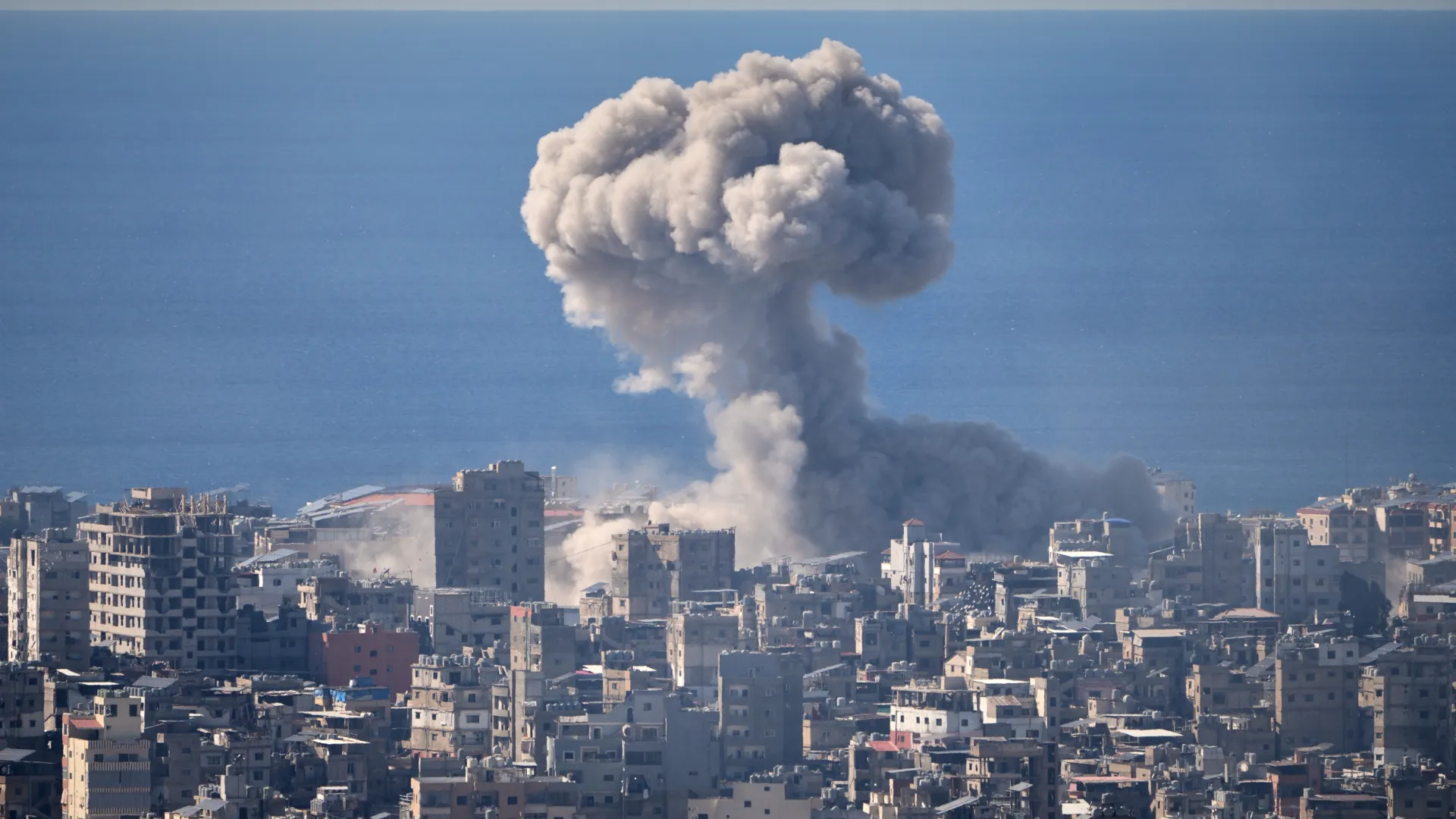
Iran–Israel War Escalates | Tehran Strikes, Hormuz Closed, Oil Surges Above $100
By: Javid Amin | 26 March 2026
A Region on the Brink: War Crosses Red Lines
The conflict between Iran and Israel has entered a dangerous new phase as of March 26, 2026—transforming from a shadow confrontation into a full-spectrum, multi-front war.
For the first time in years, Israel has directly struck targets in Tehran, while Iran has responded with sustained missile attacks not only on Israeli cities but also on U.S. military installations across the Gulf. The closure of the Strait of Hormuz has simultaneously injected a severe shock into global energy markets.
This is no longer a contained conflict. It is a rapidly expanding regional crisis with global consequences.
Ground Situation: A War Across Multiple Fronts
1. Military Operations Intensify
Israel’s Offensive Strategy
Israel’s decision to strike Tehran marks a significant escalation threshold. Previously focused on covert and peripheral operations, Israeli forces are now targeting:
- Military infrastructure within Iran’s capital
- Strategic command-and-control nodes
- Weapons storage and missile facilities
Simultaneously, Israel has expanded operations into southern Lebanon, attempting to establish a “buffer zone” aimed at neutralizing threats from militant groups along its northern border.
Iran’s Retaliatory Doctrine
Iran’s response has been swift and expansive.
Missile barrages have targeted:
- Tel Aviv
- Kiryat Shmona
- U.S. military bases in Kuwait, Jordan, and Bahrain
The Islamic Revolutionary Guard Corps has vowed sustained retaliation, signaling that Iran is prepared for a prolonged confrontation.
United States: Dual Role
The United States has taken on a complex, dual-track posture:
- Military: Supporting Israel and conducting strikes on Iranian targets
- Diplomatic: Claiming progress on a ceasefire framework
This duality—warfare alongside negotiation claims—adds further ambiguity to the conflict trajectory.
2. Humanitarian Toll: Civilians Bear the Brunt
Iran
- Civilian deaths nearing 2,000
- Urban areas, including Tehran, heavily impacted
- Infrastructure damage affecting hospitals and essential services
Israel
- Missile strikes hitting civilian zones in central and northern regions
- Casualties reported, though figures remain fluid
Lebanon
- Intensifying Israeli bombardment in southern regions
- Displacement and humanitarian strain escalating rapidly
The pattern is clear: urban warfare is driving a sharp rise in civilian suffering, raising urgent concerns among international humanitarian agencies.
3. Strategic Geography: The Hormuz Shockwave
At the heart of the global impact lies the closure of the Strait of Hormuz.
Why Hormuz Matters
- Handles nearly 20% of global oil shipments
- Connects Gulf producers to international markets
Iran’s decision to shut the strait represents a strategic escalation with worldwide implications.
Economic Fallout
- Brent crude surges past $100 per barrel
- Emergency reserves released by major economies
- Shipping disruptions ripple across global supply chains
For energy-dependent economies like India, the stakes are immediate—higher import costs, inflationary pressure, and fiscal strain.
4. Expanding War Map: From Bilateral Conflict to Regional War
The conflict now spans multiple theaters:
- Iran (direct strikes)
- Israel (missile attacks)
- Lebanon (buffer zone operations)
- Gulf states (U.S. base targeting)
This expansion significantly raises the risk of:
- Syria becoming an active front
- Iraq witnessing spillover conflict
- Wider regional alliances being drawn in
Diplomatic Landscape: Signals Without Settlement
Gulf Response
The Gulf Cooperation Council has issued strong condemnations:
- Criticizing Iran’s closure of Hormuz
- Labeling missile strikes as “beyond all red lines”
This signals growing regional unease and potential alignment against Iran’s actions.
Washington–Tehran Disconnect
While Donald Trump claims progress on a 15-point plan, Tehran continues to deny any negotiations.
This disconnect suggests:
- Talks are either indirect or non-existent
- Public statements are being used for strategic signaling
Iran’s Strategic Leverage
Mojtaba Khamenei has reinforced Iran’s stance:
- Hormuz will remain closed
- Military retaliation will continue
This positions economic disruption as a negotiating tool, not merely a wartime tactic.
Key Risks: What Could Happen Next
1. Full-Scale Regional War
With multiple fronts already active, the risk of escalation into a broader war is high.
2. Global Energy Crisis
A prolonged Hormuz closure could:
- Push oil prices significantly higher
- Trigger economic slowdowns worldwide
3. Humanitarian Collapse
Urban bombardments may:
- Overwhelm healthcare systems
- Displace millions
4. Diplomatic Breakdown
Conflicting narratives between the U.S. and Iran suggest:
- Negotiations remain fragile
- Miscalculations are increasingly likely
Strategic Outlook: The Road Ahead
Short-Term (Days to Weeks)
- Intensified Israeli strikes inside Iran
- Continued Iranian missile retaliation
- Rising civilian casualties
Medium-Term (Weeks to Months)
- Sustained volatility in oil markets
- Increased calls for humanitarian corridors
- Greater involvement from global powers
Long-Term (Months and Beyond)
The trajectory depends on one critical factor:
Whether meaningful U.S.–Iran negotiations materialize.
If diplomacy fails, the conflict risks evolving into a prolonged regional war with global economic consequences.
Conclusion: A Conflict Redefining Global Stability
The Iran–Israel war has crossed a threshold—from shadow conflict to overt confrontation, from regional tension to global crisis.
- Direct strikes on Tehran
- Missile attacks across borders
- Closure of a critical energy chokepoint
These are not isolated घटनाएँ—they are interconnected escalations shaping a new geopolitical reality.
What happens next will not only determine the future of the Middle East but also influence global markets, security architectures, and diplomatic alignments for years to come.
In this moment, the world is not just watching a war—it is feeling its consequences in real time.