Iran–US War 2026: Day 10 Crisis Explained | Israel Strikes, Mojtaba Khamenei Wounded, Oil Shock Hits Global Markets
By Javid Amin | 10 March 2026
Iran–US War Enters Day 10: A Region in Flames and the World on Edge
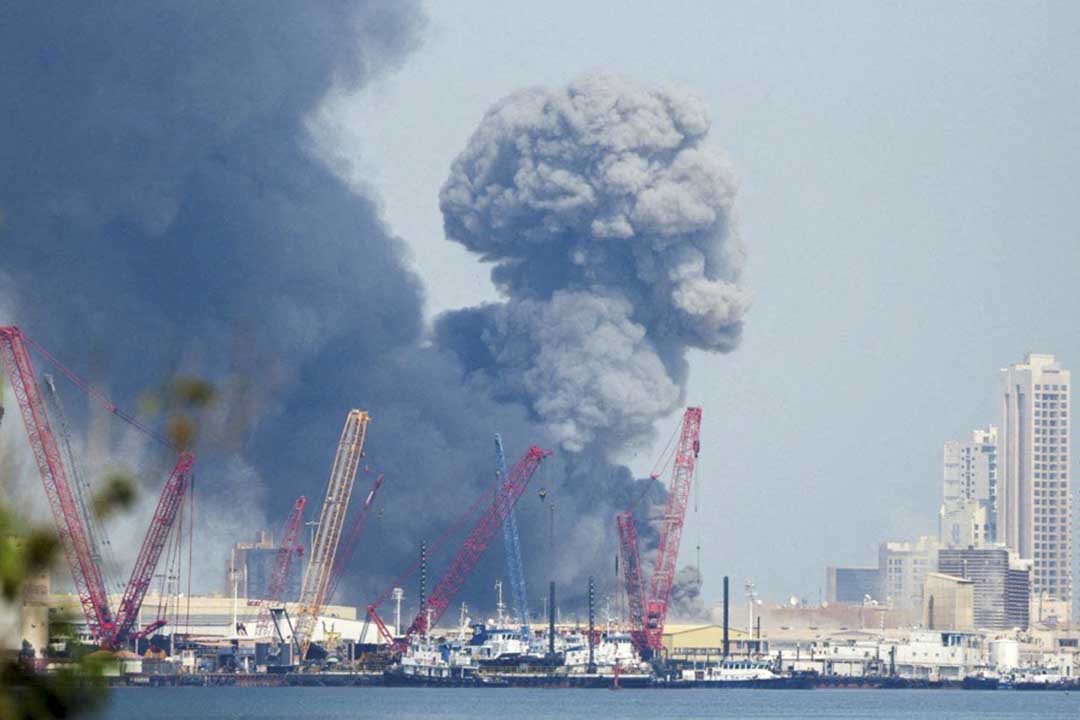
The war between the United States and Iran has entered its 10th day on March 10, 2026, marking one of the most dangerous escalations in Middle Eastern geopolitics in decades. What began as a sudden and devastating military operation against Iranian leadership has rapidly evolved into a multi-front conflict involving Israel, Gulf states, and regional militias.
Missiles streak across Middle Eastern skies almost nightly. Oil markets swing wildly. Strategic waterways are under threat. And a leadership crisis inside Iran has injected even more uncertainty into an already volatile war.
The conflict—sparked by a U.S.–Israeli offensive known as Operation Epic Fury—has triggered a cascade of retaliatory missile attacks, proxy battles, and geopolitical tremors stretching from the Strait of Hormuz to the eastern Mediterranean.
For millions across the Middle East, this is no longer merely a geopolitical contest. It is a war that has already brought destruction to cities, displaced civilians, and shaken global markets.
How the War Began: Operation Epic Fury and the Decapitation Strike
The current conflict traces its origins to a dramatic military escalation on February 28, 2026, when the United States and Israel launched coordinated air and missile strikes across Iran.
The campaign—Operation Epic Fury—targeted critical military infrastructure, nuclear facilities, missile bases, and command centers. But the most controversial element of the operation was a targeted strike that killed Iran’s Supreme Leader Ali Khamenei.
According to multiple reports, the decapitation strike relied on high-precision intelligence and targeted locations where Iran’s senior leadership was believed to be meeting. The killing of Khamenei was intended to cripple the Iranian command structure and send a powerful signal to Tehran.
Instead, it triggered one of the largest retaliatory missile barrages the Middle East has seen in decades.
Iran responded within hours with ballistic missiles and drones launched toward Israeli territory and U.S. military facilities across the region. The attacks expanded rapidly beyond the immediate battlefield, pulling neighboring countries into the line of fire.
The result: a regional war with unpredictable consequences.
Tehran Under Fire: The Intensifying Air War
Ten days into the conflict, Iran’s capital Tehran has become one of the primary battlegrounds.
Air raid sirens and explosions have become a nightly reality as U.S. and Israeli aircraft strike military installations across the country. Recent attacks have reportedly targeted:
-
missile launch facilities
-
air defense systems
-
aircraft bases
-
logistics hubs supporting Iran’s military operations
One of the most significant strikes occurred near Isfahan, where Israeli forces targeted several Iranian fighter jets stationed at a major air base.
These strikes are part of a broader effort to neutralize Iran’s air power and missile infrastructure. According to military assessments, thousands of targets have been hit during the first days of the campaign.
Despite the intensity of the air campaign, Iran has continued to launch missiles and drones toward Israeli and Gulf targets, demonstrating that its strategic strike capability remains operational.
Iran’s Missile Barrage: Retaliation Across the Region
Iran’s retaliation has been swift and sustained.
Since the war began, Iran’s military and the Islamic Revolutionary Guard Corps have launched more than 500 ballistic missiles and nearly 2,000 drones toward targets across the Middle East.
Many of these attacks have focused on Israel.
Major Israeli cities—including Jerusalem and Haifa—have repeatedly activated missile defense systems to intercept incoming projectiles.
Some missiles have managed to reach their targets, striking infrastructure including energy facilities and fuel depots.
Casualties have been reported in Israel, while debris from intercepted missiles has caused damage across populated areas.
The attacks have not been limited to Israel alone.
Iranian missiles and drones have also targeted:
-
Gulf states hosting U.S. bases
-
energy infrastructure
-
shipping routes in the Persian Gulf
Civilian casualties have been reported in places such as Bahrain, highlighting the widening geographical scope of the conflict.
Leadership Crisis in Iran: The Rise of Mojtaba Khamenei
Perhaps the most dramatic political development of the war has been the leadership crisis inside Iran.
Following the death of Ali Khamenei, Iran’s political establishment moved quickly to appoint a new supreme leader.
The position was filled by his son, Mojtaba Khamenei, in a controversial decision that has sparked debate both inside and outside the country.
The succession has raised several questions:
-
Does Mojtaba Khamenei have the religious legitimacy required for the role?
-
Will the Iranian political establishment rally behind him?
-
Can he maintain control during wartime?
Recent reports that Mojtaba Khamenei may have been wounded during airstrikes have further deepened uncertainty about Iran’s leadership stability.
A wounded or weakened leader during wartime could complicate command decisions and affect Iran’s military strategy.
Civilian Toll: The Human Cost of War
While military strikes dominate headlines, the most devastating impact of the conflict is being felt by civilians.
According to reports, more than 1,200 people have been killed in Iran, most of them civilians caught in airstrikes or missile attacks.
Among the most shocking incidents was a reported strike on an elementary school in the southern Iranian city of Minab, where dozens of children were killed.
Such incidents have sparked international concern and renewed debate over the humanitarian consequences of the war.
Hospitals and infrastructure have also been damaged in multiple cities, further complicating rescue and relief efforts.
In Israel, missile strikes have killed several civilians and injured thousands.
For ordinary people on both sides of the conflict, the war has brought fear, disruption, and loss.
The Lebanon Front: Hezbollah Enters the Battlefield
The conflict has expanded beyond Iran and Israel.
In southern Lebanon, Hezbollah has intensified attacks against Israel.
Rocket fire from Lebanese territory has triggered retaliatory Israeli strikes, opening a dangerous second front.
Israeli forces have reportedly conducted operations inside southern Lebanon, marking a potential escalation that could draw the entire Levant into the conflict.
The risk of a full-scale Israel–Hezbollah war remains one of the most serious dangers in the current crisis.
The Strait of Hormuz Crisis: The World’s Most Dangerous Chokepoint
One of the most alarming developments in the war is the rising tension around the Strait of Hormuz.
This narrow waterway connects the Persian Gulf to global shipping lanes and carries roughly 20% of the world’s oil supply.
Iran has warned that it could block or disrupt shipping if attacks continue.
Such a move would have massive global consequences.
The United States has responded with stern warnings that any attempt to close the strait would trigger overwhelming military retaliation.
Naval forces from multiple countries are now operating in and around the region, creating a high-risk environment where even a small incident could escalate into a major naval battle.
Global Energy Shock: Oil Prices Surge
The war has already triggered a major shock to global energy markets.
At the height of the crisis, crude oil prices surged to nearly $120 per barrel before falling back toward $90 as markets reacted to shifting geopolitical signals.
The volatility reflects deep uncertainty about the future of oil exports from the Middle East.
Several Gulf countries—including the United Arab Emirates, Kuwait, and Iraq—have reduced production amid security concerns.
Shipping through the Strait of Hormuz has slowed dramatically, with tankers waiting outside the region due to safety fears.
Energy analysts warn that a prolonged conflict could trigger the worst oil shock since the early 2000s.
India and Asia: The Energy Security Challenge
The consequences of the war are not limited to the Middle East.
Countries across Asia—especially energy-importing nations—are closely monitoring the crisis.
India, which relies heavily on imported crude oil and LPG, has already begun taking precautionary measures.
Emergency meetings involving Narendra Modi, Subrahmanyam Jaishankar, and Hardeep Singh Puri focused on maintaining energy supply stability.
The Indian government has invoked emergency provisions under the Essential Commodities framework to ensure uninterrupted LPG supply.
Any prolonged disruption in Gulf oil shipments could have serious consequences for inflation, transport costs, and economic growth across South Asia.
Washington’s Strategy: Pressure Without Invasion
Inside the United States, the war has triggered intense debate over military strategy.
President Donald Trump has stated that the war could end “very soon,” even as he warned Iran against blocking oil shipments.
The administration’s stated objectives include:
-
destroying Iran’s missile capabilities
-
dismantling its military infrastructure
-
weakening its regional proxy networks
However, the question of whether the United States would launch a ground invasion of Iran remains highly controversial.
Military analysts warn that such an operation would be extraordinarily difficult.
Iran’s territory is three times larger than Iraq, with mountainous terrain and a population of over 80 million.
Any ground war could become a prolonged and costly conflict.
Diplomatic Efforts: Is Mediation Possible?
Despite the intensity of the fighting, some countries are pushing for diplomatic mediation.
Russia and several European states have called for negotiations to prevent the conflict from spiraling further.
However, Iranian officials have signaled that talks with the United States are currently off the table.
Trust between the two sides is extremely low following the opening strikes.
Without diplomatic engagement, the war risks becoming a prolonged confrontation with unpredictable consequences.
The Strategic Endgame: What Happens Next?
The central question facing policymakers and analysts is simple but profound:
How does this war end?
Several possible scenarios are emerging:
1. Limited Military Victory
The United States and Israel succeed in degrading Iran’s military capabilities enough to claim victory.
2. Prolonged Missile War
Iran continues launching missiles and drones for months, creating a grinding regional conflict.
3. Regional Escalation
Hezbollah, militias in Iraq, and other allies expand the war across the Middle East.
4. Diplomatic Settlement
International pressure eventually forces both sides into negotiations.
Each scenario carries its own risks and consequences.
A War That Could Reshape the Middle East
The Iran–US war of 2026 may prove to be one of the defining geopolitical events of the decade.
It has already altered strategic calculations across the Middle East, destabilized global energy markets, and raised fears of a broader regional war.
The coming weeks will determine whether the conflict stabilizes, escalates, or transforms into a long-term confrontation.
For now, the war shows no sign of ending.
Missiles continue to fly.
Cities remain on alert.
And the world watches anxiously as the crisis unfolds.

