Iran War Enters Second Week as Airstrikes Intensify and Regional Risks Grow
By: Javid Amin | 07 March 2026
The Iran war has entered its second week with escalating military operations across the region. Israeli and U.S. airstrikes are intensifying across Tehran and other major Iranian cities, while Iranian forces continue retaliating with waves of missiles and drones.
Civilian casualties are rising, global oil markets are under pressure following the disruption of shipping routes near the Strait of Hormuz, and geopolitical tensions are spreading beyond the immediate battlefield.
Meanwhile, Donald Trump has reportedly demanded Tehran’s “unconditional surrender,” signaling that Washington may be preparing for a prolonged and uncompromising military campaign alongside Israel.
The conflict is rapidly evolving into one of the most dangerous geopolitical crises in the Middle East in decades.
Current Advancements in the Conflict
Intensified Israeli Airstrikes
Israeli military operations have expanded significantly over the past several days.
According to Israeli defense statements, more than 80 fighter jets conducted coordinated strikes on March 7 targeting missile launchers, radar systems, and military infrastructure across central Iran.
These strikes reportedly focused heavily on strategic facilities around Tehran, as well as installations linked to missile production and drone operations.
Israeli officials claim that over 400 targets across Iran have been struck since the escalation began, marking one of the most extensive air campaigns ever conducted against Iranian territory.
The objective appears to be degrading Iran’s ability to launch sustained retaliatory strikes.
U.S. Military Operations
The United States has also become deeply involved in the conflict.
Reports suggest that the joint U.S.–Israel military campaign, described by some analysts as Operation Epic Fury, began on February 28, marking the opening phase of coordinated strikes against Iranian military infrastructure.
Early strikes reportedly targeted command centers, missile bases, and strategic military facilities.
The campaign’s opening phase triggered a rapid escalation across the region and prompted large-scale Iranian retaliation.
Iranian Retaliation: Drone and Missile Barrages
Iran’s response has relied heavily on asymmetric warfare tactics.
Military officials say Iran has launched hundreds of missiles and thousands of drones across the Middle East targeting Israeli territory, U.S. military installations, and allied bases in the Gulf region.
Several Gulf states have reported intercepting multiple waves of incoming drones and missiles, highlighting the scale of Iran’s retaliation capabilities.
Iran’s strategy appears designed to overwhelm missile defense systems through saturation attacks, launching large numbers of projectiles simultaneously.
Regional Spillover: Lebanon Drawn Into the Conflict
The conflict is increasingly spilling beyond Iran and Israel.
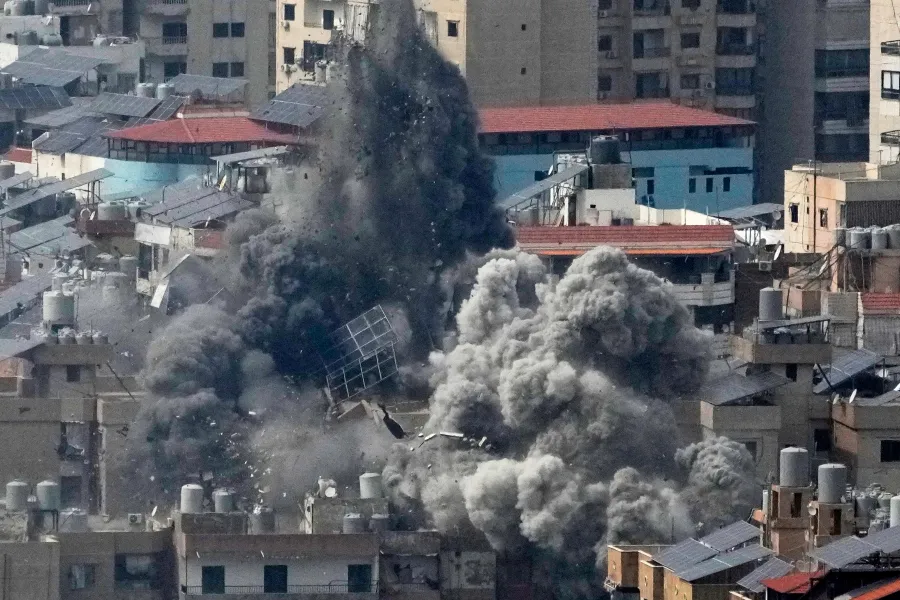
Military activity has expanded into Lebanon, where tensions along the Israel-Lebanon border have intensified.
Israeli authorities have reportedly ordered evacuations in southern suburbs of Beirut, raising concerns that the conflict could open a second major front involving Hezbollah.
Analysts warn that a full Hezbollah-Israel confrontation would dramatically escalate the war and significantly increase civilian casualties.
Humanitarian and Economic Impact
Rising Casualties
Humanitarian organizations estimate that at least 1,200 people have been killed since the escalation began, though the true toll may be higher as rescue operations continue across several cities.
Civilian infrastructure, including residential areas and transportation networks, has been damaged in multiple strike zones.
Global Oil Market Shock
The disruption of shipping through the Strait of Hormuz has triggered sharp volatility in global energy markets.
The strait carries roughly 20% of global oil shipments, making it one of the most strategically important maritime routes in the world.
Any sustained disruption in this corridor has the potential to push oil prices sharply higher and fuel inflation across global economies.
Civilian Displacement and Refugee Risks
Evacuation orders and ongoing strikes have forced thousands of civilians to flee affected areas.
Lebanon is already facing the risk of a growing refugee crisis, while urban populations across Iran are dealing with air raid alerts, infrastructure disruptions, and shortages of essential services.
Humanitarian agencies are warning that prolonged fighting could trigger a large-scale regional displacement crisis.
Strategic Direction and Likely Outcomes
Washington’s Position
The United States appears committed to continuing the campaign.
President Donald Trump has reportedly rejected mediation efforts and insisted that Tehran accept “unconditional surrender,” signaling that diplomatic compromise may not be imminent.
Officials in Washington have suggested the campaign could continue for four to six weeks, indicating expectations of a sustained military operation.
Iran’s Strategic Approach
Iran’s response strategy focuses on asymmetric warfare.
Rather than matching U.S. or Israeli airpower directly, Tehran is leveraging:
-
missile barrages
-
drone swarms
-
cyber operations
-
proxy militia networks
These forces—often described collectively as the Axis of Resistance—operate across multiple countries including Iraq, Syria, Lebanon, and Yemen.
This strategy allows Iran to stretch U.S. and Israeli defenses across multiple fronts.
Regional Risks and Escalation
As the conflict continues, the possibility of a wider regional war is increasing.
Countries across the Gulf are on high alert as missile interceptions continue.
Military analysts warn that prolonged hostilities could pull additional actors into the conflict, including regional militias and state forces.
Escalation across Lebanon, Syria, and Gulf waters could significantly expand the war’s geographic scope.
Global Economic Impact
Beyond the immediate battlefield, the conflict is already affecting global economic stability.
Energy markets, shipping routes, and financial markets are all sensitive to developments in the Middle East.
If the war continues beyond the projected timeline, analysts warn of:
-
prolonged oil price spikes
-
supply chain disruptions
-
rising global inflation
-
economic uncertainty in energy-dependent economies
Consultant’s Strategic Assessment
From a military standpoint, Israeli and U.S. forces appear to hold tactical superiority, particularly in terms of air power and precision strike capabilities.
However, Iran’s ability to launch large-scale missile and drone attacks demonstrates the resilience of its deterrence strategy.
Saturation tactics—firing large numbers of drones and missiles simultaneously—continue to test the limits of advanced air defense systems.
Trajectory of the Conflict
Current indicators suggest the war may enter a prolonged escalation phase.
With no visible diplomatic breakthrough and both sides escalating militarily, the likelihood of immediate negotiations appears low.
The demand for unconditional surrender significantly reduces the chances of a short-term ceasefire.
Strategic Risks
If the conflict continues to intensify, several risks could emerge:
-
regional spillover into Lebanon and Syria
-
escalation involving Gulf states
-
sustained disruption of global oil supplies
-
expansion of proxy warfare across the Middle East
Each of these factors could transform the current conflict into a broader regional war.
Bottom Line
The Iran war is intensifying rapidly.
Israeli and U.S. forces are pressing forward with large-scale air operations, while Iran is countering with asymmetric warfare tactics involving missiles, drones, and regional allies.
The situation remains highly volatile.
Humanitarian crises are deepening, energy markets are reacting to instability in key shipping routes, and geopolitical tensions are spreading across the Middle East.
Unless a significant diplomatic intervention occurs, the coming weeks may see continued escalation with the potential for broader regional destabilization.