Kashmir Hospitality Sector on Edge as Global Conflict Raises LPG Supply Concerns | Tourism Recovery Faces New Risk
By: Javid Amin | 10 March 2026
Global Conflict, Local Impact: Why Kashmir’s Tourism Industry is Watching Fuel Supply Closely
Srinagar — As geopolitical tensions escalate in the Middle East between the United States–Israel alliance and Iran, the ripple effects are beginning to reach far beyond the conflict zone. In India’s picturesque Kashmir Valley, the hospitality industry — one of the region’s most critical economic pillars — is growing increasingly anxious about potential disruptions in fuel supply, particularly Liquefied Petroleum Gas (LPG).
Hotels, restaurants, guest houses, and cafés across Kashmir depend heavily on commercial LPG for cooking and day-to-day operations. Even a short disruption could paralyze kitchens, disrupt tourist services, and trigger a chain reaction across the local economy.
These concerns intensified after the Government of India invoked provisions of the Essential Commodities Act through a gazette notification earlier this week. The move aims to prevent hoarding and ensure uninterrupted supply of domestic cooking gas amid fears that global energy supply chains could face disruption if the conflict escalates further.
While officials maintain that there is currently no shortage of LPG or petroleum products in Kashmir, stakeholders in the hospitality industry say the precautionary government action itself signals that authorities are preparing for possible contingencies.
For a tourism sector that has only recently begun recovering after years of instability and economic setbacks, the mere possibility of fuel shortages is enough to set alarm bells ringing.
Kashmir’s Tourism Industry: A Delicate Recovery in Progress
After Years of Setbacks, Tourism Was Finally Returning
Over the past few months, Kashmir’s tourism sector has been slowly regaining momentum. The winter season of early 2026 brought heavy snowfall to destinations like Srinagar, Gulmarg, Pahalgam, and Sonamarg, attracting thousands of tourists eager to experience the Valley’s famed winter landscapes.
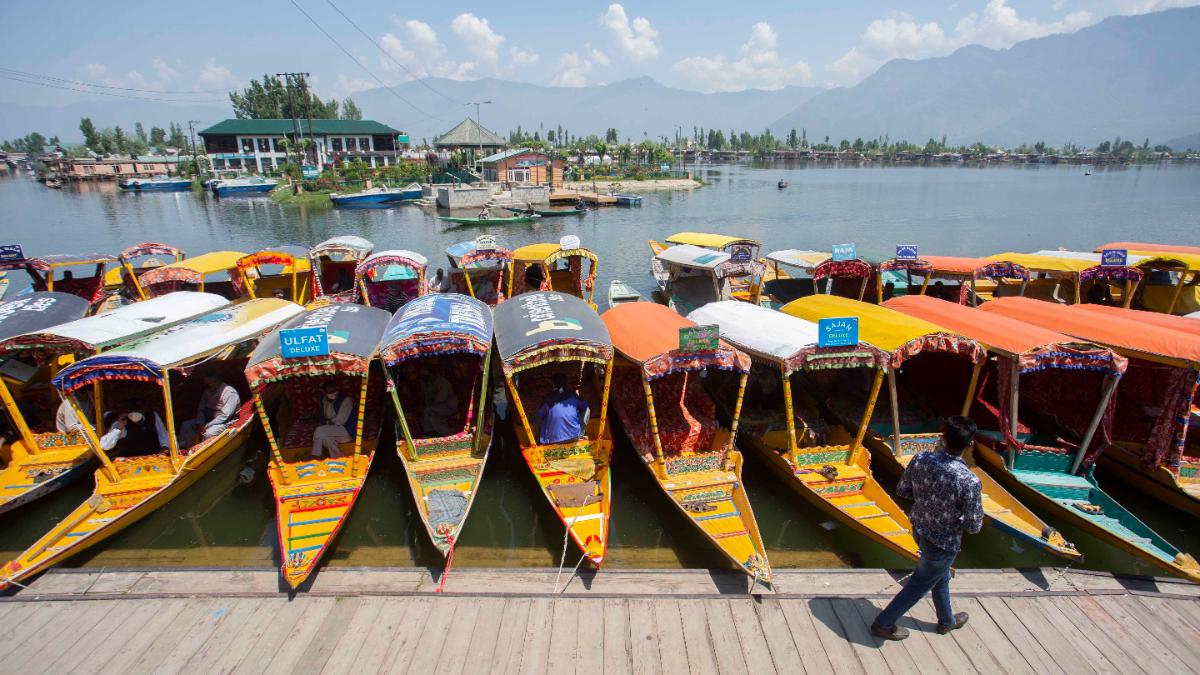
Hotels reported improved bookings compared to the latter half of 2025. Travel operators noted a visible uptick in arrivals from major Indian cities, and local tourism workers — from taxi drivers to shikara operators — began seeing business return after months of uncertainty.
For many industry players, the rebound was a long-awaited relief.
The tourism economy in Kashmir supports a vast network of livelihoods, including:
-
Hotel and guesthouse operators
-
Houseboat owners on Dal and Nigeen lakes
-
Restaurant and café workers
-
Tour guides
-
Shikara boatmen
-
Taxi and transport operators
-
Local artisans and handicraft sellers
When tourism thrives, thousands of families across the region benefit.
However, the industry’s recovery remains fragile.
A combination of security concerns, economic uncertainty, and infrastructure gaps continues to cast a shadow over the long-term sustainability of tourism in the region.
Memories of a Crisis: The Tourism Collapse of 2025
A Year That Nearly Brought the Sector to a Standstill
To understand why industry stakeholders are alarmed today, one must look back at the events of 2025 — a year that severely damaged Kashmir’s tourism image.
In April 2025, a deadly terror attack targeting tourists shook the Valley’s travel industry. The attack, which killed 26 visitors, triggered widespread cancellations and prompted travel advisories from several countries.
The psychological impact on tourists was immediate.
Hotel bookings plummeted almost overnight. Tour operators reported mass cancellations across both domestic and international travel packages. Airlines saw reduced passenger loads on flights to Srinagar.
By the end of 2025, hotel occupancy in many parts of Kashmir had fallen below 20 percent.
Entire tourism clusters faced financial distress.
Shikara operators on Dal Lake reported days with no passengers. Taxi drivers waited hours outside hotels without securing a single booking. Guesthouse owners struggled to pay staff salaries and utility bills.
Many small hospitality establishments temporarily shut down.
For a region where tourism contributes significantly to economic activity, the downturn was devastating.
The sector entered 2026 hoping for stability and gradual recovery.
Now, the possibility of a fuel supply disruption threatens to create another unexpected challenge.
Why LPG Is the Lifeline of Kashmir’s Hospitality Sector
Kitchens That Never Stop
Unlike many industries where temporary disruptions can be managed through alternative arrangements, the hospitality sector relies on continuous access to fuel.
In Kashmir, LPG serves as the primary cooking fuel for hotels, restaurants, cafés, and catering services.
Large hotels host dozens — sometimes hundreds — of guests daily.
Breakfast buffets, room service, banquet meals, restaurant dining, and event catering all depend on uninterrupted kitchen operations.
Without LPG cylinders, these services cannot function.
Mushtaq Chaya, Chairman of the J&K Hoteliers Club, explained the severity of the situation.
According to him, LPG is not just an operational input but the backbone of hospitality services.
Hotels cannot cook meals without it, restaurants cannot serve customers, and catering services cannot deliver events.
Even a short interruption in supply could lead to operational shutdowns.
Unlike households, which may stretch a cylinder for weeks, hotels consume multiple cylinders daily.
A single large property hosting 100 to 200 guests might require dozens of cylinders every week.
In such a scenario, any disruption in commercial LPG supply would immediately affect service delivery.
Government Steps In: Essential Commodities Act Invoked
Preventing Panic and Hoarding
Recognizing the potential impact of global geopolitical tensions on domestic energy markets, the Indian government recently invoked provisions of the Essential Commodities Act.
The objective of this move is straightforward:
-
Prevent hoarding of LPG cylinders
-
Ensure equitable distribution of domestic cooking gas
-
Maintain supply chain stability
-
Avoid price manipulation or black marketing
The government’s decision comes as crude oil prices show volatility in international markets amid the ongoing conflict.
Global oil prices often influence LPG supply chains, transportation costs, and fuel logistics.
While India imports a significant portion of its crude oil requirements, domestic distribution networks are designed to ensure that essential fuels reach households and businesses even during disruptions.
Officials say the new notification is a precautionary step rather than a response to any current shortage.
However, industry stakeholders interpret the move as an indication that authorities are preparing for possible supply shocks.
Domestic Consumers Get Priority
New Guidelines Shift Delivery Focus
LPG distributors in Kashmir confirm that recent guidelines emphasize prioritizing domestic consumers.
Earlier, roughly 65 percent of deliveries were carried out through OTP-based systems. Under the updated directives, distributors are now required to ensure that nearly 90 percent of LPG deliveries are routed through the DAC/OTP system.
This system ensures that cylinders reach verified domestic users and reduces the possibility of diversion or misuse.
For households, this is reassuring news.
For commercial consumers, however, it raises concerns.
Hotels, hospitals, restaurants, and catering businesses depend on large volumes of commercial LPG cylinders.
Distributors say oil companies have requested detailed data on commercial consumption patterns, including:
-
Number of commercial consumers
-
Daily LPG usage
-
Frequency of cylinder refills
-
Storage capacities
This data collection suggests that authorities are assessing potential demand scenarios in case supply chains tighten.
At present, distributors insist that there is no shortage.
However, they acknowledge that panic booking has increased.
Panic Booking and Rising Demand
A Temporary Pressure on Supply Networks
Some LPG distributors in Kashmir report that booking requests have nearly doubled in recent days.
Normally, local supply infrastructure handles around 400 to 500 cylinder deliveries daily.
Recently, the demand has surged significantly.
One distributor explained that the OTP verification system itself takes time during deliveries, which has added to logistical delays.
These delays do not indicate a shortage but reflect temporary pressure on distribution networks.
Despite this surge in bookings, suppliers emphasize that LPG stocks remain adequate.
Cylinder trucks continue arriving from supply plants, and warehouses maintain sufficient reserves.
Authorities and distributors are urging consumers not to panic or hoard cylinders.
Petrol and Diesel Supplies Remain Stable
Fuel Retailers Report No Restrictions
While LPG concerns dominate discussions in the hospitality sector, petroleum retailers across Kashmir say there has been no disruption in petrol or diesel supplies.
Petrol pump owners confirm that fuel deliveries from oil companies are arriving as scheduled.
Retailers have not received any directive restricting the volume of fuel they can procure.
Modern fuel retail systems in India are highly automated.
Inventory levels, sales data, and supply movements are monitored centrally by oil companies.
Because of this digital monitoring system, large-scale hoarding or black marketing is extremely difficult.
Retailers say any irregular activity would immediately trigger alerts within company systems.
For now, petrol and diesel supplies remain normal.
However, industry players acknowledge that prolonged global conflict could eventually influence transportation costs and fuel prices worldwide.
Tourism’s Economic Ripple Effect
When Tourism Suffers, Thousands Lose Income
Tourism in Kashmir is not merely an industry; it is a livelihood ecosystem.
The hospitality sector generates employment for thousands of people across the Valley.
These include:
-
Houseboat owners
-
Shikara boatmen
-
Taxi drivers
-
Tour guides
-
Hotel staff
-
Restaurant workers
-
Local artisans
-
Handicraft traders
When tourist arrivals drop, the economic shock spreads quickly.
Restaurants lose customers, hotels operate below capacity, taxis remain idle, and handicraft shops see declining sales.
Even farmers supplying fresh produce to hotels and restaurants experience reduced demand.
A disruption in LPG supply could therefore affect far more than hotel kitchens.
It could impact the entire tourism supply chain.
Seasonal Tourism: A Structural Vulnerability
Kashmir’s Economy Still Depends on Peak Seasons
One of the biggest challenges facing Kashmir’s tourism industry is its dependence on seasonal travel.
The Valley experiences two major tourism peaks:
-
Winter Tourism — driven by snowfall and skiing in destinations like Gulmarg
-
Summer Tourism — driven by trekking, sightseeing, and escape from heat in the plains
During these seasons, hotel occupancy can reach high levels.
But during off-season months, demand drops sharply.
This seasonal pattern creates financial instability for hospitality businesses.
Many hotels generate most of their annual revenue during just a few months.
Any disruption during peak season — whether security-related, economic, or logistical — can significantly impact annual earnings.
This is why industry players are particularly sensitive to potential fuel disruptions.
Infrastructure Challenges Continue
Connectivity and Services Need Improvement
Despite its global appeal as a tourist destination, Kashmir still faces several infrastructure challenges that affect the hospitality sector.
These include:
-
Limited high-capacity transportation networks
-
Occasional internet disruptions
-
Shortage of trained hospitality professionals
-
Inconsistent power supply in some areas
-
Limited international connectivity
Improving these areas could strengthen the sector’s resilience and attract higher-spending tourists.
The government has introduced several initiatives aimed at addressing these challenges, but implementation remains ongoing.
Policy Efforts to Revive Tourism
Diversification Beyond Traditional Tourism
Recognizing the vulnerabilities of seasonal tourism, authorities have begun promoting diversified travel experiences.
These initiatives include:
Eco-Tourism
Encouraging sustainable travel to lesser-known natural locations.
Cultural Tourism
Highlighting Kashmir’s heritage, crafts, and traditional festivals.
Adventure Tourism
Promoting trekking, skiing, paragliding, and mountaineering.
Rural Tourism
Encouraging visitors to experience village life and local culture.
Such diversification could help distribute tourist arrivals throughout the year, reducing the dependence on peak seasons.
Signs of Resilience Across the Valley
Community Participation Driving Recovery
Despite repeated setbacks, Kashmir’s tourism industry has shown remarkable resilience.
Local communities have played a significant role in rebuilding visitor confidence.
Boatmen on Dal Lake, taxi drivers, hotel staff, and tour guides have collectively worked to improve visitor experiences.
Tour operators have also intensified marketing efforts, promoting Kashmir’s natural beauty across digital platforms and travel networks.
These grassroots efforts are slowly restoring the Valley’s tourism image.
Comparative Snapshot of the Tourism Sector
| Period | Tourist Footfall | Hotel Occupancy | Sector Mood |
|---|---|---|---|
| October 2025 | Very Low | Below 20% | Crisis |
| January 2026 | Rising | Improving | Cautious Optimism |
While recovery is visible, the industry remains vulnerable to sudden shocks.
What Happens If LPG Supply Is Disrupted?
Potential Consequences for the Hospitality Sector
If LPG supply were disrupted, the hospitality industry could face several immediate challenges:
Restaurant Closures
Many restaurants would be unable to operate without cooking fuel.
Hotel Service Interruptions
Buffet services, room service, and banquet events could be affected.
Food Supply Chain Disruption
Catering companies and food suppliers would face operational delays.
Loss of Tourist Confidence
Travelers expect uninterrupted hospitality services.
Any visible disruption could harm Kashmir’s tourism image.
Industry Appeal to the Government
Call for Continuous Monitoring
Hospitality stakeholders are urging authorities to closely monitor fuel supply chains.
They believe that early planning can prevent panic and ensure smooth operations.
Industry representatives say the government must ensure:
-
Adequate LPG allocation for commercial users
-
Efficient distribution logistics
-
Transparent communication with businesses
Such measures could reassure both operators and tourists.
The Road Ahead: Recovery with Caution
Tourism Is Rebounding, But Fragility Remains
Kashmir’s tourism sector stands at a delicate crossroads.
After years of disruptions, visitor numbers are slowly returning.
Hotels are seeing improved bookings.
Winter tourism has revived business in key destinations.
Yet the sector remains highly sensitive to external shocks — whether security incidents, economic fluctuations, or global geopolitical tensions.
The current LPG supply concerns highlight how global conflicts can affect even remote tourism economies.
For Kashmir’s hospitality industry, the message is clear.
Recovery is underway, but resilience is not guaranteed.
Conclusion
The hospitality sector in Kashmir is cautiously optimistic yet deeply vigilant.
Fuel supply concerns linked to global tensions have reminded stakeholders how interconnected the world’s economies have become.
While authorities assure that LPG and fuel supplies remain stable for now, industry players are urging continuous monitoring to prevent disruptions.
Tourism remains one of Kashmir’s most vital economic lifelines.
Ensuring stable energy supply, improving infrastructure, strengthening security, and diversifying tourism offerings will be key to securing the Valley’s long-term economic resilience.
For now, the industry waits — hopeful that recovery will continue and that the alarm bells ringing today will remain only a warning, not the start of another crisis.