Kashmir Protests After Reports of Ayatollah Khamenei’s Death | Shutdown Call & Internet Curbs
By: Javid Amin | 01 March 2026
Protests Return to Kashmir Streets — Triggered by West Asia Shockwaves
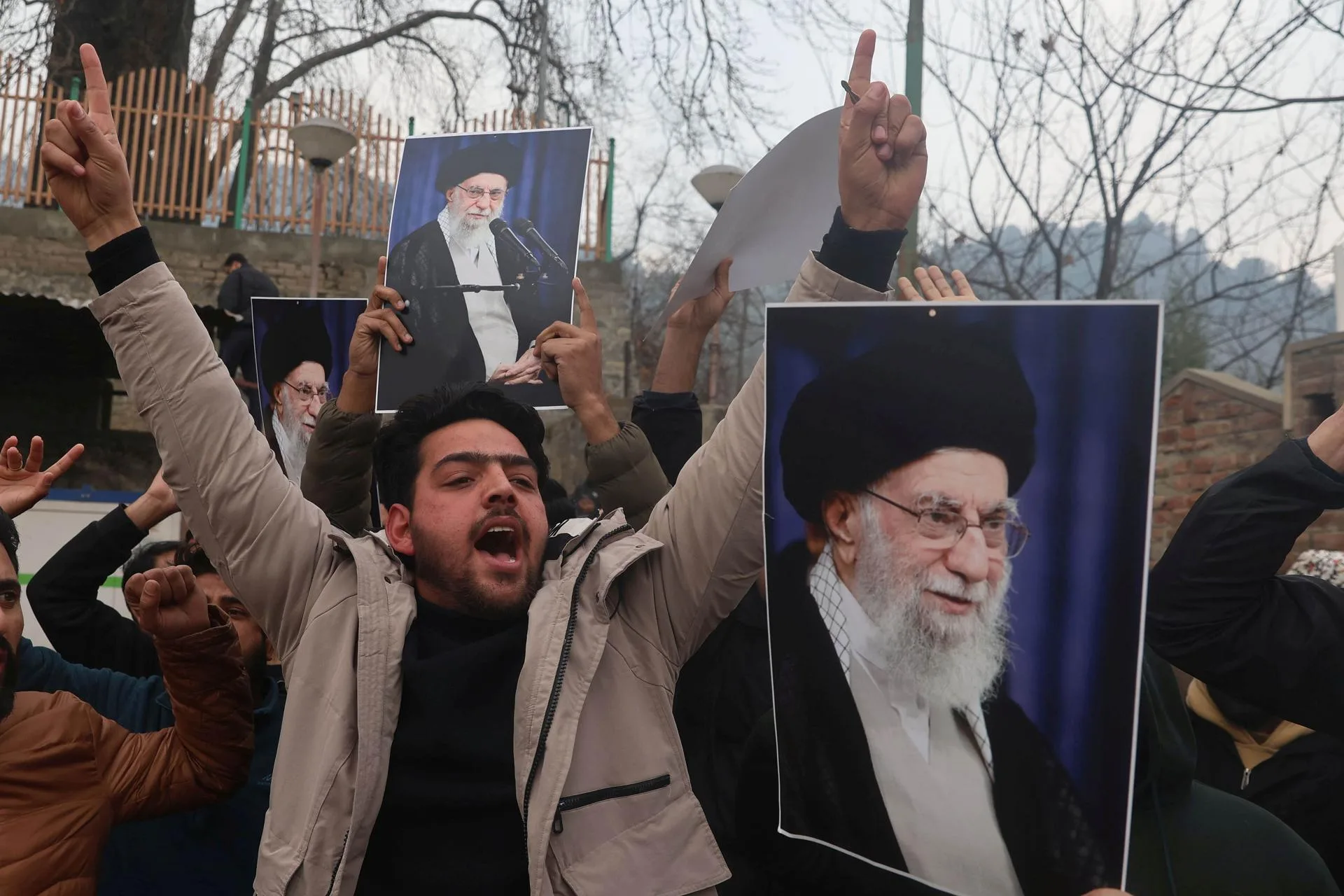
Rare street protests resurfaced in parts of Jammu & Kashmir following reports circulating about the death of Iran’s Supreme Leader, Ali Khamenei, in an alleged U.S.–Israel strike.
Even before full clarity emerged internationally, emotional reactions took shape locally.
Gatherings were reported in:
-
Srinagar
-
Lal Chowk
-
Sonawari
-
Bandipora
-
Budgam
-
Kargil
Demonstrations were largely led by members of the Shia community, many carrying portraits of Khamenei, chanting slogans, and holding mourning processions.
Security agencies monitored the gatherings closely. Reports indicate that most protests remained peaceful.
Why Khamenei’s Reported Death Resonates in Kashmir
To understand the scale of reaction, one must understand the religious dimension.
For many Shia Muslims worldwide, Khamenei is not merely a political figure — he is regarded as a spiritual authority. In Shia-majority pockets of Kashmir, particularly in Budgam and Kargil, Iranian clerical leadership has long held symbolic influence.
This connection is rooted in:
-
Shared theological networks
-
Religious scholarship exchanges
-
Ideological affinity
-
Emotional solidarity
When reports of his death surfaced, the response was less about geopolitics and more about perceived religious loss.
Timeline: How Events Unfolded in Kashmir
February 28 – Evening
News of Khamenei’s reported death begins circulating through international broadcasts and social media.
Local clerics in Srinagar and Budgam hold initial mourning gatherings.
February 29 – Morning
Street protests emerge in Lal Chowk and surrounding areas.
Demonstrators carry black flags and portraits.
Security forces deploy in sensitive zones.
February 29 – Afternoon
Political reactions surface.
Mehbooba Mufti condemns the alleged strike, describing it as destabilizing for the region.
Mirwaiz Umar Farooq also criticizes the killing, framing it as a blow to resistance movements.
Authorities reportedly begin restricting mobile internet in parts of Srinagar and Budgam to prevent viral dissemination of protest videos.
March 1 – Morning
The Mutahida Majlis-e-Ulama (MMU) issues a shutdown call.
Date announced: March 2, 2026.
Scope: Shops, schools, and businesses in Shia-majority areas urged to remain closed.
March 2 – Planned Shutdown
Security remains heightened.
Mourning gatherings and mosque congregations expected.
Authorities continue monitoring digital communication channels.
Internet Restrictions: A Familiar Tool in Kashmir
Mobile internet throttling in parts of Srinagar and Budgam reflects a pattern seen during previous sensitive moments.
Authorities typically justify such measures as:
-
Preventive
-
Aimed at stopping rumor spread
-
Designed to prevent mobilization escalation
However, digital rights advocates often criticize internet restrictions as disproportionate and disruptive to ordinary life.
In this instance, social media platforms were reportedly slowed intermittently rather than fully shut down.
The Shutdown Call: What It Means
The MMU’s shutdown call is significant for two reasons:
-
It reflects coordinated religious mobilization.
-
It marks one of the rare large-scale protest shutdowns in recent years triggered by an international event.
While shutdown calls were once common in Kashmir’s political landscape, they have become less frequent in recent years.
The March 2 observance, therefore, stands out symbolically.
Political Backing:
The People’s Democratic Party (PDP) formally supported the shutdown call, giving it significant political weight. The party stated that the strike had deeply hurt religious sentiments and that peaceful expression of grief should be respected.
Several local clerics and community groups also endorsed the call, making it one of the most politically backed protest shutdowns in recent years.
Is This a Political Protest or Religious Mourning?
The lines are intertwined.
For many participants, the gatherings are framed as:
-
Mourning for a religious authority
-
Solidarity with global Shia communities
-
Protest against perceived aggression in West Asia
For political leaders, the moment also carries geopolitical undertones, linking local sentiment to broader narratives of global justice.
Security Sensitivity: Why Authorities Are Alert
From a governance standpoint, transnational religious solidarity can quickly intersect with local political fault lines.
Authorities are concerned about:
-
Escalation into confrontation
-
Viral misinformation
-
Provocative messaging
So far, protests appear largely peaceful, but security deployment indicates precaution.
Regional Implications Beyond Kashmir
If reports about Khamenei’s death were confirmed internationally, repercussions could extend to:
-
Iraq
-
Lebanon
-
Gulf states
Groups such as Hezbollah could react strongly.
But as of now, the situation remains clouded by competing narratives.
Information Fog: A Critical Warning
In modern conflict zones, information warfare is intense.
False announcements of leadership deaths have occurred in past conflicts as psychological operations.
Until multiple independent global agencies verify a claim, caution remains essential.
The emotional reaction in Kashmir reflects how powerful even unverified reports can be.
Significance: Why This Moment Matters
This episode highlights three key realities:
-
Kashmir’s emotional and religious ties to West Asia remain strong.
-
Global geopolitical events can rapidly trigger local mobilization.
-
Digital communication accelerates reaction cycles.
It is notable that this is one of the first large-scale street mobilizations in recent years linked to a foreign political-religious figure.
The Road Ahead
Several questions remain:
-
Will international confirmation clarify Khamenei’s status?
-
Will protests remain limited and peaceful?
-
Will authorities ease digital restrictions?
The situation remains fluid.
What is clear is that West Asian geopolitics continues to resonate deeply in Kashmir’s social and religious fabric.