Kashmiri Leaders Meet Iranian Ambassador in New Delhi After Killing of Ayatollah Ali Khamenei
By: Javid Amin | 09 March 2026
Cross-party delegation expresses solidarity with Iran, raises concerns over Kashmiri students amid escalating Middle East conflict
Kashmiri Leaders Meet Iranian Ambassador, Express Support for Iran Amid Global Tensions
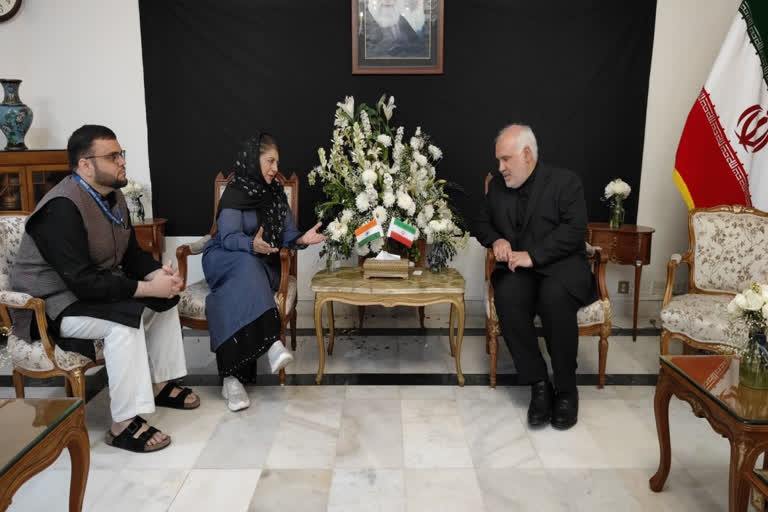
A delegation of prominent political leaders from Jammu and Kashmir visited the Iranian Embassy in New Delhi on March 9, 2026, meeting Iranian Ambassador Dr. Mohammad Fathali to convey condolences and express solidarity with Iran after the killing of the country’s Supreme Leader, Ali Khamenei.
The cross-party meeting, led by Mehbooba Mufti, president of the People’s Democratic Party (PDP) and former Chief Minister of Jammu & Kashmir, also included leaders from the Jammu & Kashmir National Conference (NC). The visit followed widespread protests and expressions of grief in Kashmir after the dramatic escalation of tensions in the Middle East.
The political delegation signed a condolence book opened by the Iranian Embassy and held discussions with the ambassador about the humanitarian situation, particularly the safety of Indian and Kashmiri students studying in Iran.
The meeting was symbolic yet politically significant, reflecting how global geopolitical developments often resonate deeply in Kashmir due to historical, cultural, and religious connections with Iran and the wider Shia world.
The Delegation: Who Met the Iranian Ambassador
The delegation that visited the Iranian Embassy represented a limited but cross-party political spectrum from Jammu and Kashmir.
Key Leaders Who Attended the Meeting
| Name | Party/Position | Role in Meeting |
|---|---|---|
| Mehbooba Mufti | PDP Chief, Former J&K Chief Minister | Met ambassador, expressed solidarity with Iran, raised concerns about Kashmiri students in Iran |
| Aga Syed Muntazir Mehdi | MLA, Budgam | Accompanied Mehbooba Mufti |
| Chowdry Mohammad Ramzan | MP, National Conference | Signed condolence book |
| Sajjad Ahmed Kichloo | MP, National Conference | Signed condolence book |
| Gurwinder Singh Oberoi | MP, National Conference | Signed condolence book |
Another senior National Conference leader, Aga Ruhulla Mehdi, was not part of the delegation, despite speculation in some early reports. Party representatives confirmed that only Ramzan, Kichloo, and Oberoi represented the National Conference at the embassy meeting.
The absence of Aga Ruhulla suggests that the visit was organized informally rather than as an official full-party delegation.
Why Kashmiri Leaders Visited the Iranian Embassy
The immediate trigger for the diplomatic outreach was the assassination of Iran’s Supreme Leader.
On February 28, 2026, Iranian authorities confirmed that Ali Khamenei was killed during coordinated United States and Israeli airstrikes targeting leadership sites in Tehran, an event that dramatically escalated tensions across the Middle East.
The killing of the long-time Iranian leader triggered mourning across Iran and protests in several parts of the Muslim world.
Iran declared a 40-day national mourning period, while the country’s powerful religious and military institutions quickly rallied behind a successor.
In response to the assassination, the Iranian Embassy in New Delhi opened a condolence book for diplomats, political leaders, and members of the public to sign.
The Kashmiri leaders’ visit was part of this condolence process.
Mehbooba Mufti’s Message of Solidarity
Leading the delegation, Mehbooba Mufti emphasized what she described as a sense of emotional connection between Kashmir and Iran.
During the meeting, Mufti reportedly conveyed condolences to the Iranian people and condemned the killing of Khamenei, describing it as a destabilizing development for the region.
She also highlighted humanitarian concerns, particularly the safety of Kashmiri students studying in Iranian universities.
Many students from Jammu and Kashmir pursue religious and academic studies in cities such as:
-
Qom
-
Tehran
-
Mashhad
These institutions attract students from Shia communities across South Asia.
Mufti urged diplomatic channels to ensure the safe evacuation or protection of students if the conflict intensifies.
National Conference MPs Sign Condolence Book
Three Members of Parliament belonging to the Jammu & Kashmir National Conference also attended the embassy and signed the condolence register.
These included:
-
Chowdry Mohammad Ramzan
-
Sajjad Ahmed Kichloo
-
Gurwinder Singh Oberoi
Their presence signaled that sympathy for Iran’s leadership extended across party lines in Kashmir’s political landscape.
The NC leaders did not issue extensive public statements but reportedly expressed condolences and acknowledged what they described as a tragic development in global politics.
Widespread Protests in Kashmir
The political visit to the embassy came against the backdrop of large demonstrations across Kashmir.
In Srinagar and other towns, thousands reportedly gathered for protests and mourning processions following the assassination of Khamenei.
Demonstrators raised slogans condemning the airstrikes and expressing solidarity with Iran.
In several areas, religious scholars and local leaders framed the event as the “martyrdom” of the Iranian leader.
The protests were particularly visible in areas with significant Shia populations, including:
-
Budgam
-
Srinagar outskirts
-
parts of north Kashmir
These demonstrations reflect the longstanding cultural and religious connections between Kashmir’s Shia communities and Iran.
Kashmir and Iran: Historical and Religious Links
The emotional reaction in Kashmir cannot be understood without recognizing the region’s centuries-old ties with Iran.
Historically, Persian culture profoundly influenced Kashmir’s language, literature, and religious traditions.
Persian was once the administrative and literary language of Kashmir during medieval periods.
Even today, many Kashmiri religious scholars receive training in Iranian seminaries.
Key factors behind Kashmir’s strong Iran connection include:
1. Religious Networks
Iran hosts major Shia seminaries where Kashmiri clerics study theology.
2. Cultural Influence
Persian poetry, architecture, and scholarship shaped Kashmiri intellectual traditions.
3. Political Symbolism
Iran’s anti-Western rhetoric often resonates with certain political narratives within the region.
These historical connections help explain why developments in Iran often trigger reactions in Kashmir.
The Geopolitical Context: US-Israel Strikes on Iran
The assassination of Ali Khamenei occurred during a dramatic escalation in the Middle East.
The strikes were reportedly part of a decapitation strategy targeting Iranian leadership structures in Tehran.
The operation involved intelligence coordination between U.S. and Israeli agencies.
In the aftermath:
-
Iran vowed retaliation
-
regional militias intensified operations
-
global oil markets experienced volatility
The geopolitical shockwaves extended far beyond the Middle East, affecting political reactions across Asia and Europe.
Iran’s Leadership Transition
Within days of Khamenei’s death, Iran’s powerful clerical body selected his son, Mojtaba Khamenei, as the new Supreme Leader.
The decision marked a historic moment because it introduced dynastic succession in the Islamic Republic, a system originally designed to avoid hereditary leadership.
The appointment has been controversial both inside and outside Iran.
Critics argue it undermines the revolutionary ideology of the Islamic Republic, while supporters say it ensures stability during wartime.
Diplomatic Sensitivity for India
The meeting between Kashmiri leaders and the Iranian ambassador also carries diplomatic implications for India.
India maintains complex relations with all parties involved in the conflict:
-
strategic partnership with the United States
-
strong defence ties with Israel
-
historic energy and trade relations with Iran
Balancing these relationships is a delicate task for Indian foreign policy.
Although the Kashmiri leaders’ visit was not an official government initiative, public expressions of solidarity with Iran can still generate diplomatic sensitivities.
Humanitarian Concerns: Kashmiri Students in Iran
One of the most pressing issues raised during the meeting was the situation of Kashmiri students studying in Iran.
Hundreds of students from Jammu and Kashmir enroll in:
-
religious seminaries
-
medical colleges
-
technical universities
With missile strikes and escalating hostilities across the region, families in Kashmir have expressed anxiety about their safety.
Political leaders urged Indian authorities to:
-
establish communication with students
-
monitor the security situation
-
prepare evacuation plans if necessary
Such humanitarian concerns were a central part of the discussion with the Iranian ambassador.
Domestic Political Implications in Kashmir
The visit also has a domestic political dimension.
By expressing solidarity with Iran, Kashmiri leaders may be appealing to constituencies that view the Iranian leadership as a symbol of resistance against Western and Israeli influence.
This messaging resonates particularly among sections of:
-
Shia voters
-
religious institutions
-
political activists critical of U.S. foreign policy
However, such positioning can also provoke controversy in India’s broader political environment.
Risks of Escalation
Analysts warn that continued escalation in the Middle East could have indirect consequences for South Asia.
Potential impacts include:
Regional Security Concerns
Heightened tensions could trigger protests or political mobilization across parts of the Muslim world.
Diplomatic Pressures
Countries like India may face pressure to clarify their stance in the conflict.
Energy Market Disruptions
The Strait of Hormuz remains a critical oil shipping route.
Disruption there could significantly affect global energy prices.
Key Takeaways
The March 9 meeting between Kashmiri leaders and the Iranian ambassador was more than a routine diplomatic courtesy.
It reflected several overlapping dynamics:
-
emotional and religious ties between Kashmir and Iran
-
domestic political messaging within Jammu & Kashmir
-
humanitarian concerns about Kashmiri students abroad
-
the global ripple effects of the Middle East crisis
The delegation included Mehbooba Mufti, Aga Syed Muntazir Mehdi, and three National Conference MPs — Ramzan, Kichloo, and Oberoi.
Importantly, Aga Ruhulla Mehdi was not part of the visiting group, despite speculation in some early reports.
Conclusion: A Local Reaction to a Global Crisis
The assassination of Ali Khamenei has reshaped the geopolitical landscape of the Middle East, triggering diplomatic reactions far beyond Iran’s borders.
For Kashmir, the event struck a deeper chord due to historical ties, religious connections, and ongoing political sensitivities.
The visit by Kashmiri leaders to the Iranian Embassy in New Delhi illustrates how global conflicts can resonate locally, shaping political narratives, public sentiment, and diplomatic gestures even thousands of kilometers away.
As the Iran-Israel-US conflict continues to evolve, the political and humanitarian implications for regions like Kashmir may continue to unfold.


