Mehbooba Mufti Burns Effigies of Trump, Netanyahu in Srinagar as Iran Crisis Reverberates in Kashmir
By: Javid Amin | 04 March 2026
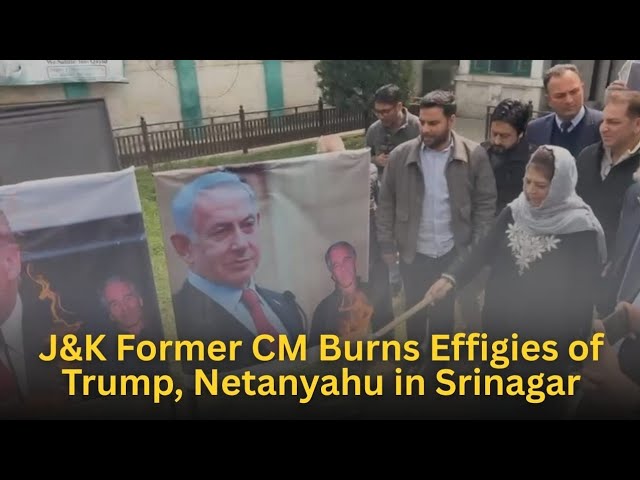
In a dramatic political protest that underscores the global ripple effects of the escalating Iran–Israel confrontation, former Jammu & Kashmir Chief Minister Mehbooba Mufti burned effigies of former US President Donald Trump and Israeli Prime Minister Benjamin Netanyahu in Srinagar on March 4, 2026.
The protest was organized to condemn the recent US–Israel strikes on Iran that reportedly killed Iranian Supreme Leader Ayatollah Ali Khamenei, an event that has triggered demonstrations across several parts of South Asia and the Middle East.
Mufti’s action adds a dramatic political dimension to the already tense atmosphere in Kashmir, where authorities have imposed precautionary restrictions to prevent unrest.
The Protest in Srinagar
The protest took place in Srinagar under heightened security restrictions.
During the demonstration:
-
Effigies and posters of Donald Trump and Benjamin Netanyahu were publicly burned.
-
Protesters raised slogans condemning US and Israeli military actions in Iran.
-
Supporters gathered around Mehbooba Mufti as she delivered a fiery speech criticizing international and domestic responses to the conflict.
The demonstration was one of the most visible political protests in Kashmir since restrictions were imposed following the escalation of the Iran–Israel crisis.
Mufti’s Strong Political Message
Addressing supporters during the protest, Mehbooba Mufti strongly condemned the military strikes on Iran.
She accused world powers of violating the sovereignty of another nation and criticized the Indian government for what she described as silence over the incident.
Mufti argued that India historically maintained balanced relations with Iran and suggested that New Delhi should have taken a clearer position following the strike.
In a particularly emphatic statement, she declared:
“Qayaamat tak karoongee virodh” — I will continue to oppose until the end of time.
The statement signaled her intention to maintain a sustained political campaign against what she called US–Israel aggression.
Demand for Release of Kashmiri Leaders
During the protest, Mufti also raised domestic political concerns.
She demanded:
-
Immediate release of detainees held during recent protests.
-
Withdrawal of police cases filed against political leaders.
Among those she referred to were National Conference MP Aga Syed Ruhullah Mehdi and former Srinagar mayor Junaid Azim Mattu, against whom the police recently registered FIRs over alleged circulation of misleading online content.
Mufti framed the legal action as part of what she described as a broader clampdown on political expression in Kashmir.
Restrictions Across Kashmir
The protest occurred amid tight administrative restrictions in Jammu and Kashmir, as authorities attempted to prevent the Iran–Israel crisis from triggering wider unrest.
Reported precautionary measures include:
-
Reduced mobile internet speeds (limited to 2G in several areas).
-
Temporary suspension of prepaid calling services in certain locations.
-
Closure of schools and colleges across the Valley.
-
Heavy deployment of police and paramilitary forces in sensitive zones.
Security forces also sealed off important locations such as Lal Chowk, traditionally the epicenter of political protests in the city.
Why the Iran Crisis Resonates in Kashmir
The killing of Ayatollah Ali Khamenei has triggered a particularly strong emotional reaction in parts of Kashmir for several reasons.
1. Religious and ideological connections
Iran holds symbolic importance for many Shia communities in the region.
2. Political solidarity narratives
Khamenei was widely perceived in certain political circles as a vocal critic of Western influence in the Middle East.
3. Historical diplomatic memory
Some Kashmiri political leaders frequently recall Iran’s support for India during the 1994 UNHRC resolution on Kashmir, using it as a point of reference in contemporary debates.
As a result, developments in Iran often resonate strongly within Kashmir’s political discourse.
Wider Political Reactions in Kashmir
Mehbooba Mufti is not the only political leader responding to the crisis.
Several prominent figures in Kashmir have commented on the situation:
Omar Abdullah
Chief Minister Omar Abdullah condemned the assassination of Khamenei and questioned the legality of the strike, while urging residents to maintain peace.
Ruhullah Mehdi
MP Aga Syed Ruhullah Mehdi criticized India’s diplomatic approach, suggesting the government had prioritized relations with Gulf monarchies while ignoring Iran.
Sajad Lone
People’s Conference leader Sajad Lone focused on media freedom concerns after Kashmiri news outlets reported restrictions on their social media accounts.
Each leader has framed the crisis differently, reflecting the complex intersection of global geopolitics and local politics in Kashmir.
Global Context: Escalation Between Iran, Israel, and the United States
The protest in Srinagar is part of a wider chain reaction following the alleged US–Israel operation that killed Ayatollah Khamenei.
The strike has triggered:
-
Retaliatory threats from Iranian allies across the Middle East.
-
Protests in several countries, including Pakistan and parts of India.
-
Rising geopolitical tensions involving US bases in the Gulf region.
Iran has reportedly entered a period of national mourning while mobilizing its military and regional allies.
Kashmir at the Crossroads of Global Politics
The events in Srinagar illustrate a recurring pattern: global geopolitical crises often echo strongly in Kashmir’s political and emotional landscape.
Historically, conflicts involving:
-
Palestine
-
Iraq
-
Afghanistan
-
Iran
have sparked demonstrations in the region.
In this case, the Iran–Israel confrontation has once again intersected with Kashmir’s complex political dynamics, blending international outrage with local grievances.
Conclusion
Mehbooba Mufti’s decision to burn effigies of Donald Trump and Benjamin Netanyahu in Srinagar reflects both political theatre and a deeper ideological response to the escalating Middle East crisis.
Her protest not only condemned the US–Israel strikes on Iran but also criticized the Indian government’s response and demanded relief for detained Kashmiri leaders.
As tensions continue to unfold globally, Kashmir remains a region where international geopolitical developments can quickly translate into local political reactions — reinforcing the Valley’s unique position at the intersection of global narratives and regional politics.


