Middle East Crisis Triggers Panic Buying of Fuel and LPG in Kashmir
By: Javid Amin | 11 March 2026
Authorities say supply is stable despite long queues at petrol pumps
The escalating conflict in the Middle East has begun to trigger anxiety thousands of kilometers away in the Kashmir Valley, where residents rushed to petrol pumps and LPG distributors fearing possible shortages of fuel and cooking gas.
Over the past 24 hours, long queues were reported at several fuel stations across Kashmir as people hurried to fill their vehicle tanks and secure LPG cylinders.
However, officials in the Jammu and Kashmir government have clarified that there is no shortage of petroleum products or LPG in the region, urging the public not to panic or hoard supplies.
Authorities say the rush is largely driven by fear and speculation, rather than any disruption in actual fuel availability.
Panic Buying at Petrol Pumps
Long queues seen across parts of the Valley
Fuel stations across several areas witnessed unusually heavy demand as residents attempted to stock up on petrol and diesel.
Witnesses reported long queues at petrol pumps in multiple districts, with some stations seeing customers purchasing fuel in extra containers.
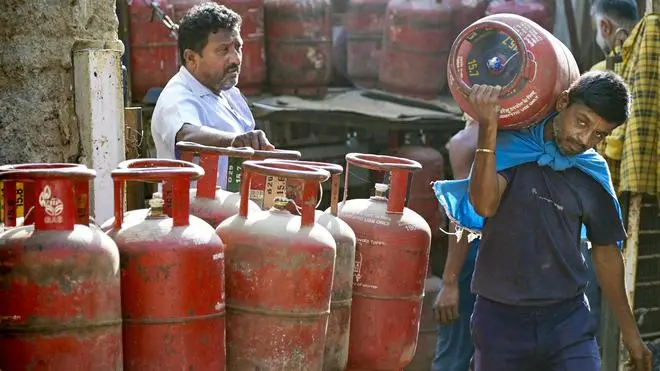
Similar scenes were observed at LPG distribution centers, where households tried to secure additional cylinders amid concerns that global tensions could affect supply.
Shopkeepers and distributors say the sudden surge in demand has temporarily strained local distribution networks, even though supply levels remain stable.
Government Reassurance on Fuel Supply
Officials urge residents not to hoard
The Jammu and Kashmir government has stepped in to reassure residents that the situation remains under control.
Consumer Affairs Minister Satish Sharma stated that adequate reserves of both LPG and petroleum products are available in the region.
According to officials:
-
Petrol and diesel stocks are sufficient
-
LPG supplies remain stable
-
Distribution networks are functioning normally
Authorities emphasized that panic buying itself can create artificial shortages, even when supply levels are adequate.
Residents have been urged to purchase fuel only as needed and avoid hoarding.
Why the Panic Started
Global tensions raise fears of supply disruptions
The anxiety in Kashmir stems from escalating tensions in the Middle East involving Iran, Israel, and the United States, which has raised concerns about potential disruptions in global energy supply routes.
One of the key worries is the Strait of Hormuz, a narrow maritime corridor between Iran and Oman through which a large portion of the world’s oil shipments pass.
Nearly 20 percent of global oil trade moves through this route.
Any conflict that threatens shipping traffic in the strait could lead to higher fuel prices and possible supply disruptions worldwide.
News of attacks on vessels and rising geopolitical tensions has therefore created uncertainty among consumers.
Psychological Panic vs Actual Supply
Experts say fear can create artificial shortages
Economic analysts often describe panic buying as a self-fulfilling crisis.
When consumers believe that shortages are imminent, they begin purchasing more than usual.
This sudden surge in demand can overwhelm local supply chains, leading to temporary stock shortages that reinforce the perception of scarcity.
In reality, such shortages are often caused by consumer behavior rather than actual supply disruptions.
Authorities in Kashmir say the current rush for fuel and LPG appears to be driven primarily by fear rather than real supply problems.
LPG Demand Spike at Distribution Centers
Households rushing to secure cylinders
LPG distributors across the Valley have reported a noticeable increase in bookings and walk-in customers.
Many households attempted to secure additional cylinders as a precaution.
While supplies remain available, distributors say the sudden spike in demand has led to longer waiting times for deliveries in some areas.
Officials warn that hoarding LPG cylinders could disrupt distribution schedules and affect households that genuinely need immediate refills.
Black Market Concerns
Panic buying may encourage illegal resale
Another concern during periods of panic buying is the emergence of black-market activity.
When demand rises sharply, unscrupulous traders may attempt to:
-
Stockpile LPG cylinders
-
Resell fuel at inflated prices
-
Exploit temporary supply imbalances
Reports from other parts of India, including the Delhi-NCR region, have already indicated instances of LPG cylinders being sold in informal markets at higher prices.
Authorities say they are monitoring the situation to prevent similar practices in Kashmir.
Wider Energy Concerns in India
Rising global oil prices could affect domestic markets
Even though there is no immediate shortage of fuel in Kashmir, the broader geopolitical crisis could still have economic consequences for India.
India imports nearly 85 percent of its crude oil, making it highly sensitive to fluctuations in global oil markets.
If tensions in the Gulf region disrupt shipping routes or oil production, fuel prices in India could rise.
Higher energy prices typically affect multiple sectors of the economy, including:
-
Transportation
-
Agriculture
-
Manufacturing
-
Food distribution
This can eventually push up inflation and the overall cost of living.
UN Warning on Global Price Impact
Food prices may rise if shipping lanes are disrupted
International organizations have also expressed concern about the potential economic impact of the crisis.
The United Nations has warned that disruptions in the Strait of Hormuz could lead to higher shipping costs worldwide.
Since maritime transport plays a key role in moving food and agricultural products, increased shipping costs could translate into higher food prices.
Countries that depend heavily on imports — including India — could feel the effects more strongly.
Kashmir’s Unique Supply Challenges
Geography makes the region sensitive to disruptions
Kashmir’s geographical location adds another layer of complexity to supply concerns.
Unlike many other regions in India, the Valley relies heavily on supplies transported by road from outside the region.
Seasonal weather conditions and terrain often affect transportation routes, making supply chains more fragile.
This vulnerability can amplify public anxiety during global crises that affect energy supply.
Authorities Monitoring Situation
Government agencies working to ensure stability
Officials say they are closely monitoring fuel stocks and supply chains across Jammu and Kashmir.
Authorities are coordinating with:
-
Oil marketing companies
-
LPG distributors
-
Transport operators
to ensure uninterrupted supply.
Government departments are also keeping a watch on market behavior to prevent hoarding and price manipulation.
Public Appeal for Responsible Buying
Officials emphasize calm and cooperation
Authorities have appealed to residents to remain calm and avoid unnecessary purchases.
Consumer behavior during crises can play a crucial role in maintaining supply stability.
Experts say responsible buying ensures that essential commodities remain accessible to everyone.
If consumers avoid panic buying, supply chains are more likely to function smoothly.
The Bigger Picture
A global crisis with local effects
The panic buying seen in Kashmir illustrates how international geopolitical tensions can quickly influence local markets and consumer behavior.
Events unfolding in distant regions — such as conflicts in the Middle East — can create ripple effects that reach communities far beyond the immediate conflict zone.
While the current rush for fuel and LPG appears to be driven largely by fear, experts say the situation serves as a reminder of how interconnected global energy systems have become.
Key Takeaway
Despite long queues at petrol pumps and LPG distributors, authorities confirm that Kashmir currently has adequate fuel and cooking gas supplies.
The panic buying seen across the region is largely driven by fears linked to the Middle East crisis rather than any real shortage.
However, if geopolitical tensions escalate and disrupt shipping routes such as the Strait of Hormuz, global energy markets — and countries like India that rely heavily on imported oil — could face real supply and price shocks.
For now, officials urge residents to remain calm, avoid hoarding, and rely on verified information from government sources.