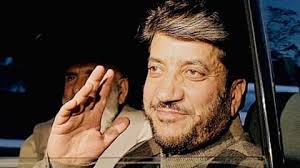
Supreme Court Bail to Shabir Shah with Kashmir Ban: Legal Impact, Political Fallout & Security Implications
By: Javid Amin | 19 March 2026
A Conditional Freedom: Bail Without Homecoming
In a significant and legally nuanced decision, the Supreme Court of India has granted bail to veteran Kashmiri separatist leader Shabir Shah—but with a striking caveat: he cannot return to Jammu & Kashmir.
The order underscores a complex judicial balancing act—between safeguarding individual liberty and addressing national security concerns in one of India’s most sensitive regions.
For Shah, often dubbed the “Jailbird of Kashmir” due to decades of incarceration, the ruling offers conditional relief. But it also imposes a form of political exile—raising profound questions about rights, representation, and the future of separatist politics in Kashmir.
The Case: From Arrest to Bail
Shabir Shah was arrested in connection with alleged terror funding and money laundering cases, investigated by agencies including the Enforcement Directorate.
The charges are linked to suspected financial networks that authorities claim were used to fund separatist activities in Jammu & Kashmir.
Over the years, Shah has faced multiple detentions under stringent laws such as:
-
Unlawful Activities (Prevention) Act (UAPA)
-
Terrorist and Disruptive Activities (Prevention) Act (TADA)
-
Prevention of Terrorism Act (POTA)
His legal journey spans decades, reflecting both the persistence of the Indian state in pursuing cases and the enduring complexity of Kashmir’s political landscape.
What the Supreme Court Ordered
The Supreme Court’s bail order is not unconditional.
Key Conditions Imposed
-
❌ No Entry into Jammu & Kashmir
-
📄 Mandatory Cooperation with Investigators
-
🗣️ Restriction on Public Statements Related to the Case
These conditions are critical.
They effectively allow Shah personal liberty—but restrict his geographical presence, political engagement, and public communication.
In legal terms, this is a controlled release, designed to mitigate perceived risks while upholding due process.
Legal Analysis: Bail vs National Security
1. The Principle of Bail as a Right
Indian jurisprudence has consistently emphasized that “bail is the rule, jail is the exception.”
By granting bail, the Supreme Court reaffirms:
-
The presumption of innocence
-
The importance of personal liberty under Article 21
-
The need to avoid indefinite pre-trial detention
2. The Exception: Security-Driven Restrictions
However, the conditions imposed reflect a parallel doctrine:
Liberty can be regulated when national security concerns are at stake.
The restriction on entering Jammu & Kashmir is particularly notable.
It suggests that the Court views Shah’s physical presence in the region as potentially:
-
Politically mobilizing
-
Socially disruptive
-
Security-sensitive
3. A Hybrid Legal Approach
This ruling represents a hybrid framework:
| Legal Principle | Application in This Case |
|---|---|
| Personal Liberty | Bail granted |
| Public Order | Movement restricted |
| Fair Trial | Speech limited |
| National Security | Regional ban imposed |
Such calibrated orders are increasingly common in high-stakes cases involving terrorism or separatism.
Political Implications: Silence, Absence, and Vacuum
1. Impact on Separatist Politics
Shabir Shah has long been a symbolic figure in Kashmir’s separatist ecosystem.
His absence from the Valley—even after securing bail—creates a political vacuum.
Unlike traditional imprisonment, this is a strategic absence:
-
He is free—but not present
-
Active legally—but restricted politically
This limits his ability to:
-
Address public gatherings
-
Engage with local networks
-
Influence grassroots sentiment
2. Timing: A Charged Political Climate
The decision comes at a time when Kashmir’s political discourse is already intense.
Voices like Agha Syed Ruhullah Mehdi and Engineer Rashid are actively shaping debates—both inside Parliament and on the ground.
In this context:
-
Shah’s absence strengthens mainstream and parliamentary voices
-
It weakens traditional separatist mobilization structures
3. Symbolism of the Ban
The prohibition on entering Jammu & Kashmir is perhaps the most symbolic aspect of the ruling.
It conveys a powerful message:
In Kashmir, geography itself is political.
For many observers, this condition reflects how deeply security considerations override conventional freedoms in the region.
Security Perspective: Preventive Strategy or Overreach?
From a security standpoint, the order can be seen as a preventive measure.
Authorities likely assessed that Shah’s return could:
-
Trigger protests or mobilization
-
Reignite dormant networks
-
Complicate the law-and-order situation
However, critics may argue that:
-
Such restrictions blur the line between legal control and political suppression
-
They raise questions about freedom of movement within one’s own country
This tension is central to Kashmir’s governance model.
Historical Context: The Long Incarceration of Shabir Shah
Shabir Shah’s political life has been marked by repeated arrests and long periods in custody.
Over the decades, he has spent over 30 years in jail cumulatively.
His trajectory mirrors the broader history of separatist politics in Kashmir:
-
Cycles of detention and release
-
Legal battles under evolving anti-terror laws
-
Shifting political relevance over time
Even his nickname—“Jailbird of Kashmir”—reflects this unusual political lifecycle.
A Judiciary Walking a Tightrope
The Supreme Court’s decision illustrates the judiciary’s delicate position in Kashmir-related cases.
It must navigate:
-
Constitutional rights
-
Executive security concerns
-
Political sensitivities
-
Public perception
In doing so, the Court often crafts case-specific solutions rather than broad precedents.
This ruling is one such example.
Broader Implications for Kashmir Politics
1. Shift Toward Institutional Politics
With separatist leaders restricted, there is a visible shift toward:
-
Parliamentary representation
-
Electoral politics
-
Policy-based debates
2. Changing Nature of Dissent
Dissent is not disappearing—but evolving.
It is increasingly expressed through:
-
Speeches in Parliament
-
Media interventions
-
Civil society discourse
Rather than street mobilization.
3. The Future of Separatist Leadership
The long-term question remains:
Can separatist politics sustain itself without physical presence and grassroots engagement?
Or will it gradually be replaced by new forms of political expression?
Conclusion: Bail That Redefines Freedom
The Supreme Court’s decision to grant bail to Shabir Shah is not just a legal development—it is a political and symbolic moment.
It reflects a new paradigm:
-
Freedom, but conditional
-
Rights, but regulated
-
Presence, but restricted
In Kashmir, where every legal decision carries political weight, this ruling will likely shape both discourse and strategy in the months ahead.
Whether viewed as a pragmatic compromise or a controversial limitation, one thing is clear:
This is not just bail—it is a redefinition of what freedom looks like in a conflict-sensitive region.


