FFRC Crackdown in Kashmir: Reform or Optics? A Ground Report from Srinagar
By: Javid Amin | 02 April 2026
In Srinagar, a regulatory storm is brewing over private school fees.
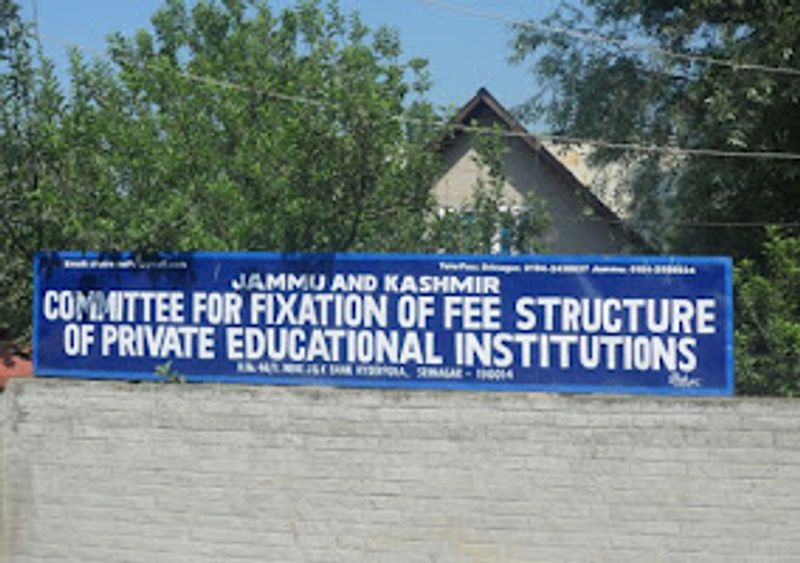
The Fee Fixation and Regulation Committee (FFRC) has issued final notices to 660 private schools, warning of strict action for violating fee norms. At the same time, it has frozen any new fee hikes until March 31, 2026, offering immediate relief to thousands of parents.
On paper, it appears to be one of the strongest regulatory interventions in recent years.
But on the ground, a crucial question remains:
Are schools truly complying—or simply adapting to bypass the system?
The Official Position: Strong Orders, Clear Deadlines
The FFRC’s stance is unambiguous:
- Approved fee structure for 2025–26 remains valid till March 2026
- No school can impose new or revised fee hikes
- 660 schools must submit audited financial records within 15 days
- Non-compliance may lead to penalties or derecognition
Additionally, multiple corrigenda issued in February 2026 have tightened compliance requirements, signaling seriousness.
The relocation of the FFRC office to Srinagar’s Old Assembly Complex further suggests an attempt to improve accessibility and responsiveness.
Ground Reality: Compliance on Paper, Loopholes in Practice
Despite the clarity of orders, field-level observations reveal a mixed and uneven reality.
1. Selective Compliance Across Schools
Schools broadly fall into three categories:
Fully Compliant (Limited)
- Adhering strictly to approved fee structures
- Maintaining transparency
Strategically Compliant (Majority)
- No official fee hikes
- But introducing indirect charges:
- “Development fees”
- “Activity funds”
- Inflated transport costs
This is where the system is quietly adjusting—not reforming.
Non-Compliant (Under Pressure)
- Delaying financial submissions
- Testing enforcement boundaries
- Continuing questionable practices informally
2. The Rise of “Hidden Charges”
One of the most significant trends observed:
Fee hikes have not disappeared—they have been repackaged.
Instead of direct increases:
- Charges are fragmented
- Labels are changed
- Documentation is kept vague
This creates a compliance illusion:
Officially legal. Practically burdensome.
3. Fee Cards vs Actual Payments
In several cases:
- Fee cards remain unchanged
- But parents report verbal or informal demands exceeding listed amounts
This dual system allows schools to:
- Avoid regulatory action
- Continue revenue expansion
Parents Speak: Relief Mixed with Distrust
Across Srinagar and other districts, the sentiment is consistent:
Relief
- No sudden hikes this academic year
- Legal backing to challenge schools
Concern
- Fear of hidden or indirect charges
- Doubts about enforcement
- Anxiety about future fee spikes
A recurring ground-level sentiment:
“The order is strong—but implementation is weak.”
Editorial Lens: Who Really Controls Education?
This issue goes beyond fees. It exposes a deeper structural reality:
Education in Kashmir is caught between regulation and market forces.
The Core Conflict
- Government seeks fairness and standardization
- Schools operate on cost and profit pressures
- Parents face limited choice and high dependency
Private schooling has evolved into a high-demand, semi-commercial sector, where:
- Quality options are limited
- Demand outweighs supply
- Regulatory enforcement struggles to keep pace
The Enforcement Gap
The Fee Fixation and Regulation Committee has taken a significant step.
But enforcement is measured not by notices—
it is measured by consequences.
So far:
- Large-scale penalties are limited
- Public naming of violators is rare
- Derecognition remains largely theoretical
This creates a perception problem:
Rules exist—but consequences are uncertain.
Is This Crackdown Real or “Eye Wash”?
Not Just Eye Wash
- 660 notices indicate real administrative action
- Fee freeze has delivered tangible relief
- Increased regulatory visibility is evident
But Not Full Reform Yet
For real transformation, three missing elements are critical:
1. Visible Punishment
Without examples, deterrence weakens.
2. Transparency
Parents need:
- Public access to approved fee structures
- Clear comparison tools
3. Fast Complaint Resolution
Delayed action undermines trust.
Why Enforcement Remains Weak
1. Education as a Business Ecosystem
- Rising operational costs
- Salary pressures
- Infrastructure investments
Schools balance compliance with survival—and profit.
2. Institutional Capacity Limits
The Fee Fixation and Regulation Committee:
- Oversees hundreds of schools
- Has limited manpower
- Relies heavily on complaints
3. Parent Fragmentation
- Lack of collective action
- Fear of repercussions
- Limited awareness
This is the biggest enforcement gap.
Action Guide: How Parents Can Actually Enforce the Order
Policy works only when people use it.
1. Audit the Fee Structure
- Compare with previous year
- Identify hidden or new charges
2. Demand Written Proof
Ask:
“Is this charge approved by FFRC? Show written approval.”
3. Document Everything
Keep:
- Receipts
- Fee cards
- Communication records
4. File Formal Complaints
Submit to FFRC (Old Assembly Complex, Srinagar) with:
- Evidence
- Clear description of violation
5. Act Collectively
- Form parent groups
- Submit joint complaints
Collective pressure drives enforcement.
What Happens Next?
Most Likely Scenario
- Partial compliance
- Continued indirect charges
- Gradual enforcement
Best Case
- Visible penalties
- Strong deterrence
- System-wide reform
Worst Case
- Policy fatigue
- Return to unchecked fee hikes
- Collapse of regulatory credibility
Final Verdict: Between Reform and Reality
Let’s be clear:
- The orders are real
- The relief is real—but temporary
- The compliance is partial
- The enforcement is still evolving
Closing Line
The FFRC has drawn a line in Kashmir’s education system.
But whether that line holds—or fades—depends on enforcement, and on how strongly parents push back.


