No Breakthrough, No Breakdown: A Conflict Stuck in Strategic Limbo
By: Javid Amin | 13 April 2026
As of April 13, 2026, the US–Iran confrontation has entered a prolonged stalemate phase—where diplomacy continues, but without tangible progress, and military signaling grows sharper by the day.
Negotiations have neither collapsed nor succeeded. Instead, they have shifted into indirect, backchannel engagement, with Pakistan and Oman emerging as the primary mediators attempting to prevent escalation.
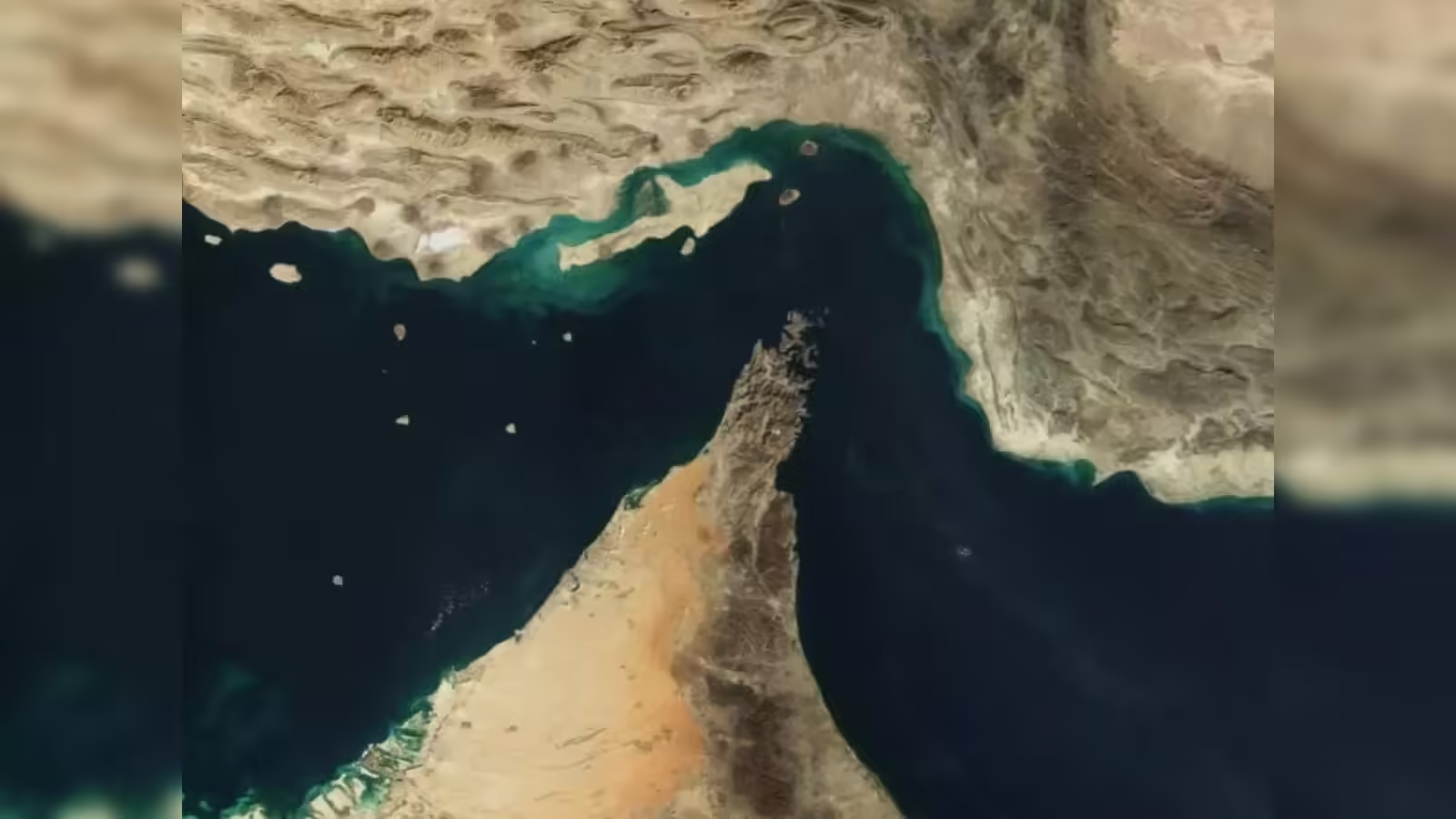
At the same time, developments around the Strait of Hormuz suggest the crisis is entering a more dangerous economic and naval phase.
Strait of Hormuz: From Pressure Point to Active Confrontation Zone
The most consequential escalation is unfolding at sea.
Donald Trump has announced a de facto blockade strategy, stating that he has directed the U.S. Navy to:
- Interdict vessels suspected of paying tolls to Iran
- Restrict maritime trade linked to Iranian ports
- Enforce pressure on Tehran through naval dominance
Strategic Implications
- This is not a full legal blockade—but an operational interdiction campaign
- It directly challenges Iran’s use of Hormuz as leverage
- It raises the risk of naval confrontation in one of the world’s busiest shipping lanes
Iran, which has already used:
- Temporary closures
- Mine threats
- Controlled passage routes
is likely to view this as an escalation into economic warfare at sea.
Oil Markets React: Energy Shock Signals Return
The global energy market has responded immediately to rising tensions.
Latest Market Movements
- Brent crude surged above $92 per barrel
- WTI crude crossed $88 per barrel
Why Prices Are Rising
- Fear of restricted Iranian exports
- Risk of wider disruption in the Persian Gulf
- Increased insurance and shipping costs
Energy analysts warn that:
- A prolonged blockade or counter-blockade scenario could push oil prices significantly higher
- Supply chains, especially Asia-bound routes, could face sustained disruption
Diplomatic Track: Quiet, Indirect, and Fragile
Despite rising tensions, diplomacy has not ended.
Mediators Take Center Stage
- Pakistan continues to host and facilitate indirect talks
- Oman—with a history of quiet mediation—has re-entered the diplomatic arena
Current Format
- No direct US–Iran negotiations
- Messages conveyed through intermediaries
- Focus on preventing immediate escalation rather than achieving a full deal
This reflects a shift from formal diplomacy → crisis management diplomacy.
Military–Economic Convergence: A New Phase of Conflict
The crisis is now entering a phase where:
- Military pressure
- Economic disruption
- Diplomatic signaling
are all converging simultaneously.
Key Characteristics of This Phase
- No large-scale strikes (relative pause)
- Increased naval deployments
- Economic tools (blockades, sanctions, shipping control) becoming primary weapons
This is a hybrid conflict model, combining:
- Hard power (military)
- Soft coercion (economic pressure)
Role of Regional Actors: Stabilizers or Stakeholders?
Oman: The Quiet Mediator
Oman is positioning itself as a neutral facilitator:
- Trusted by both Washington and Tehran
- Experienced in backchannel diplomacy
Saudi Arabia: Watching and Engaging
Saudi Arabia is:
- Monitoring oil market stability
- Engaging cautiously with Iran diplomatically
- Concerned about regional spillover
OPEC Dynamics
Oil-producing nations are now under pressure to:
- Stabilize supply
- Prevent price shocks
- Avoid deeper geopolitical entanglement
Situation Snapshot (April 13, 2026)
| Domain | Status |
|---|---|
| Diplomacy | Ongoing, indirect, no breakthrough |
| Hormuz | Under threat of interdiction/blockade |
| Oil Markets | Rising, volatile |
| Military | High readiness, limited active strikes |
| Mediation | Pakistan & Oman leading |
What Happens Next: Strategic Scenarios
🔴 1. Naval Escalation
- Iran challenges U.S. interdiction
- Direct encounters at sea
- Hormuz partially or fully disrupted
Impact: Oil spikes sharply, global crisis
🟠 2. Prolonged Stalemate (Most Likely)
- No major breakthrough
- No full-scale war
- Continued economic pressure
Impact: Sustained volatility, strategic uncertainty
🟢 3. Managed De-escalation
- Oman/Pakistan mediation yields limited agreement
- Shipping lanes stabilized
- Oil prices ease
Impact: Temporary stability, fragile peace
Global Impact: Why This Matters
Energy Security
The Strait of Hormuz handles a significant share of global oil flows:
- Any disruption affects global prices immediately
Trade & Shipping
- Rising insurance premiums
- Delays in cargo movement
- Increased cost of goods globally
India’s Exposure
For India:
- Heavy reliance on Gulf energy imports
- Inflation risks if oil prices continue rising
- Strategic need for supply diversification
Final Assessment: A Conflict Frozen—But Dangerous
The April 13 situation reflects a dangerous equilibrium:
- Diplomacy is alive—but not advancing
- Military conflict is paused—but not resolved
- Economic warfare is intensifying
This is not stability—it is controlled instability.
Bottom Line
- No breakthrough in US–Iran talks, but diplomacy continues indirectly
- Trump signals a naval interdiction strategy in Hormuz
- Oil prices surge amid fears of supply disruption
- Oman and Pakistan emerge as key mediators
The crisis is no longer just about war or peace—it is about control over global energy flows. And right now, that control remains contested.